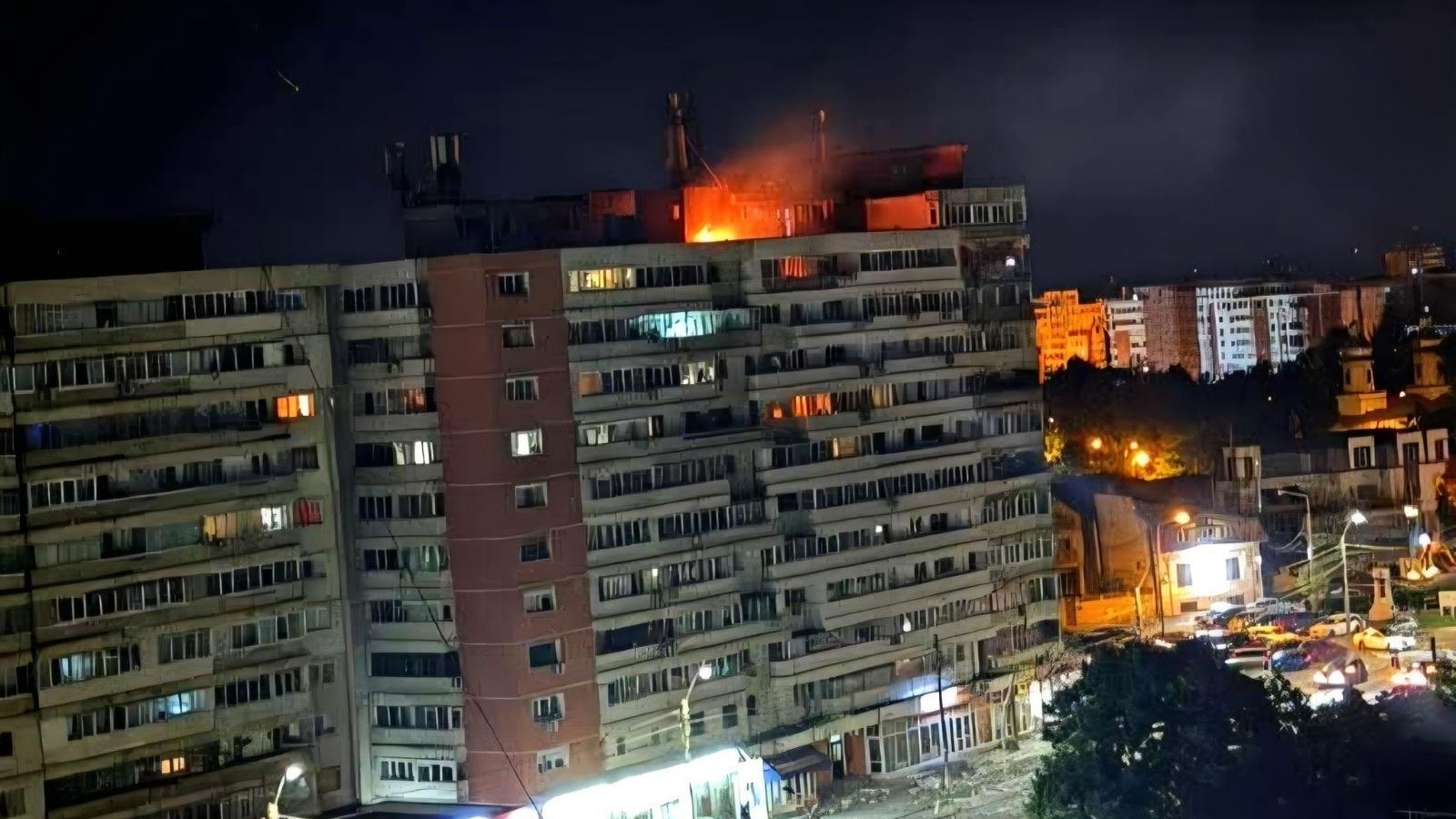
A Russian drone struck a residential apartment building in Galați, Romania, injuring two people and prompting the Romanian defense ministry to call it a serious threat to regional security and NATO collective safety. The incident was described as the most serious on Romanian national territory since the start of the Russia-Ukraine war, heightening cross-border geopolitical risk. NATO and EU leaders publicly condemned the strike and reiterated support for Romania and Ukraine.
This is less a one-off headline than a signal that the Black Sea risk premium is migrating westward. Even if there is no immediate kinetic escalation, markets should price a higher floor for European defense spending, air-defense procurement, and border hardening over the next 6-24 months; the incremental spend is likely to concentrate in short-cycle munitions, counter-UAS, radar, and integrated air defense rather than legacy platforms. The beneficiaries are primes with existing NATO adjacency and bottlenecks in missile interceptors, as inventories were already tight before this incident.
The second-order loser is any asset exposed to Southeast Europe transit, insurance, or civilian aviation risk premiums. A sustained increase in “spillover” perception tends to widen CDS and sovereign spreads for frontier EU names first, then raise freight and war-risk insurance on Black Sea-linked routes; that can filter into European industrial margins via higher logistics and security costs. Energy is a mixed read: a durable risk-off bid can support natgas and refined product hedges, but the bigger effect is on European gas storage politics and maritime insurance rather than spot crude.
The key catalyst is whether this is treated as an isolated accident or as evidence of inadequate NATO perimeter defense. If there is a formal response—air-defense reinforcement, new rules of engagement, or expanded sanctions—the trade becomes a multi-quarter re-rating of defense budgets; if rhetoric fades, the premium can mean-revert within days. The contrarian risk is that the market overstates escalation probability: Russia may prefer calibrated provocation below the threshold that forces NATO retaliation, which would cap the duration of the move.
For positioning, buy European air-defense beneficiaries on weakness: RHM, SAAB-B, and RTX on a 1-3 month horizon, with preference for call spreads to limit event risk. Pair long defense against short a basket of European cyclicals with Black Sea or Eastern Europe revenue sensitivity, as insurance/logistics and higher energy/transport costs should pressure margins first. Consider a tactical long in natgas-adjacent hedges or energy volatility via XLE call spreads only if follow-on incidents occur; otherwise the better risk/reward is defense over broad commodities.
AI-powered research, real-time alerts, and portfolio analytics for institutional investors.
Request DemoOverall Sentiment
strongly negative
Sentiment Score
-0.70
