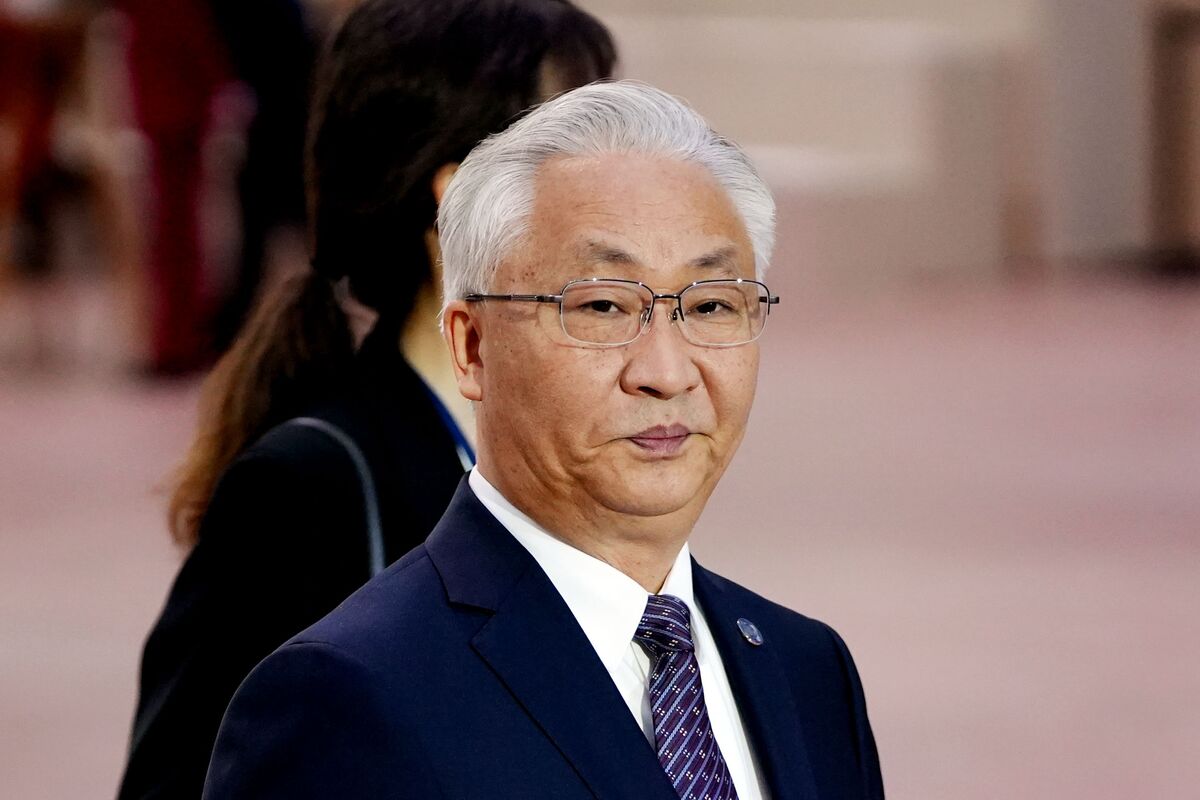
China Vice Premier Zhang Guoqing will join a G7 video call on Thursday to discuss trade imbalances, marking a rare invitation for China to participate in the multilateral session. The discussion, chaired by French President Emmanuel Macron, includes G7 members, partner countries such as India and South Korea, and the IMF. The event is diplomatically notable but carries limited near-term market impact absent policy announcements.
This is less about immediate policy resolution than about China being pulled into a framework where it can be framed as a co-contributor to global rebalancing rather than a unilateral target. That matters because any credible dialogue on surpluses and industrial policy tends to shift the burden onto sectors most exposed to policy-led export expansion: autos, batteries, solar, chemicals, and machinery. The second-order effect is not a broad China selloff; it is a higher probability of selective margin compression in export-heavy manufacturers while domestic-consumption and services proxies can relative-collect.
For markets, the key horizon is weeks to months, not days. A diplomatic process like this often reduces the odds of near-term tariff escalation, which is mildly supportive for global cyclicals and emerging markets that sit in the crossfire of US-China supply chain rerouting. But if the conversation turns into a coordinated call for deficit reduction, the most vulnerable assets are the “third-country winners” of China+1: Vietnam, Mexico, and select ASEAN exporters that have benefited from trade diversion and may face scrutiny if the policy tone shifts from diversification to containment.
The contrarian angle is that investors may overread the symbolism as de-escalation when it could actually be the opening move in a more structured pressure campaign. China’s participation may buy time, but it also creates a public benchmark that can later justify targeted remedies if imbalances persist. In that setup, the real risk is not broad market volatility; it is abrupt regime rotation within industrial supply chains, where leaders with low price elasticity and domestic demand buffers outperform while exporters with thin margins and high external dependence underperform sharply.
Near-term, the best signal is whether commentary after the call emphasizes cooperation or measurable commitments. If language hardens around “fairness” or “rebalancing,” expect a 1-3 month window of renewed headline risk for Asia export equities and freight-sensitive names, even if the macro tape remains calm. If the outcome is purely rhetorical, the trade is mostly a relief rally fade in the most politically exposed China industrials, because the structural surplus issue is unlikely to be solved quickly enough to matter for earnings revisions this quarter.
AI-powered research, real-time alerts, and portfolio analytics for institutional investors.
Request DemoOverall Sentiment
neutral
Sentiment Score
0.05
