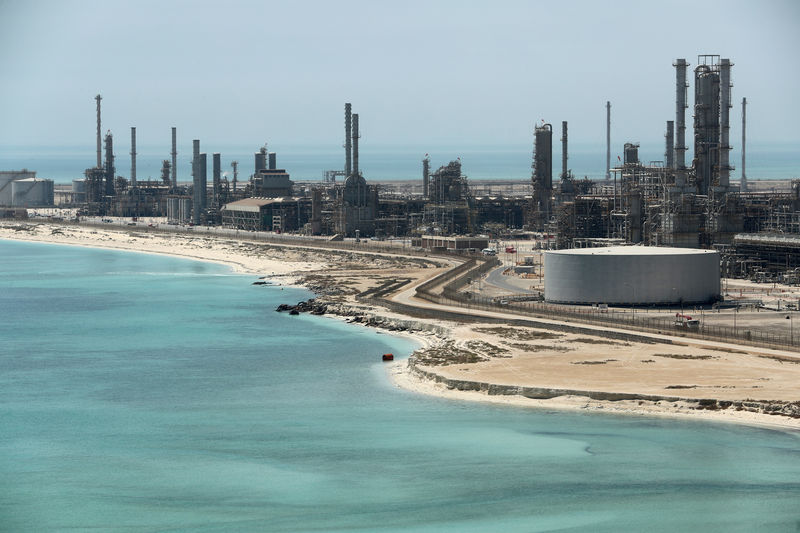
Saudi Arabia has restored full 7-million-barrel-per-day capacity on its East-West pipeline, bringing 700,000 barrels per day back online after strike damage and easing a key supply constraint away from the Strait of Hormuz. Aramco also restored output at Manifa, though Khurais remains under repair for a 300,000-barrel-per-day outage. The developments improve supply resilience, but ongoing regional security risks keep a war premium embedded in Brent and WTI.
The key market implication is not a clean bearish oil signal; it is a reduction in the probability of a left-tail supply shock while leaving the right-tail risk intact. Restored Saudi pipeline capacity lowers the odds of a sudden physical shortage, but the fact that the kingdom is still routing around the Strait of Hormuz means the market’s geopolitical insurance premium should compress only modestly, not disappear. In practice, that argues for lower realized intraday volatility in front-month crude, but a relatively sticky term premium as traders continue paying for disruption risk.
The second-order beneficiary is not just Saudi export reliability, but the entire set of tanker, storage, and refining assets that can arbitrage route uncertainty. If Red Sea routing remains elevated, more barrels will need longer-haul transport and floating inventory, which supports shipping utilization and keeps prompt times tight even if headline supply looks normal. Conversely, the biggest loser is any producer or downstream margin model that was implicitly pricing a multi-week outage; that convexity is now being removed, which should hit the most levered geopolitical beta names first.
The Iran refinery-recovery timeline matters because it reduces the chance of a near-term escalatory response through domestic fuel stress, but it does not solve the diplomatic impasse. That creates a window where crude can drift lower on restored flows while still retaining a premium against fresh headlines over the next 2-6 weeks. The right contrarian read is that the market may be underestimating how quickly operational workarounds can mute the actual supply loss, but overestimating how fast political risk can be de-risked.
Net: this is a fade-the-panic, not a fade-the-premium, setup. Any sharp knee-jerk selloff in crude should be sold selectively, but upside needs to be capped unless there is a fresh physical disruption or a failed repair at the remaining impaired Saudi assets. The cleaner expression is relative value rather than outright directional oil, because the recovery in physical capacity is real while the security backdrop remains structurally unresolved.
AI-powered research, real-time alerts, and portfolio analytics for institutional investors.
Request DemoOverall Sentiment
neutral
Sentiment Score
0.10
Ticker Sentiment
