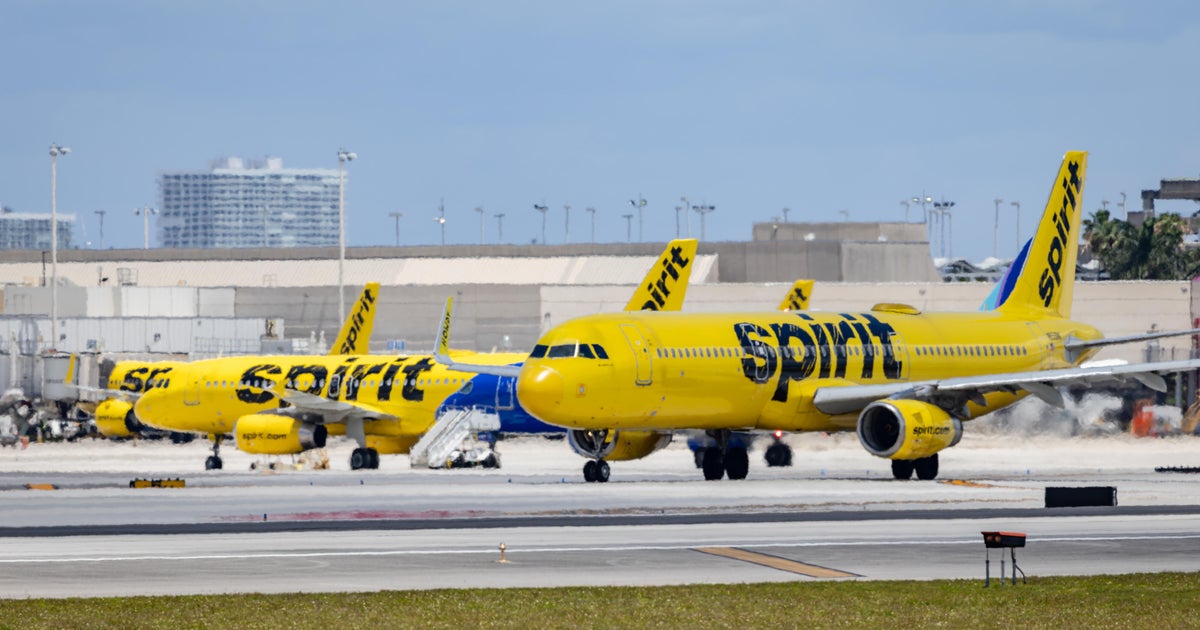
Spirit Airlines said it is ceasing operations immediately after failing to secure a $500 million federal bailout, cancelling all flights and beginning an orderly wind-down. The carrier cited a sharp rise in fuel costs tied to the Iran war and a lack of additional funding, while officials said creditor issues blocked the rescue plan. The shutdown will disrupt travel across more than 40 U.S. cities and trigger competitive fare responses from major airlines.
Spirit’s liquidation is less important as a single-name event than as a pricing reset for the ultra-low-cost segment. The immediate read-through is that capacity does not disappear overnight; it gets recycled by larger carriers with stronger balance sheets, which should pressure yields on Spirit-heavy leisure routes while improving load factors for incumbents. That favors airlines with domestic scale, schedule depth, and ancillary revenue engines, while making the surviving discount model even harder to sustain if fuel remains elevated.
The second-order effect is on regional pricing power and aircraft utilization. As capacity is redistributed, the first beneficiaries are carriers that can upgauge into Spirit’s former airports with limited incremental cost, especially where they already have crew, gates, and loyalty traffic. But this is not a clean win for the industry: if fuel stays high for months, the revenue bump from displaced passengers can be offset by margin compression across the network, and the real loser may be the consumer via higher fares rather than the airlines via lower volume.
Credit markets are sending a louder signal than equity here: the failure of a rescue despite apparent political support suggests lenders now have more leverage than policymakers in distressed aviation, and that any “too-big-to-fail” assumptions in smaller carriers should be discounted. The key catalyst is whether Spirit’s liquidation becomes a template for other overlevered travel names facing fuel shocks; if so, the market may reprice weak balance sheets across leisure transport over the next 1-3 months. Contrarian view: this may be more of a route-optimization event than an industry demand shock, so the biggest equity winners could be the carriers best able to add capacity without disrupting their own unit economics, not necessarily the lowest-fare competitors.
AI-powered research, real-time alerts, and portfolio analytics for institutional investors.
Request DemoOverall Sentiment
extremely negative
Sentiment Score
-0.97
Ticker Sentiment
