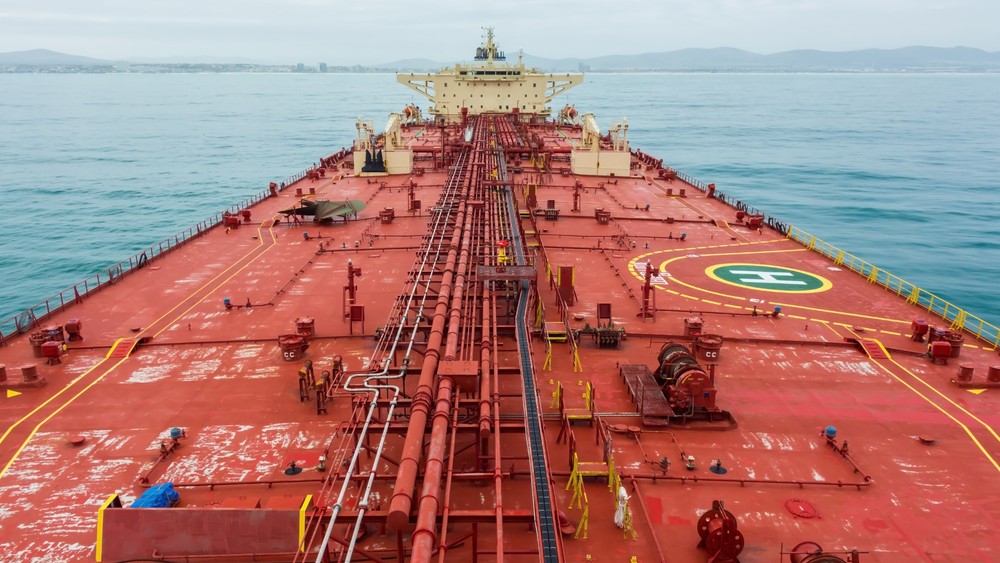
Two supertankers carrying Iraqi and Qatari crude have exited the Strait of Hormuz and are heading to China, while at least 19 crude and LPG tankers from Gulf states other than Iran have crossed since March 1. However, about 100 tankers reportedly remain stranded, and traffic through the chokepoint is still far below pre-war levels amid Iran's de facto restrictions and dark-mode sailings. The situation keeps a major oil transit route partially disrupted, which is supportive for oil-price volatility and broader energy-market risk.
This is a normalization signal, not a resolution signal. The key market implication is that the choke point is moving from binary shutdown risk to a regime of selective permissioning, which tends to keep the forward curve backwardation-supportive without immediately re-pricing outright supply loss. That matters because even modest flow restoration can be offset by higher war-risk premia, longer voyage times, and lower effective tanker utilization — a bullish setup for freight, but only a partial relief for crude balances.
The second-order winner is the shipping complex: if more cargoes are forced into dark-mode routing, ship-to-ship transfers, or delayed departures, the market will need more ton-miles to move the same barrels. That should support spot tanker rates and structurally tighten vessel availability over the next 2-6 weeks, especially for clean/product and gas carriers that face fewer easy substitutes than crude. Conversely, refiners and downstream consumers outside the Gulf get a short-term relief valve, but their input costs remain vulnerable to any renewed interruption, so margin forecasting stays noisy and hedged less effectively than the headline crude move suggests.
The contrarian point is that the market may be underpricing how durable this quasi-open/ quasi-closed regime can be. A partial reopening can persist for weeks without restoring pre-conflict flow, which keeps optionality elevated and discourages inventory destocking; that is structurally supportive for prompt barrels even if spot prices soften on the headline. The tail risk is a sudden policy reversal or a misread at sea that snaps traffic back to near-zero within days, which would force an immediate spike in flat price and freight, but the more likely path is a grinding, fragmented normalization that rewards carriers and penalizes anyone relying on just-in-time Gulf supply.
AI-powered research, real-time alerts, and portfolio analytics for institutional investors.
Request DemoOverall Sentiment
mildly negative
Sentiment Score
-0.15
