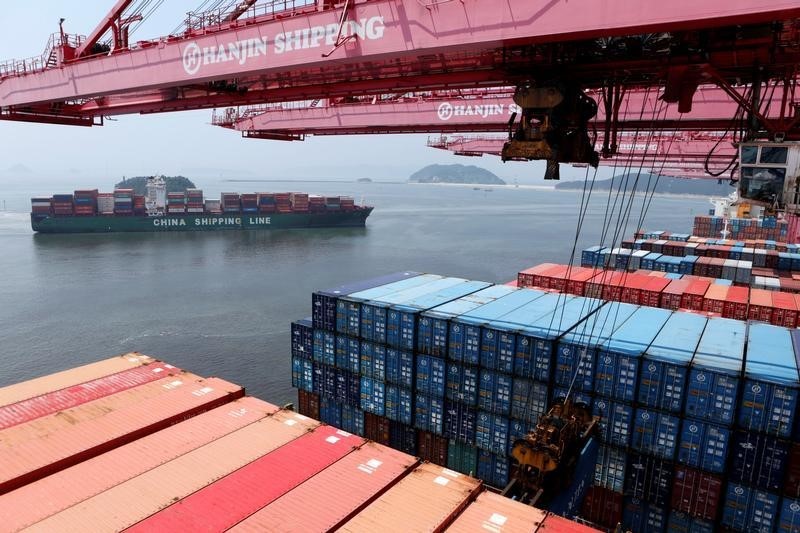
China's trade surplus widened to $213.62bn in Jan-Feb, well above the $177.40bn consensus, driven by a 21.8% surge in exports (vs 7.1% expected) and a 19.8% rise in imports (vs 6.3% expected). Strong external demand and a rebound in domestic spending over Lunar New Year boosted flows, while a Supreme Court ruling easing U.S. tariffs is expected to further support U.S.-bound exports and commodity demand.
The export rebound will transmit into global logistics and commodity chains unevenly: container lines and transpacific capacity providers should see demand re-accelerate within 6-12 weeks, while bulk commodity suppliers will experience a more drawn-out multi-quarter inventory draw. Expect port throughput and inland trucking tightness to re-rate freight forwarders’ pricing power before corporate margin recognition catches up, creating a near-term squeeze for shippers but a multi-month tailwind for carriers and terminal operators.
A stronger external-facing Chinese industrial cycle also implies upward pressure on base metals and energy over the next 3–9 months, but with an asymmetric risk profile: commodity exporters benefit quickly from drawdowns in stockpiles, yet any RMB appreciation or targeted subsidy rollback would blunt margins for export-competitiveness-sensitive miners. Currency dynamics are the key flow-through mechanism — capital inflows from export receipts can appreciate the CNH, which is positive for importers and domestic consumers but compresses exporters’ FX-adjusted margins unless hedged.
The policy and geopolitical vector is the main reversal channel. Non-tariff barriers, fresh US trade measures, or a step-up in geopolitical supply-chain re-shoring initiatives could erase the cyclical pickup inside 2–4 quarters. Conversely, if tariff relief proves durable and Chinese exporters convert higher volumes into capex rather than inventory, the structural incumbency of China in certain manufacturing nodes will be reinforced — favoring asset owners of logistics, ports, and vertically integrated miners over short-term assembly contractors.
AI-powered research, real-time alerts, and portfolio analytics for institutional investors.
Overall Sentiment
strongly positive
Sentiment Score
0.65
