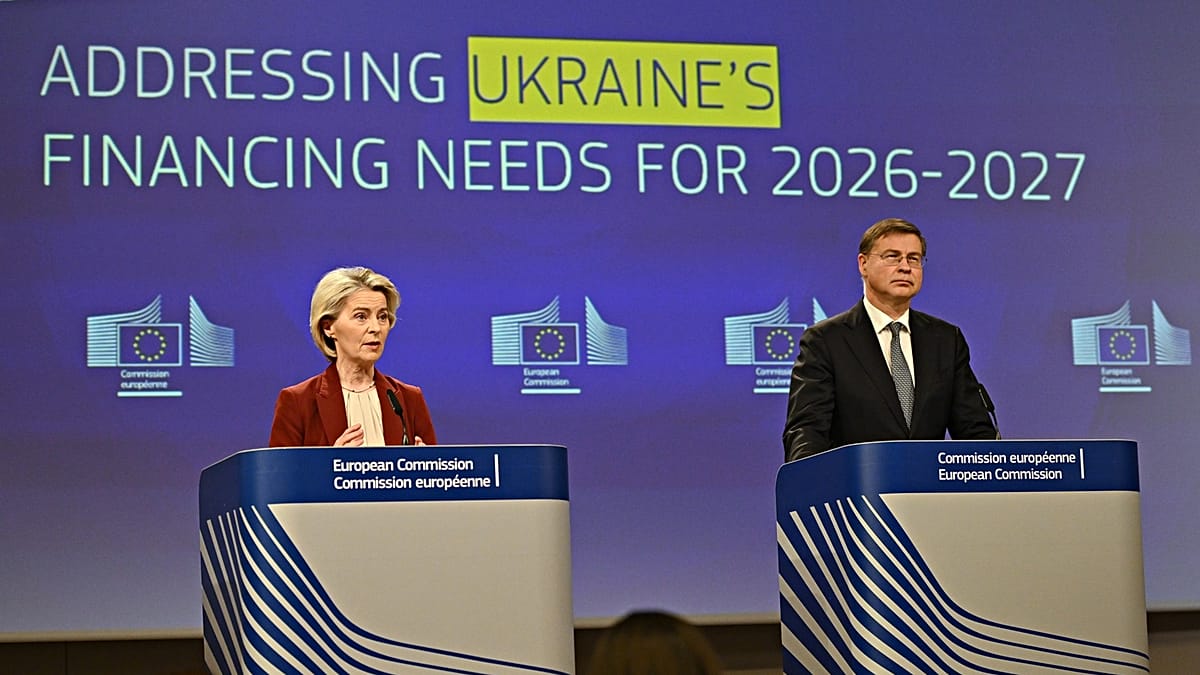
Euroclear has publicly warned that the EU plan to use immobilised Russian central bank assets to underwrite a zero‑interest reparations loan for Ukraine is legally fragile and poses material legal, liquidity and reputational risks that could trigger an exodus of foreign investors and raise borrowing costs across the eurozone. The Commission proposes to cover €90bn of Ukraine's €135bn two‑year financing gap using those assets, but Euroclear (which holds roughly €17bn tied to Russia) and Belgium fear liability shortfalls — including a cited €185bn guarantee requirement — and potential asset seizures; German and EU leaders are scrambling to secure Belgian approval ahead of the 18 December summit. Failure to reach a political solution would likely force the EU to tap capital markets to raise €90bn in common debt, with implications for sovereign funding, market confidence and euro‑area liquidity.
Market structure: The Euroclear warning makes European financials and peripheral sovereign debt the clear near-term losers while safe-haven assets (US Treasuries, Gold) and dollar liquidity win. Expect EUR sovereign spreads to widen 20–80bp if legal/operational doubts persist and foreign portfolio outflows accelerate; EURUSD could weaken ~1–3% in the first weeks on risk-off. European banks (large-cap names like DB, BNP.PA) will underperform due to operational counterparty and reputational risk.
Risk assessment: Tail scenarios include (A) Russian/third‑party seizure of assets triggering settlement failures and a 50–200bp shock to eurozone sovereign CDS, and (B) Belgian rejection leading the Commission to issue €90bn of joint debt — a 6–12 month regime change. Immediate (days): volatility spike and FX move; short-term (weeks/months): spread repricing and political bargaining around the 18 Dec summit; long-term (quarters+): structural precedent for sovereign asset expropriation or joint EU issuance.
Trade implications: Tactical hedges should be prioritized: buy duration (TLT/IEF) and gold (GLD) for 1–3 months; buy EUR puts (1–3 month, strike ~1.05) sized 0.5–1% NAV; initiate small shorts in eurozone large banks (e.g., short DB and BNP.PA totaling 1–2% NAV) and a relative trade long Bunds / short BTPs to capture spread widening (target +30–50bp). Use put spreads on STOXX Europe 600 Financials for convex downside protection if volatility rises above 25%.
Contrarian angles: The market underestimates the probability that a blocked plan forces common EU issuance — an outcome bullish for peripheral credit and EUR once implemented. If EU leaders opt for joint debt (watch 18 Dec), reverse short financials and short Bunds vs peripherals; enter longs when peripheral 10y spreads tighten >40bp from peak. Historical parallel: ECB backstops after crises reversed initial selloffs; don’t fully lever short positions without a 2–4 week political read-in.
AI-powered research, real-time alerts, and portfolio analytics for institutional investors.
Request DemoOverall Sentiment
moderately negative
Sentiment Score
-0.55
