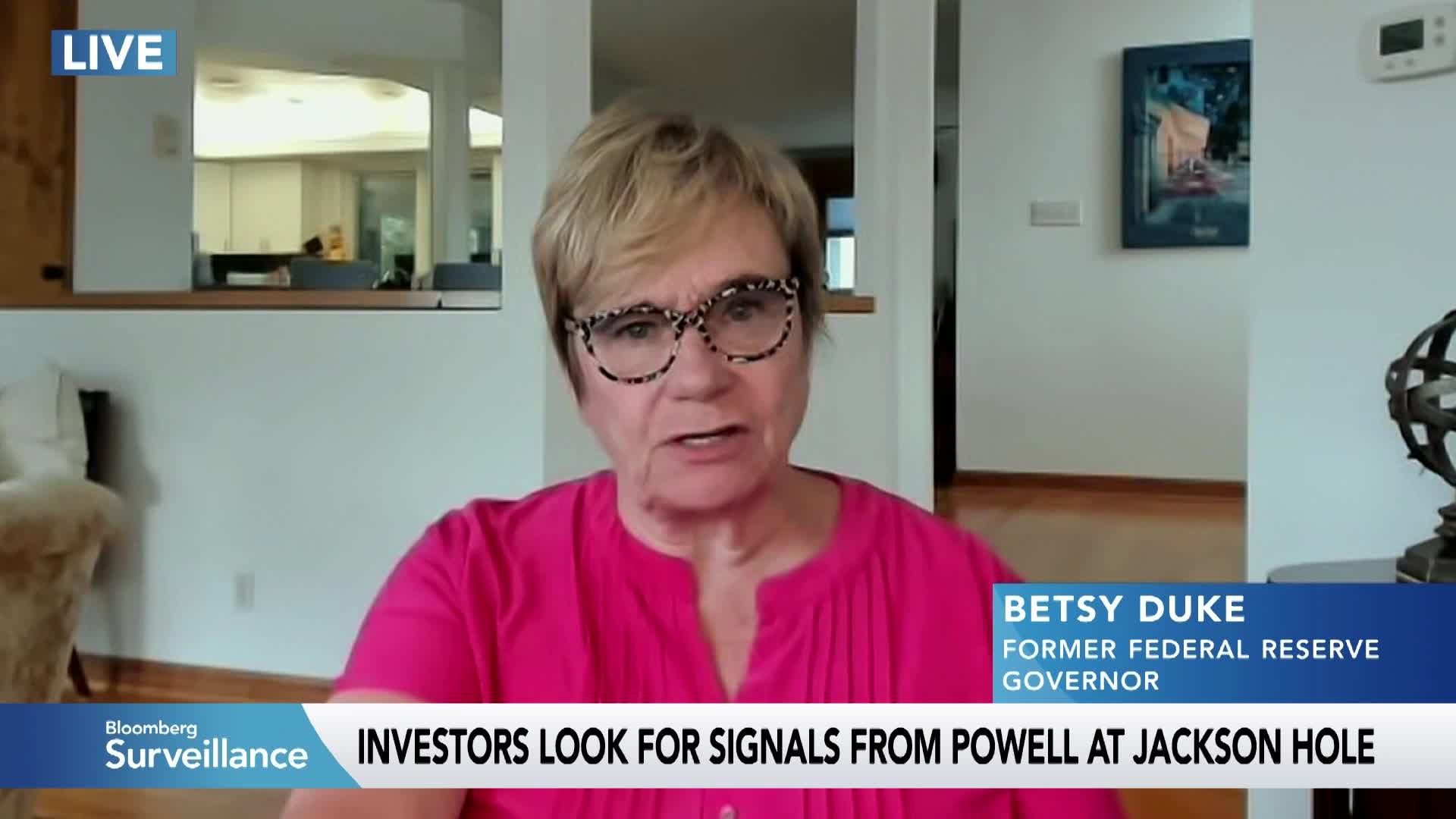
Former Federal Reserve Governor Betsy Duke anticipates Chair Jerome Powell will not signal interest rate cuts during his upcoming Jackson Hole speech, emphasizing ongoing inflation concerns and the Fed's dual mandate. This suggests market participants should not expect a dovish pivot from the Fed at this key policy symposium.
According to former Federal Reserve Governor Betsy Duke, market participants should not anticipate a signal for interest rate cuts from Chair Jerome Powell at the upcoming Jackson Hole symposium. This forecast, characterized by a hawkish tone and considered to have a high market impact score of 0.65, is rooted in the Fed's ongoing focus on its dual mandate and persistent inflation concerns. The commentary suggests that the Federal Reserve will likely maintain its restrictive monetary policy stance, prioritizing price stability over an immediate pivot to more accommodative conditions. This perspective sets a cautious tone for the highly anticipated event, implying that hopes for a near-term dovish shift in Fed rhetoric may be misplaced.
AI-powered research, real-time alerts, and portfolio analytics for institutional investors.
Request DemoOverall Sentiment
mildly negative
Sentiment Score
-0.15
