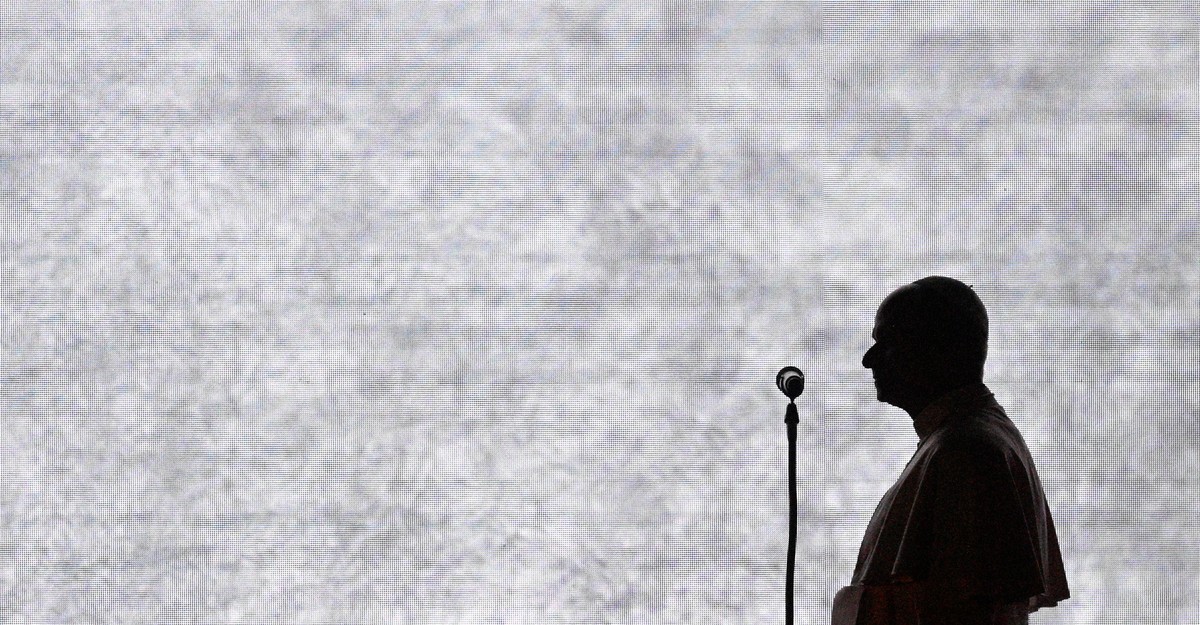
The article centers on President Trump’s clash with Pope Leo XIV over war, humility, and the limits of political power, including criticism of an AI-generated image of Trump as Jesus that was widely called blasphemous. Catholic leaders in the U.S. publicly rebuked the president, while the pope reiterated calls to avoid war and not shy away from the Gospel. The piece is mainly political and religious commentary with little direct market relevance.
This is not a first-order macro event, but it is a useful read-through on coalition risk for the current administration. The market implication is that the White House is not just polarizing opponents; it is also eroding trust with a high-discipline, high-turnout constituency that usually values hierarchy and predictability. That matters because when the governing coalition looks less durable, policy volatility rises and legislative execution gets noisier, which tends to compress multiples for policy-sensitive domestic cyclicals and anything relying on steady federal support.
The bigger second-order effect is reputational: attacks that appear to trivialize faith can harden resistance among institutional Catholic networks, including donors, universities, hospitals, and state-level operators with meaningful procurement and lobbying influence. In practice, that increases the odds that future culture-war messaging backfires into organized pushback rather than passive defection. Over a 1-3 month horizon, the near-term market risk is not direct earnings damage but elevated headline gamma around education, healthcare, immigration, and Ukraine/Russia framing, all of which can widen political risk premia.
The AI-generated imagery angle is more important than it looks. It reinforces a growing investor concern that executive communication is becoming more impulsive and less mediated, which raises the probability of unforced errors, policy reversals, and compliance/legal overhangs. The contrarian view is that the market may be overpricing the immediate scandal and underpricing the longer-run institutional fatigue: if this behavior keeps alienating socially conservative constituencies, it could gradually weaken the GOP’s turnout machine without showing up in polls until later in the cycle.
AI-powered research, real-time alerts, and portfolio analytics for institutional investors.
Request TrialOverall Sentiment
mildly negative
Sentiment Score
-0.25
