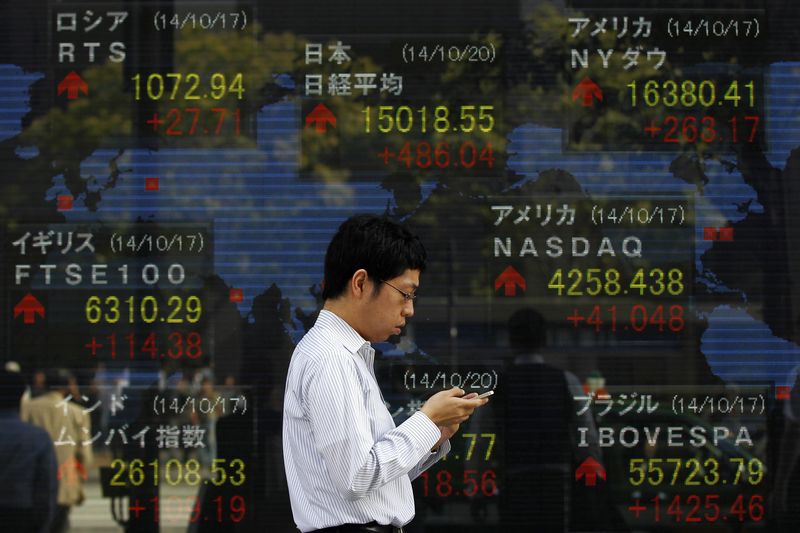
Iran called a Pakistan-brokered ceasefire 'unreasonable' and the Strait of Hormuz remains largely closed, keeping oil prices bid and geopolitical risk elevated. Asian markets slid: South Korea KOSPI -1.3%, Japan Nikkei -0.4% and TOPIX -0.6%, CSI 300 and Shanghai Composite ~-0.5%, Hang Seng -0.5% (Alibaba -3%), Singapore -0.3% and ASX 200 flat. The developments are driving a risk-off environment that could pressure oil-importing Asian economies (notably India) and sustain volatility until US-Iran talks in Pakistan clarify the ceasefire terms. Key monitors: oil flows through Hormuz and any concrete ceasefire terms from the upcoming meetings.
Winners are not limited to energy producers — owners of tanker capacity, maritime insurers, and trading houses that can flex sourcing (Japan/Korea/Singapore refiners that buy spot cargoes) will capture outsized near-term profit from rerouting and war-risk premia. Rerouting around the Strait of Hormuz or operating with war-risk cover increases voyage times and per-barrel landed cost by a material wedge (think +$0.5–$2.0/bbl in freight on standard crude flows), compressing Asian refinery margins while expanding cash flows to tanker owners and brokers.
The most important catalysts are binary and near-dated: Pakistan-mediated talks, visible AIS traffic recovery, or a rapid reduction in war-risk insurance premia can remove most of the current risk premium within days; conversely, a sustained partial closure for 2–8 weeks would push spot Brent materially higher and force longer-term rerouting (>3 months) that crystallizes structural freight inflation. Watchables that will move markets faster than headlines: Baltic Dirty index moves, war-risk premiums in Lloyd’s market, and satellite AIS throughput through Hormuz.
Constructive trade mechanics favor long exposure to freight owners and asymmetric option exposure to oil rather than naked long equities in Asia — Asian importers and regional cyclicals will underperform on both margin and FX stress. A nimble, option-heavy approach lets us capture a >2x payoff if shipping/Brent reprices while capping downside if diplomacy restores flows quickly.
Contrarian angle: consensus treats the shock as a prolonged supply disruption; history shows most oil risk premia collapse within 1–3 weeks of tangible transit normalization, producing sharp mean-reversion in both Brent and EM risk. Position sizing should therefore be asymmetric: meaningful optionality on the upside with tight timeboxes and clear triggers to cut exposure if maritime traffic or insurance spreads revert.
AI-powered research, real-time alerts, and portfolio analytics for institutional investors.
Request DemoOverall Sentiment
moderately negative
Sentiment Score
-0.40
