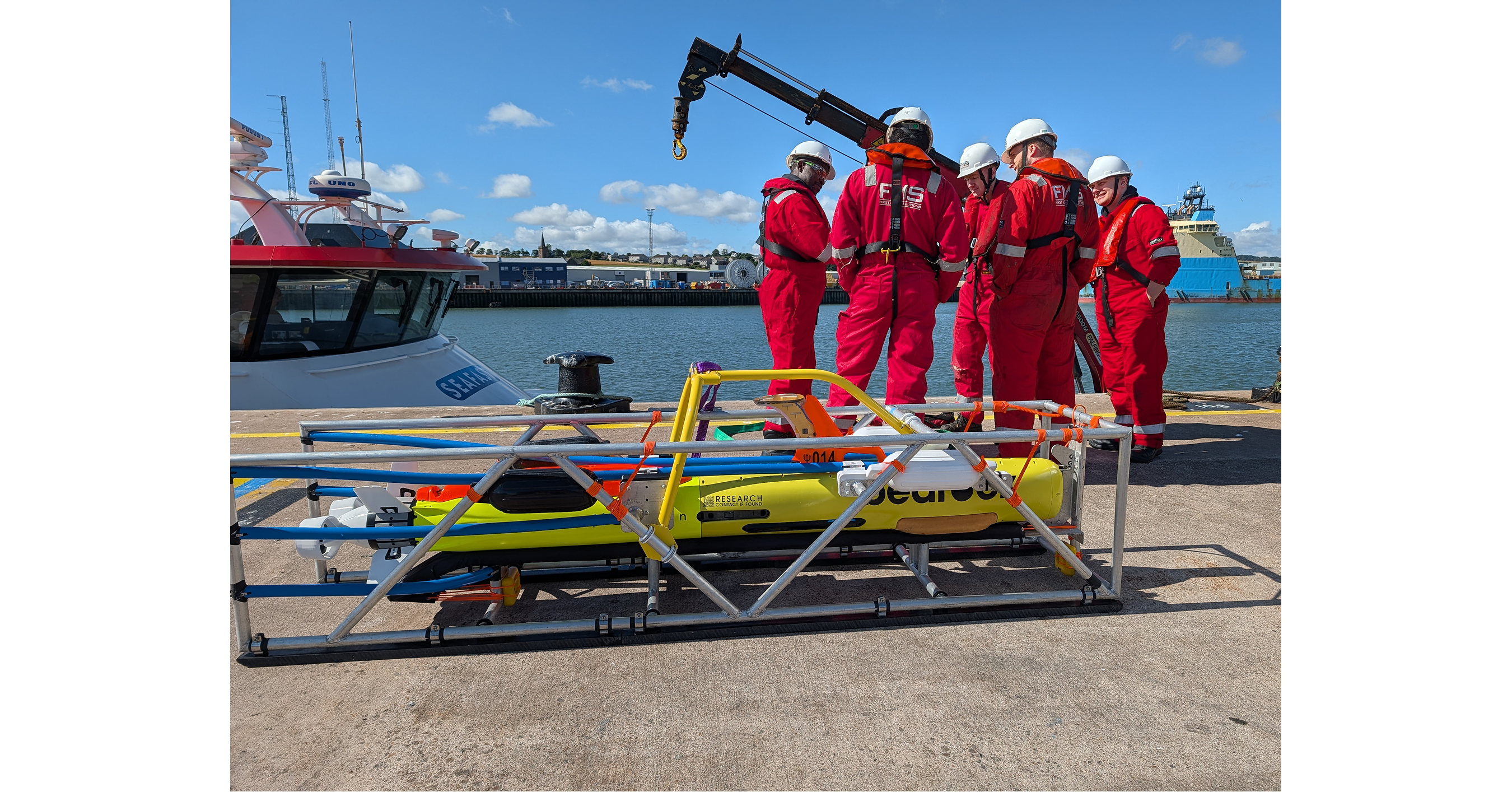
Bedrock Ocean Exploration kündigt eine mehrjährige strategische Partnerschaft mit First Marine Solutions (FMS) an: Bedrocks autonome Unterwasserfahrzeuge (AUVs) werden in der FMS-Niederlassung in Aberdeen stationiert, um die autonome Meeresüberwachung für UK/Europa zu unterstützen. Zielbild ist ein vertikal integriertes Angebot für Offshore-Energie und Unterwasserinfrastruktur mit lokalen Betriebs- und Wartungsleistungen (geringere Geräte-Rücksendungen in die USA) sowie schnelleren Einsätzen (Fly-and-Deploy: 24–72 Stunden). Insgesamt wirkt die Meldung wie ein kommerziell positives Rollout/skalierbares Service-Upgrade, dürfte aber kurzfristig eher begrenzten Kursimpuls liefern.
This is less a single-contract story than evidence that offshore surveying is moving from a vessel-and-personnel bottleneck to a software-and-autonomy workflow. The immediate winners are the suppliers that can monetize fewer ship-days and higher data throughput: subsea sensor/sonar vendors, autonomous systems integrators, and offshore service platforms with dense regional footprints. The second-order loser is the legacy survey model built around expensive mobilization, long lead times, and labor-heavy processing; if this operating model proves repeatable in the North Sea, it pressures pricing across Europe where customers are already cost-sensitive.
The near-term market impact is modest because this is private-company execution, not a public earnings reset. The real catalyst window is 1-3 quarters: watch for disclosed utilization rates, repeat bookings, and whether the partnership expands from monitoring into inspection/installation support, where the savings per project are larger and more defensible. Over 6-18 months, the strategic value is that Bedrock can turn a niche deployment into a regional network effect; if that happens, incumbents will need to either partner, acquire, or cut price, compressing margins across the survey stack.
Contrarian view: investors may overrate the “autonomy” headline and underappreciate operational friction. Offshore customers buy reliability, regulatory acceptance, and bad-weather performance, so a single partnership does not prove a step-change in adoption unless it translates into contract awards and measurable vessel-day substitution. Falsifiers are straightforward: no evidence of follow-on deployments, no improvement in turnaround times, or a failure to win work outside the initial hub. Until then, this reads as a credible commercial pilot, not a sector-wide inflection.
AI-powered research, real-time alerts, and portfolio analytics for institutional investors.
Request DemoOverall Sentiment
mildly positive
Sentiment Score
0.25
