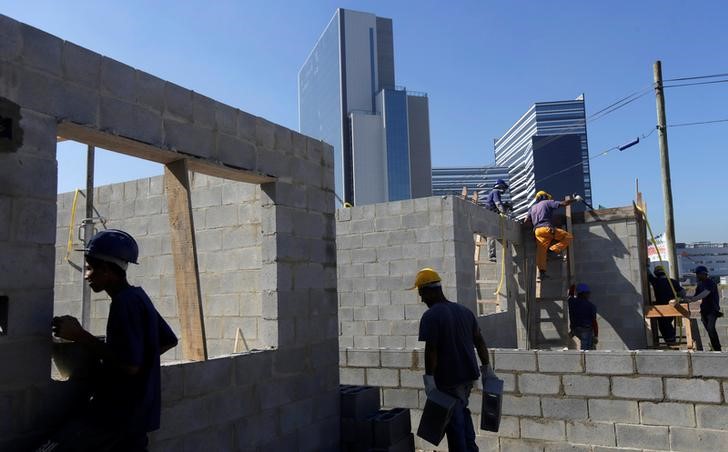
Bank of America downgraded Mohawk Industries to Neutral from Buy and cut its price target to $122 from $149, citing weak flooring demand, rising input costs, and macro headwinds in Europe. BofA also lowered 2026 and 2027 EPS forecasts by 4% and 3%, respectively, and expects most building products companies to report first-quarter earnings at the low end of guidance. The broader U.S. building products sector faces softer new construction, weak repair-and-remodel spending, and tariff-related cost pressure.
This is less a single-name downgrade than a margin-reset warning for the entire housing-adjacent complex. The important second-order effect is that pricing power is likely to fail before volumes stabilize: when end demand is soft and distributors are already cautious, price increases meant to defend gross margin can accelerate mix deterioration and promo intensity, especially in discretionary remodel categories. That creates a setup where EPS estimates can still drift lower even if management teams “hit” revenue guidance via pricing.
The clearest relative loser is Mohawk because flooring is an early-cycle, high-ticket discretionary purchase with limited urgency and long replacement deferrals; that makes it more exposed to a housing turnover slowdown than peers with more repair-driven or less cyclical revenue streams. Whirlpool and Masco face a similar but slightly different problem: appliance and fixture demand tends to lag housing starts and remodeling by several months, so earnings risk may look manageable into the next print but degrade through mid-2026 as channel inventory normalizes lower. Raw-material inflation and tariff noise add a nasty asymmetry: costs can re-accelerate before end-market demand recovers, compressing EBITDA even without a top-line miss.
The contrarian angle is that the market may still be underestimating how long this softness can persist if rates stay restrictive and existing-home turnover remains frozen. However, the consensus may also be overstating near-term downside because these names are now trading into a weaker backdrop with lower expectations; any stabilization in mortgage rates or a modest pickup in turnover can trigger sharp short-covering in the most hated names. The key is timing: the fundamental trough may be months away, but the stocks can bottom earlier if investors start pricing in a second-half 2026 recovery.
AI-powered research, real-time alerts, and portfolio analytics for institutional investors.
Request DemoOverall Sentiment
strongly negative
Sentiment Score
-0.52
Ticker Sentiment
