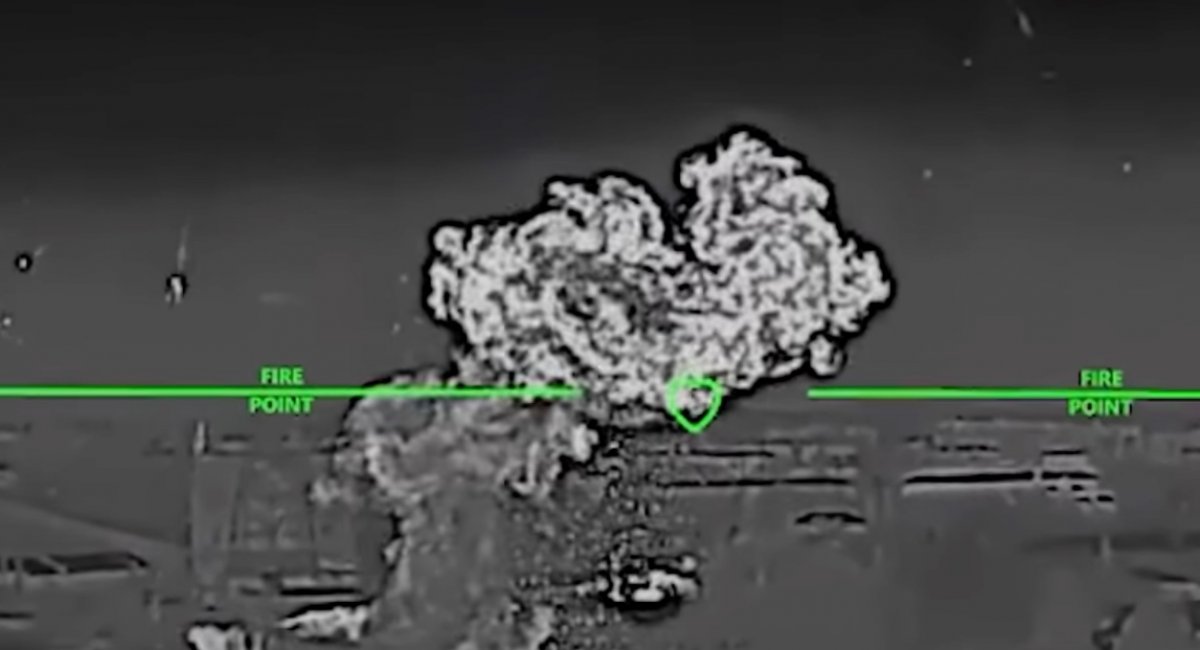
Ukraine said it conducted 11 drone strikes against a Russian special forces-linked facility in occupied Snizhne, reportedly killing 65 cadets and the center's commander. The target was described as a 2,484-square-meter complex used for drone assembly, warhead production, and housing personnel, with secondary explosions indicating ammunition storage was hit. The attack underscores continued escalation in the war and has potential implications for defense risk sentiment.
This is less about headline battlefield loss data and more about the degradation of Russia’s rear-area force generation. A strike that combines personnel attrition with destruction of a training/assembly node raises the cost of replenishment disproportionately: replacing trained specialists, workshop capacity, and stored munitions takes materially longer than replacing line infantry. The second-order effect is a widening gap between Russia’s ability to seize local tactical gains and its ability to regenerate coherent small-unit capability over the next 1-3 months.
The more important market implication is for the defense supply chain outside the front line. Drone warfare is migrating from a niche capability to a repeatable deep-strike architecture, which should keep demand elevated for EW, ISR, inertial navigation, thermal optics, small-motor components, and tactical UAV subsystems. That favors primes with counter-UAS exposure and mid-cap components suppliers more than traditional armor/artillery names, because the battlefield feedback loop is shortening and procurement will increasingly reward electronic survivability over platform mass.
The main tail risk is escalation in strike depth or retaliatory campaign intensity, which would increase headline volatility but is unlikely to reverse the underlying trend unless Ukraine’s strike capacity is meaningfully degraded. The counter-consensus is that these events are not one-off morale shocks; they are evidence of a production-disruption strategy that compounds over quarters. If that persists, expect higher attrition in Russian specialized units and more budget pressure on replacement equipment, but also a broader militarization of procurement across NATO as drone vulnerability becomes impossible to ignore.
Near term, the trade is not to chase broad geopolitics beta but to lean into beneficiaries of persistent drone/air-defense demand. The setup is more durable over 6-12 months than over days, because the catalyst is structural adaptation rather than a single escalation event.
AI-powered research, real-time alerts, and portfolio analytics for institutional investors.
Request DemoOverall Sentiment
moderately negative
Sentiment Score
-0.35
