

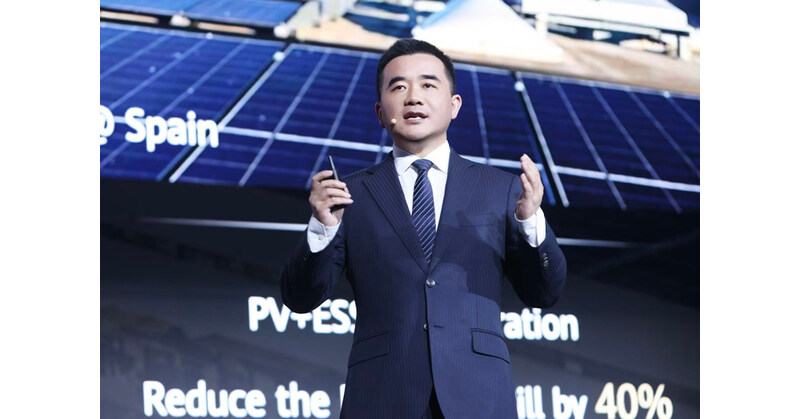
Huawei en The Smarter E 2026 presentó una estrategia de soluciones integradas (PV-BESS y funciones de “grid-forming” como black start, inercia y soporte de corriente de cortocircuito) para soportar una penetración renovable europea proyectada del 64% hacia 2030. En Alemania, una solución integral impulsó ingresos de un parque empresarial AHS un 10% en solo dos años, y en España la factura eléctrica de un supermercado Carrefour se redujo casi un 40% con un payback de ~5 años. La compañía además anunció el cambio de marca de su sistema LUNA a LUTERRA y posicionó la plataforma para diversificar modelos de negocio de BESS.
This is less a Huawei story than a pricing signal for the next procurement cycle: grid-forming capability is moving from “nice-to-have” to a spec that can win utility, C&I, and microgrid awards. That shifts value from standalone PV hardware toward integrated controls, EMS software, and balance-of-system vendors that can certify black-start/inertia services; pure-play inverter economics are at risk of margin compression as the feature set commoditizes.
The immediate market impact should be small because the reference vendor is private and European buyers will still demand bankable, non-geopolitically sensitive suppliers for critical infrastructure. The real catalyst is 1-3 months out, when grid-code language and tender language start to embed ancillary-services requirements; the 6-18 month effect is a re-rating of firms with exposure to utility storage, switchgear, and power electronics, plus a slower burn-down in gas peaker utilization and synchronous generation utilization.
Contrarian view: the market may be overestimating how quickly demo economics translate into scaled, financeable deployments. Bankability, cybersecurity review, and local-content politics can delay adoption even when the tech is ready. Falsifiers are simple: if European tenders keep clearing without grid-forming premiums, or if policy/procurement barriers keep Chinese equipment out of critical nodes, the thesis becomes a narrative rather than an earnings driver.
AI-powered research, real-time alerts, and portfolio analytics for institutional investors.
Overall Sentiment
mildly positive
Sentiment Score
0.25
Ticker Sentiment
