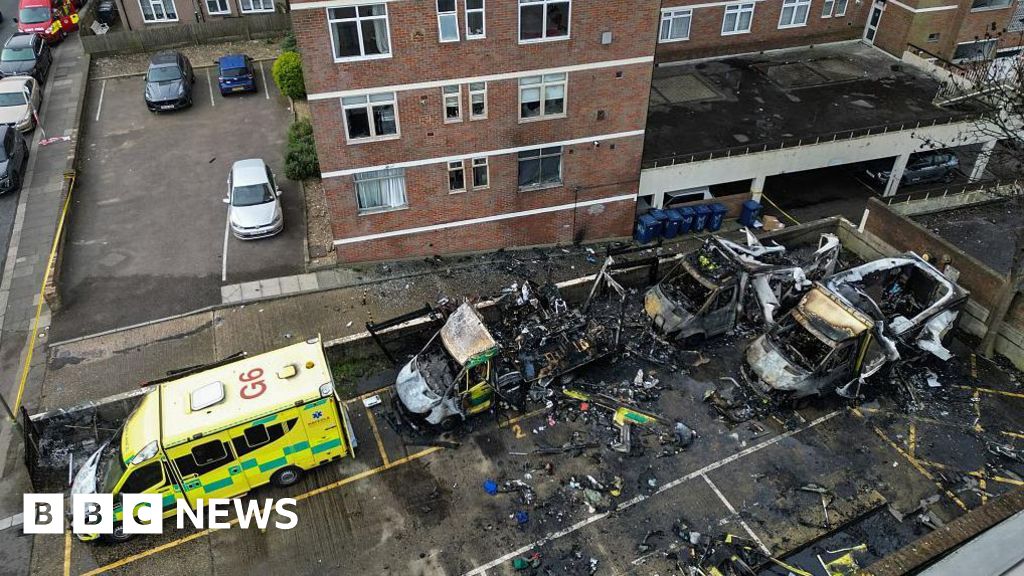
Police are investigating three suspected arson-related incidents in north London, including an attempted attack on Volant Media offices, a synagogue in Finchley, and four ambulances belonging to a Jewish charity. Three people were arrested over the Park Royal incident, while two additional arrests were made in connection with the Golders Green ambulance attack, bringing total arrests to eight and charges to three. The events have not been declared terrorism at this stage, but Counter Terrorism Policing is leading the probe amid concerns about foreign-linked actors and antisemitic motivation.
The immediate market read is not “event risk” so much as a repricing of security externalities around politically exposed soft targets in major European cities. That tends to create a modest but durable bid for private security, alarm monitoring, and perimeter-control vendors, while pressuring operators with dense public-facing footprints to spend more on guards, access systems, and insurance deductibles. The second-order effect is on operating leverage: even a small increase in security opex is meaningful for charities, media groups, and small venues because it is non-discretionary and recurring.
The more important cross-asset implication is for insurers and reinsurers with UK/Europe commercial property and liability exposure. If these incidents are treated as copycat risk rather than isolated crime, underwriters will likely tighten terms at renewal within 1–2 quarters, which means higher premiums, lower limits, and more exclusions for arson, civil unrest, and politically motivated damage. That creates a lagged margin headwind for regional carriers and a potential tailwind for global brokers that can reprice and place more complex risk faster.
From a geopolitical lens, the messaging that foreign actors may be recruiting low-level proxies is the real catalyst. That expands the threat surface well beyond the current locations, and the main risk is not one-off damage but a sustained campaign that forces institutions to alter staffing, transit, and event protocols over months. The contrarian point: if authorities move quickly and the arrests are publicized effectively, the probability of escalation may fall sharply, making the market overpay for a broad “London security premium” after the first few headlines.
AI-powered research, real-time alerts, and portfolio analytics for institutional investors.
Request DemoOverall Sentiment
moderately negative
Sentiment Score
-0.35
