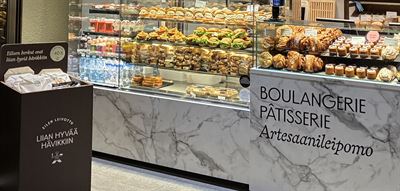
Fazer’s Gateau artisan bakeries have launched “Too Good for Food Loss” points across all bakery shops in Finland and Sweden, offering previous-day breads and buns at a 40% discount and rolling out a new Feel Good Boston Bun made from cinnamon roll ends. The move supports Fazer’s sustainability targets—food loss was reduced 13% versus 2020 with a goal to halve loss by 2030—while complementing production planning and donation practices; Fazer Group reported net sales of approximately €1,200 million in 2024.
Market structure: Fazer’s retail rollout rewards DTC artisan bakeries, surplus-resale platforms and large CPGs that can scale re‑used-product SKUs — winners are Nordic consumer staples/retailers that monetize day‑old stock and digital marketplace partners; losers are low‑margin foodservice/delivery models that rely on full‑price turnover. Pricing power shift is modest (40% markdowns on tails only) but increases SKU velocity and shelf differentiation; expect localized revenue mix shifts of +1–3% sales share to surplus channels within 6–12 months for proactive retailers. Risk assessment: tail risks include food‑safety/ reputational incidents from discounted products, or regulatory constraints on discounted labelling (low probability, high impact) that could force recalls and margin hits; immediate operational risks (days–weeks) are spoilage logistics, medium term (months) is supplier renegotiation pressure, long term (years) is brand erosion if discounting becomes permanent. Hidden dependencies: NGOs/charity networks and digital partners (ResQ/Too Good To Go) creating channel concentration risk; EU food‑waste regulation or subsidy changes are key catalysts within 3–18 months. Trade implications: prioritize European consumer staples and Nordic branded food plays that can commercialize surplus (Orkla ORK.OL, Nestlé NESN.SW, Unilever ULVR.L) and reduce discretionary exposure to food‑delivery/contract catering (Compass CPG.L, Delivery Hero DHER.DE). Use 3–12 month horizons: prefer modest longs (1–2% portfolio) in ORK.OL/NESN.SW, pair short CPG.L over 3–9 months, and use call spreads on ORK.OL to lever upside with defined risk. Contrarian angles: consensus will underweight long‑run margin benefit from waste reduction (expect 50–200 bps gross margin tailwind for efficient operators over 2–3 years) and overestimate commodity demand impact (waste cuts are micro, not macro). Beware that normalized discounting could commoditize premium bakeries and erase incremental gains; monitor sell‑through rates and charity donation volumes as early signals of durable benefit vs. one‑off PR wins.
AI-powered research, real-time alerts, and portfolio analytics for institutional investors.
Request DemoOverall Sentiment
mildly positive
Sentiment Score
0.30
