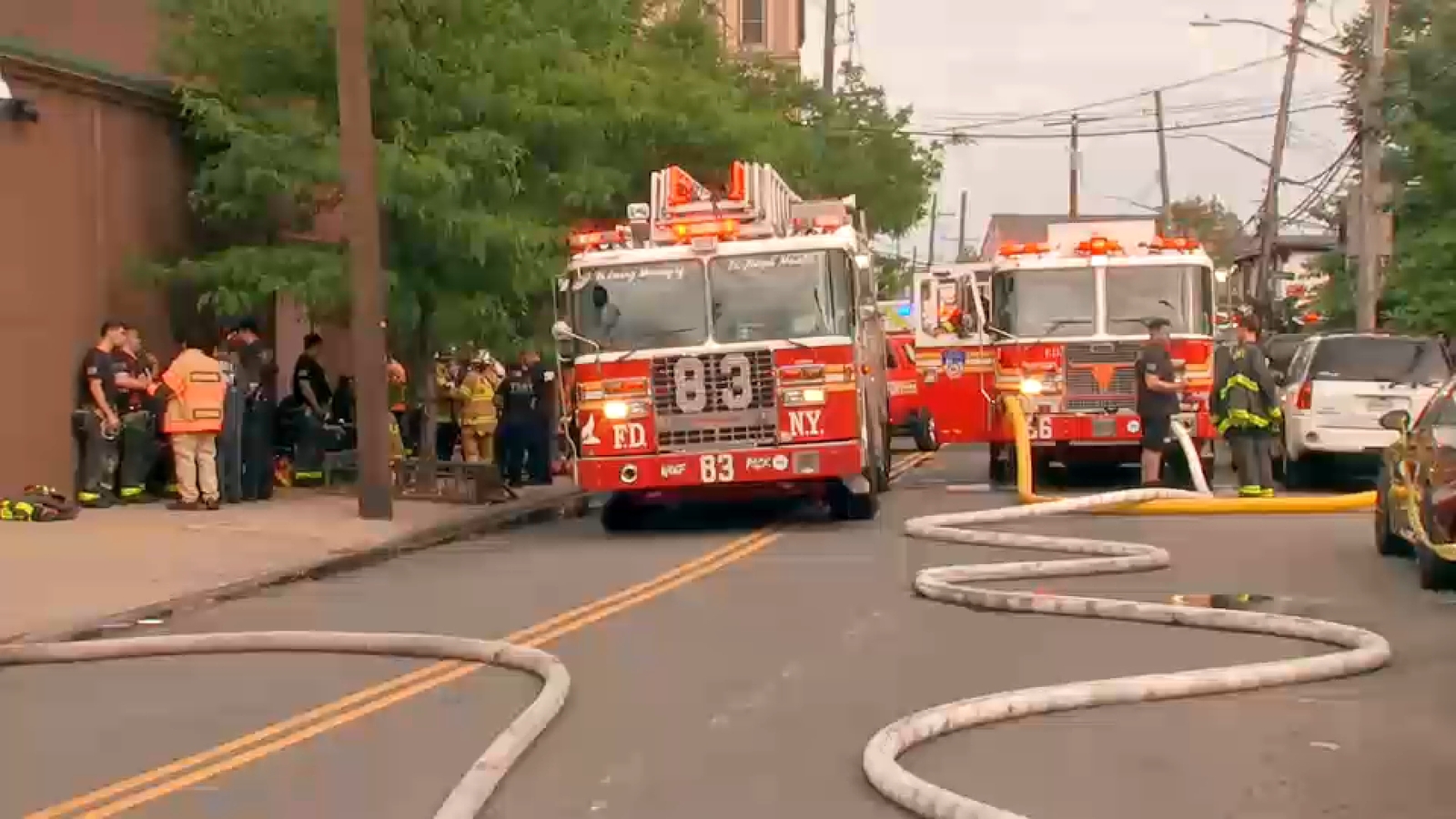
An explosion and fire at a Staten Island shipyard killed 1 person and injured 35 others, including firefighters, with one FDNY Fire Marshal in critical condition and another firefighter in serious condition. The incident involved workers in a confined space near a dry dock, and the cause has not yet been determined. While this is a major local emergency with potential operational and legal implications, it is unlikely to have broad market impact.
This is a localized but high-signal shock for industrial safety liability, marine services, and municipal response costs rather than a broad macro event. The first-order earnings hit is likely minimal for listed equities, but the second-order effect is a sharp repricing of risk around confined-space work, hot-work permits, and dry-dock operational protocols across any contractor touching ports, ship repair, tank cleaning, or hazardous maintenance. Expect insurers, surety providers, and municipal contractors to face elevated scrutiny on claims history and subcontractor oversight for the next several quarters.
The bigger market consequence is in litigation and regulatory follow-through. When an incident includes fatalities, multiple firefighter injuries, and a possible missing worker, the tail risk is not the repair bill; it is discovery-driven litigation, OSHA remediation, and class/third-party claims that can extend 12-24 months. That tends to hit smaller private operators harder, but the listed spillover is through higher renewal pricing, tighter exclusions, and delayed project awards in ports, shipyards, and adjacent infrastructure work.
A less obvious effect is on operational throughput in regional logistics. Any temporary shutdown, inspection regime, or permit tightening at nearby marine facilities can bottleneck vessel turnaround and maintenance schedules, which may modestly benefit alternative yards and specialists with cleaner safety records. If this becomes a pattern rather than an isolated incident, procurement teams will bias toward larger operators with stronger compliance infrastructure, even at higher cost, which can widen share for scaled industrial services platforms.
The contrarian view is that the move may be over-scoped if investors extrapolate a single accident into systemic marine-industry risk. Unless there is evidence of repeated control failures, the public-equity impact should fade quickly outside the insurance and legal channels. The key catalyst to watch over the next 2-6 weeks is whether investigators identify a broader class of violations; that would convert this from a one-off safety event into a multi-quarter margin and reputation issue for the relevant service ecosystem.
AI-powered research, real-time alerts, and portfolio analytics for institutional investors.
Request DemoOverall Sentiment
strongly negative
Sentiment Score
-0.75
