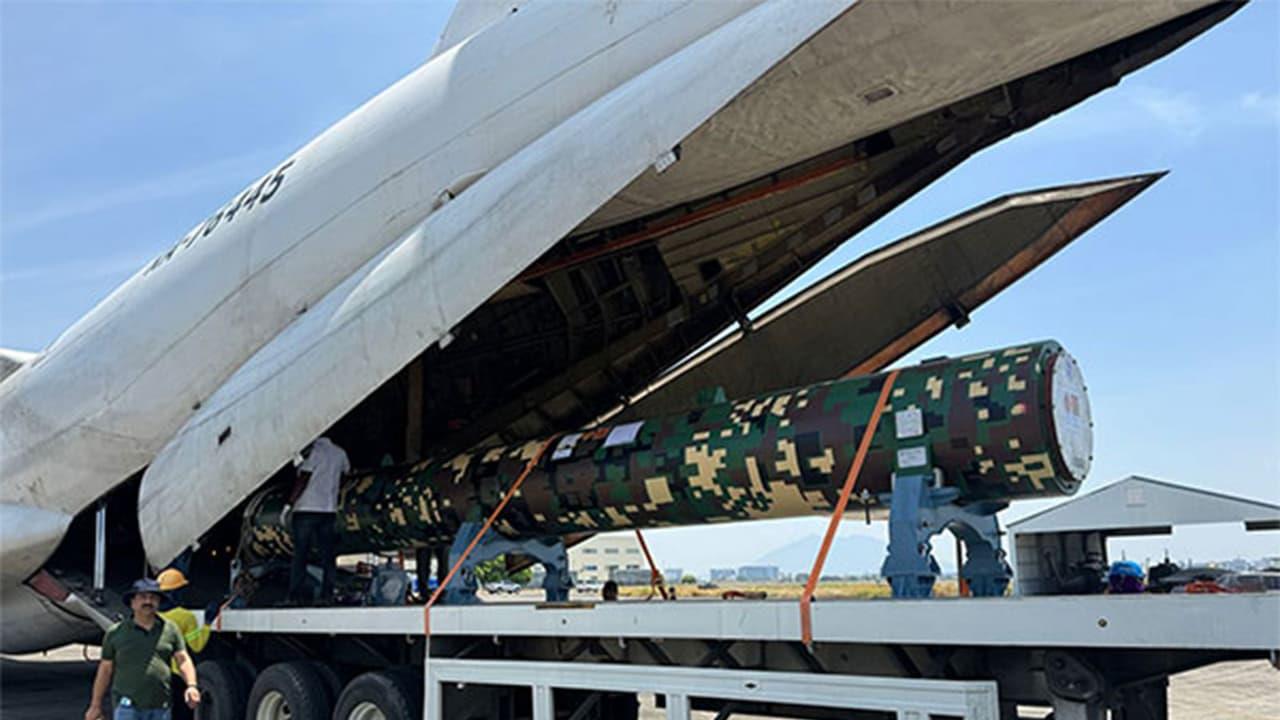
The Philippines will use its BrahMos cruise missile in a simulated maritime strike during Balikatan 2026, highlighting expanded joint drills with the United States and a stronger coastal defense posture. China criticized the exercises, warning that increased military activity could fuel division and confrontation in the Asia-Pacific. The article is geopolitically significant but likely limited in direct market impact.
This is less a single-event headline than a visible step-up in regional deterrence signaling, which tends to matter because defense procurement and joint-exercise intensity often move in fits and starts before budgets do. The immediate beneficiary is not the missile itself so much as the broader ecosystem: Asian prime contractors, command-and-control suppliers, ISR, EW, and maritime surveillance vendors that get pulled into follow-on procurement once a buyer demonstrates operational credibility. The second-order effect is that exercises like this can accelerate multiyear spending commitments even if headline tensions cool, because militaries rarely scale back after they publicly validate a high-end system.
The market is likely underestimating how much this raises the probability of incremental spend in the Philippines and adjacent ASEAN states over the next 6-18 months. If Manila leans harder into anti-access/area denial, the downstream winners are those selling coastal radars, data links, air defense, and unmanned maritime systems; the losers are any platform exposed to denial bubbles, especially legacy amphibious and low-signature commercial shipping assets operating near contested waters. There is also a procurement spillover to allies: joint interoperability usually creates common standards that favor U.S.-aligned suppliers over cheaper regional alternatives.
The contrarian view is that this may be more theater than escalation: constructive firing drills can be a signaling mechanism that actually lowers the risk of miscalculation by making capabilities more legible. That said, the tail risk is a Chinese response that is asymmetrical rather than kinetic—more coast guard activity, economic pressure, or cyber disruption—which would be more relevant to markets than overt military moves. The time horizon for that risk is days to weeks around the exercise, while the spend impulse is a months-to-years story. If regional rhetoric keeps hardening, expect defense budgets to prove sticky even if no shots are fired.
AI-powered research, real-time alerts, and portfolio analytics for institutional investors.
Request DemoOverall Sentiment
mildly negative
Sentiment Score
-0.15
