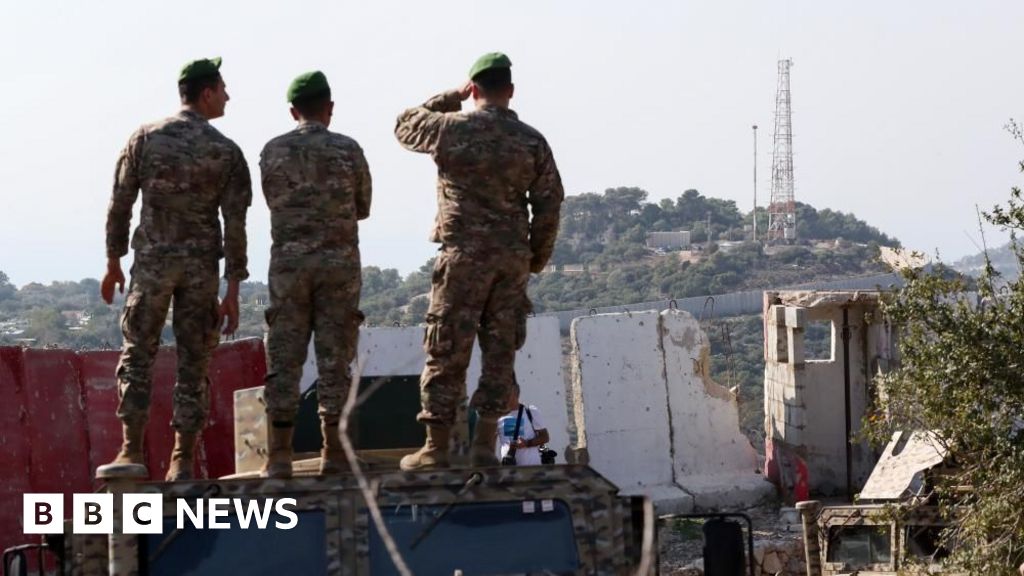
The Lebanese army announced it has taken over security in the south up to the Litani River as the first phase of a government plan to clear non-state weapons, saying the objective was achieved while noting remaining work on unexploded ordnance and tunnels. The move follows intense US pressure to disarm Hezbollah after the 2024 ceasefire; Israel and the US warn Hezbollah may be rearming, while the UN reports no clear evidence of reconstruction of its infrastructure in areas it monitors. The next phase targets the area between the Litani and Awali (including Sidon), but funding shortfalls for the cash-strapped army and Hezbollah’s refusal to disarm north of the Litani leave a risk of escalation and uncertainty for reconstruction aid flows conditioned on action against the group.
Market structure: Near-term winners are defense and surveillance suppliers (Elbit Systems ESLT, Lockheed LMT, RTX) and energy/precious-metals safe havens (WTI, GLD) as risk premium in Levant rises; losers are Lebanese sovereign debt, regional banks and EM credit (EMB) as spreads widen. Competitive dynamics favor suppliers of precision munitions/ISR systems — expect order lead times and margins to rise 6–12 months if Israeli-Hezbollah skirmishing persists. Cross-asset: expect USD and UST front-end flows, ILS volatility, +2–5% oil shock and +2–4% gold lift in an escalation scenario; Lebanese spreads can gap wider by +200–600bps on bad news.
Risk assessment: Tail risks include full-scale Israel–Hezbollah war (10–15% probability next 6 months) and Iranian escalation (5–10%), both market-moving. Immediate (days): volatility spike and safe-haven flows; short-term (weeks–months): donor funding decisions and UNIFIL reports will determine Lebanese army capability; long-term (quarters–years): structural reduction in Hezbollah influence if sustained funding/disarmament occurs. Hidden dependencies: Western donor funding (size/conditionality), Iran’s logistics, and UNIFIL verification cadence; catalysts include UNIFIL monthly findings and any US funding approval within 30–90 days.
Trade implications: Tactical longs (2–3% NAV) in ESLT and 1–2% NAV split between LMT/RTX; hedge by reducing EM sovereign exposure (sell 3% NAV EMB) and buy 3-month WTI 5% OTM call spreads (0.5–1% NAV) and 3-month GLD 25-delta calls (1% NAV) for asymmetry. Options: implement 3-month 15% OTM call spreads on ESLT sized 1–2% NAV to limit capital while capturing volatility; rotate +200–300bps into defense/energy and cut EM credit by 300bps. Enter within 1–7 trading days; target exit or re-evaluation at 3–6 months or upon decisive UNIFIL/US funding signals.
Contrarian angles: Consensus assumes protracted violent stalemate; markets underprice a peace-plus-disarmament path that could unlock reconstruction funding (> $500m commitments) and re-rate Israeli and regional contractors — a 60–120 day window could produce outsized returns for EIS (iShares MSCI Israel) and select construction names. Conversely, defense equities often overshoot on headline spikes; consider selling 30–60 day volatility 4–6 weeks after initial rallies if no kinetic escalation. Historical parallel: post-2006 Lebanon showed reconstruction funding can compress risk premia within 6–18 months if donor conditions are met.
AI-powered research, real-time alerts, and portfolio analytics for institutional investors.
Request DemoOverall Sentiment
moderately negative
Sentiment Score
-0.45
