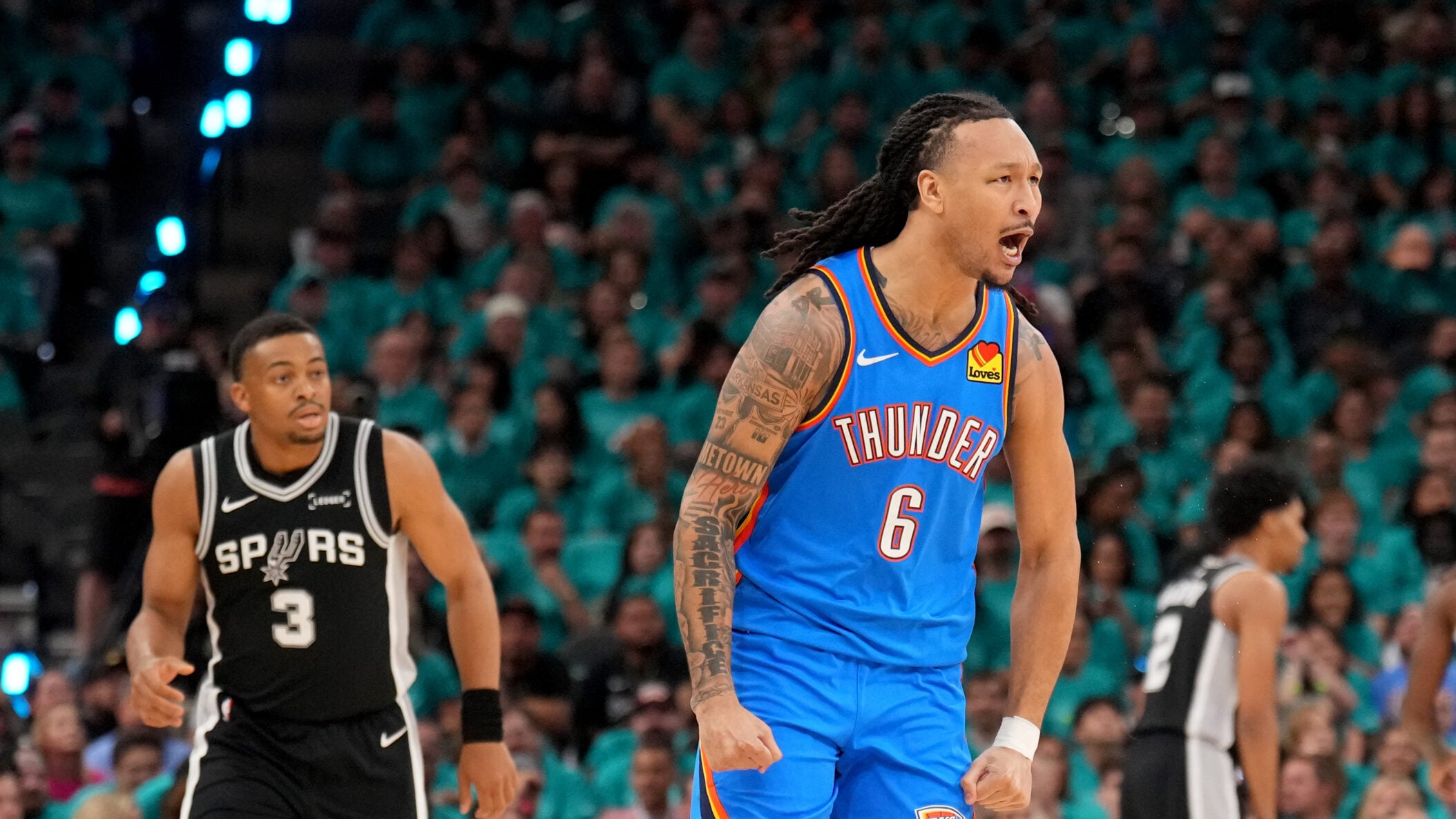
The Oklahoma City Thunder beat the San Antonio Spurs 123-108 in Game 3 to take a 2-1 series lead, powered by a 76-23 edge from the bench and 33 assists from Shai Gilgeous-Alexander across the series. Gilgeous-Alexander finished with 26 points and 12 assists despite 6-for-17 shooting, while Jaylin Williams (18 points) and Jared McCain (24 points) provided key reserve scoring. The result is positive for Oklahoma City but remains a routine playoff update with limited market impact.
This series is starting to look less like a tight playoff contest and more like a market test of depth versus star concentration. Oklahoma City’s ability to win minutes without its top starters on the floor creates a compounding edge: it protects against foul trouble, injury volatility, and adverse matchup adjustments, which matters more in a short series than raw top-end talent. The second-order effect is that San Antonio is being forced to lean harder on high-usage primary creators, increasing turnover and fatigue risk as the series extends.
The key operational signal is not Gilgeous-Alexander’s scoring efficiency; it is his ability to function as a pressure-release valve when defenses load up. That makes the Thunder less vulnerable to single-game shooting variance and raises their floor for the next 1-2 games, especially if the opponent continues to gamble with aggressive help. On the other side, the injury stack is now a structural issue rather than a headline issue: every additional compromised minute from Fox or Jalen Williams meaningfully shifts rotation quality and late-game execution, which is exactly where close playoff outcomes are decided.
The consensus may still be underestimating how quickly this can tilt if the Spurs fail to regain possession security. A reduction from catastrophic turnover rates to merely average is not enough if it comes at the cost of defensive discipline or if Fox is operating below full mobility. The more interesting contrarian angle is that the Thunder’s bench dominance is likely the more durable edge than their star shot-making, so any market assuming regression toward normal playoff rotation splits may be too slow to price in the structural roster imbalance.
AI-powered research, real-time alerts, and portfolio analytics for institutional investors.
Overall Sentiment
mildly positive
Sentiment Score
0.15
