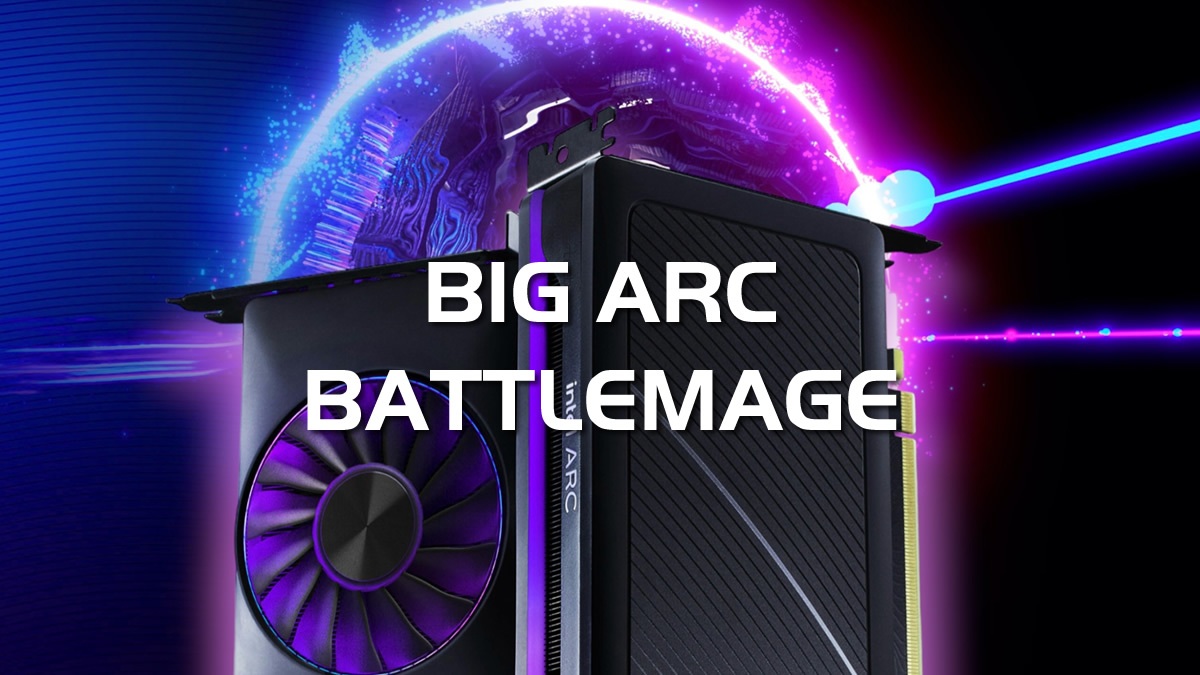
Intel has added support for the BMG-G31 “Big Battlemage” GPU to its VTune Profiler, effectively confirming the existence of a substantially larger ARC GPU that is reportedly ~60% bigger than the BMG-G21 (ARC B580). Leaked/spec details indicate a 256-bit memory bus, 16 GB GDDR6 and PCIe 5.0 support, with a potential public reveal at CES 2026 alongside Panther Lake CPUs; however, rising memory prices and the possibility of a Pro-focused launch could constrain consumer pricing and determine competitive dynamics with AMD and Nvidia.
Market structure: Intel (INTC) is the direct beneficiary — a BMG-G31 launch shifts mid-range GPU economics and gives Intel pricing power if performance lands near AMD/NVDA at launch. Memory suppliers (MU, SWKS) are indirect winners as GDDR6 demand and reported price pressure (market reports show GDDR6 up ~10–25% YTD) raise BOMs for all players and compress consumer ASP elasticity. AMD (AMD) and NVIDIA (NVDA) face mid-range margin pressure and possible share loss; incumbents can defend via OEM bundles or temporary price cuts that compress mid-cycle ASPs by an estimated 5–15% versus baseline.
Risk assessment: Tail risks include driver/firmware failures, yield issues at Intel fabs, and a consumer PR flop that forces Intel to retreat to Pro-only SKUs — each could trigger >20% downside to any pre-launch equity pop. Time horizons: immediate (days) — negligible; short-term (weeks–6 months) — rumor-driven volatility and option IV spikes; long-term (12–36 months) — actual share gains hinge on sustained performance/watt and prices vs. NVDA/AMD roadmaps. Hidden dependencies: memory contract renewals, TSMC/TSMC-equivalent capacity for dies, and channel inventory levels can flip margins quickly. Key catalysts: CES 2026 reveal, Intel earnings, AMD/NVDA counter-launchs, and quarterly GDDR6 spot-price prints.
Trade implications: Direct: establish a tactical long-INQC-sized position in INTC (2–3% portfolio) and hedge product execution risk with Jan 2027 LEAP calls (20% OTM) to asymmetrically capture upside into CES 2026. Pair: long INTC vs short AMD equal-dollar (1–2% each) to play relative mid-range share capture; unwind on clear benchmark reviews or if AMD announces >10% price cuts. Commodities play: buy MU (1–2%) or MU Mar 2026 call spread to capture GDDR6 tailwinds; exit if GDDR6 spot falls >15% MoM.
Contrarian angles: Consensus underestimates execution complexity and margin erosion from rising memory — the market may be over-exuberant pricing Intel as an immediate mid/high-end threat; a disappointingly high MSRP or Pro-only launch would compress short-term upside by >30%. Conversely, the market may underprice the strategic value of ARC entering Pro GPUs (higher ASPs); if Intel nails drivers and supply, INTC could sustainably gain 3–5ppt share in mid-range GPUs over 24 months. Monitor OEM channel bookings, driver release cadence, and weekly GDDR6 spot indexes as early detectors of outcome.
AI-powered research, real-time alerts, and portfolio analytics for institutional investors.
Request DemoOverall Sentiment
mildly positive
Sentiment Score
0.25
Ticker Sentiment
