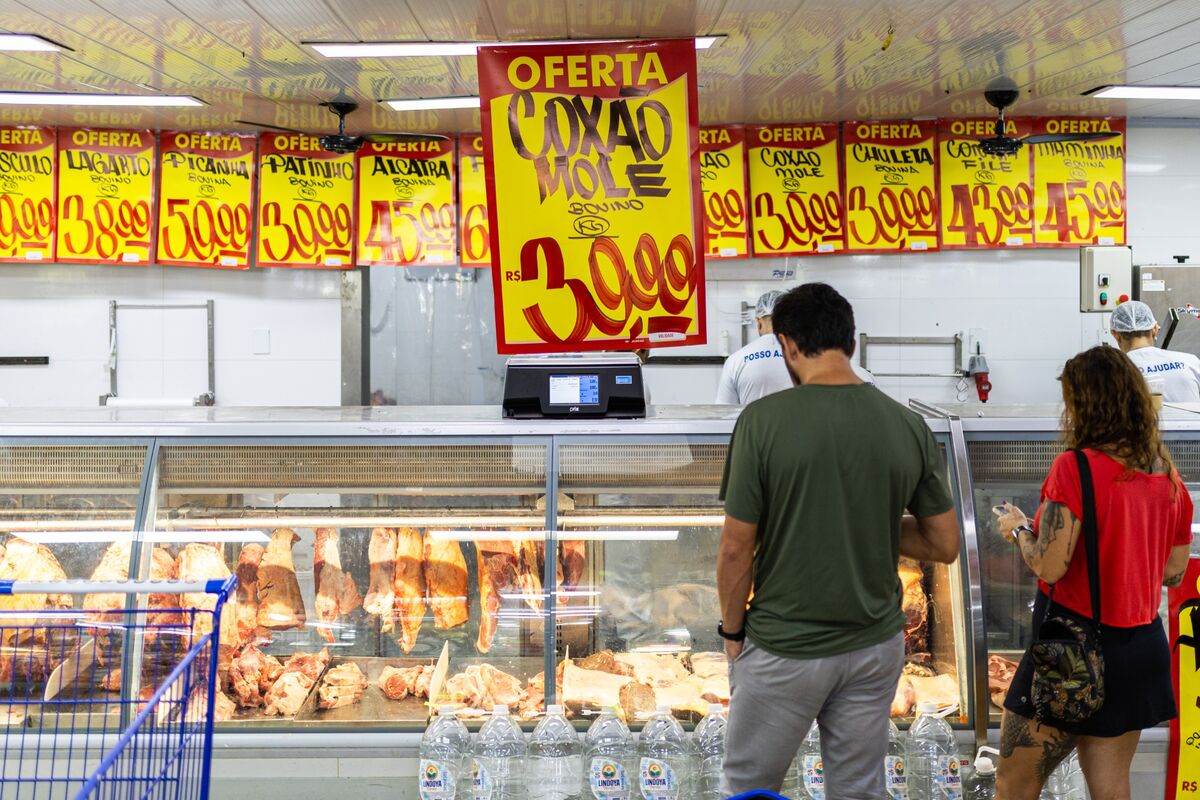
Shrinkflation is spreading across Brazilian supermarkets as package sizes fall while prices stay flat or rise, highlighting worsening affordability and food inflation ahead of the election. The article frames this as a political risk for President Luiz Inacio Lula da Silva six months before the vote, with consumer pressure likely to weigh on sentiment in Brazil's largest economy.
Shrinkflation is usually a late-cycle symptom, but in Brazil it is especially dangerous because it turns a macro problem into a visible household grievance. That matters for markets: when voters feel nominal prices are stable but real basket value is deteriorating, inflation expectations become less anchored and politicians lean harder on administrative fixes, which can distort pricing power across staples, food retail, and consumer brands. The immediate losers are low-income consumers and any domestic retailer or packaged-goods company with weak brand equity, since volume can hold up briefly while mix and margin quality silently deteriorate. The second-order effect is that shrinkflation often masks demand destruction rather than solving it. If households trade down, manufacturers can defend headline prices for a few quarters, but the eventual clearing mechanism is lower throughput, weaker replenishment cycles, and more aggressive promo activity — especially in categories where private label can substitute. Importantly, food inflation six months before an election raises the odds of policy intervention, which can compress margins for producers and importers through tax tweaks, price controls, or pressure on state-linked distribution channels. The political setup is the main catalyst risk: this is not a clean inflation trade, it is a policy-risk trade with a months-long horizon. If crop conditions improve, the currency stabilizes, or the government leans on food import relief, the narrative can reverse quickly; if not, affordability becomes a campaign issue and volatility in domestic cyclicals should rise into the vote. The market may be underpricing how fast consumer sentiment can roll over once shrinkflation becomes a mainstream issue rather than a supermarket anecdote. Contrarian view: consensus may be too focused on headline inflation and not enough on composition. If food inflation is concentrated in a few categories, broad consumer demand may be less fragile than it looks, which would argue against shorting the entire domestic consumption complex outright. The better expression is relative value: short the weakest pricing-power names and own businesses with category essentials, export exposure, or dollar-linked costs that benefit from domestic pricing pressure.
AI-powered research, real-time alerts, and portfolio analytics for institutional investors.
Request DemoOverall Sentiment
moderately negative
Sentiment Score
-0.35
