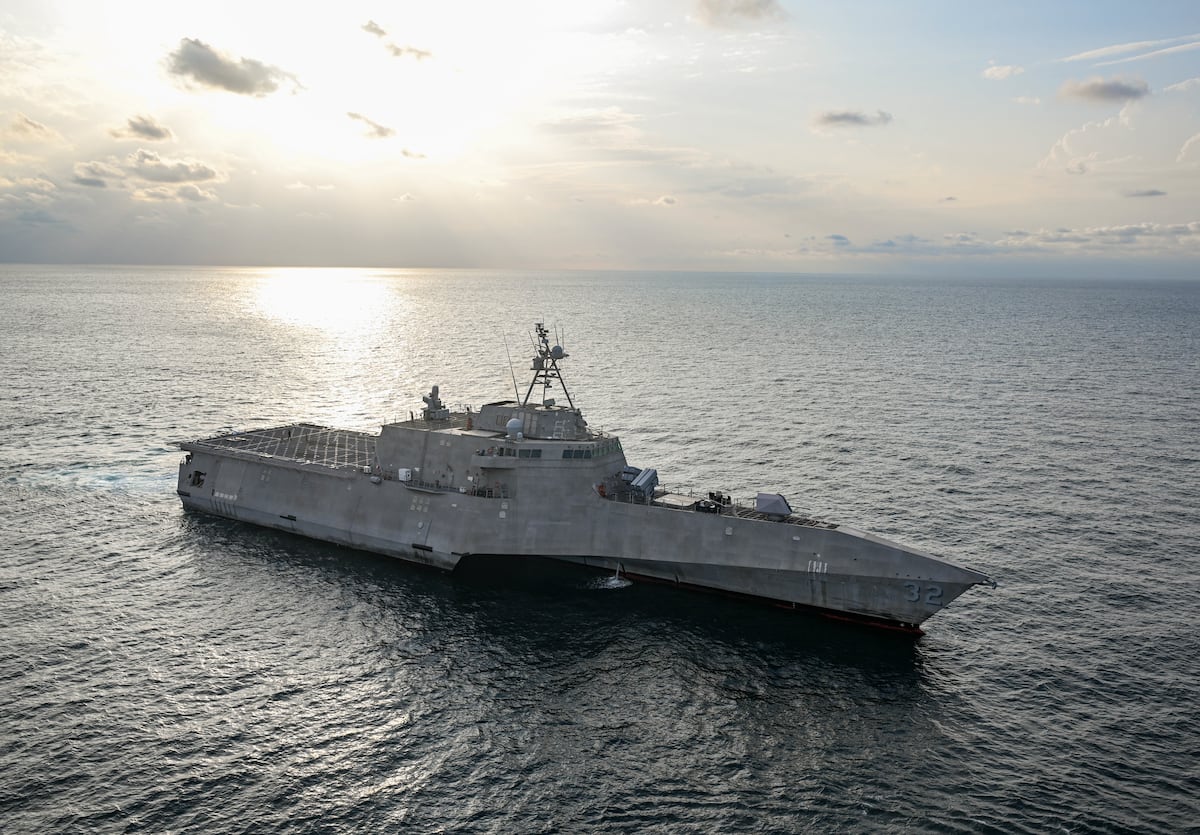
The U.S. Navy conducted the first sea-based launch of a one-way Low-cost Unmanned Combat Attack System (LUCAS) suicide drone from the flight deck of the USS Santa Barbara in the Arabian Gulf, executed by Task Force 59 and part of CENTCOM’s Task Force Scorpion Strike. LUCAS, produced by U.S. firm SpektreWorks and derived from the Iranian Shahed design, is intended to enable low-cost, swarming autonomous strike capability from multiple launch platforms and is being positioned as a regional deterrent. The deployment signals accelerating integration of autonomous lethal systems into naval operations and may incrementally influence defense procurement and regional security dynamics.
Market structure: The Navy’s sea-launch of a low-cost suicide drone accelerates demand for “attritable” unmanned systems and modular ship integration. Direct winners are small-cap drone manufacturers and sensor/EO suppliers (Kratos KTOS, AeroVironment AVAV, Teledyne TDY) and ship integrators (Austal ASB.AX) while traditional high-cost manned strike suppliers face pricing pressure and potential share loss in littoral strike missions. Commoditization will push down per-unit prices but increase volume, compressing margins for incumbents and raising aftermarket/ISR and counter‑UAS service demand.
Risk assessment: Tail risks include rapid regional escalation (oil shock: +5–15% in 1–3 months) or a policy clampdown on autonomous “killer” systems (export/regulatory bans within 12–36 months) that could freeze procurement. Immediate market moves will be headline-driven (days); contract award cadence matters in 3–9 months; structural budgetary shifts play out over 2–5 years. Hidden dependencies — semiconductor supply, shipboard integration standards, and rules-of-engagement/legal constraints — are critical failure points.
Trade implications: Favor concentrated, risk‑managed exposure to pure‑play drone and sensor names: tactical long positions in KTOS and AVAV sized 1–3% each, plus TDY for sensor exposure; hedge with EW/COUNTER‑UAV longs (LHX) to capture defensive spend. Use 9–12 month call spreads (buy 30–50% OTM, sell 60–80% OTM) to cap premium; establish stop-loss at -35% and take-profit at +30–50%. Rotate into defense ETF XAR (overweight by +3% tactical) if headlines push sector down >8% intraday.
Contrarian angles: The market may over‑discount integration, sustainment and ROE frictions — procurement may lag press cycles by 6–18 months, creating pullbacks in small-cap drone names. Historical parallel: early Predator/MQ timelines show revenue levers often take 3–7 years; expect volatility and false starts. Unintended consequence: rapid proliferation expands counter‑UAS market (benefitting LHX, RTX segments) — prefer hedged, options‑based exposure rather than large outright long positions.
AI-powered research, real-time alerts, and portfolio analytics for institutional investors.
Request DemoOverall Sentiment
neutral
Sentiment Score
0.00
