






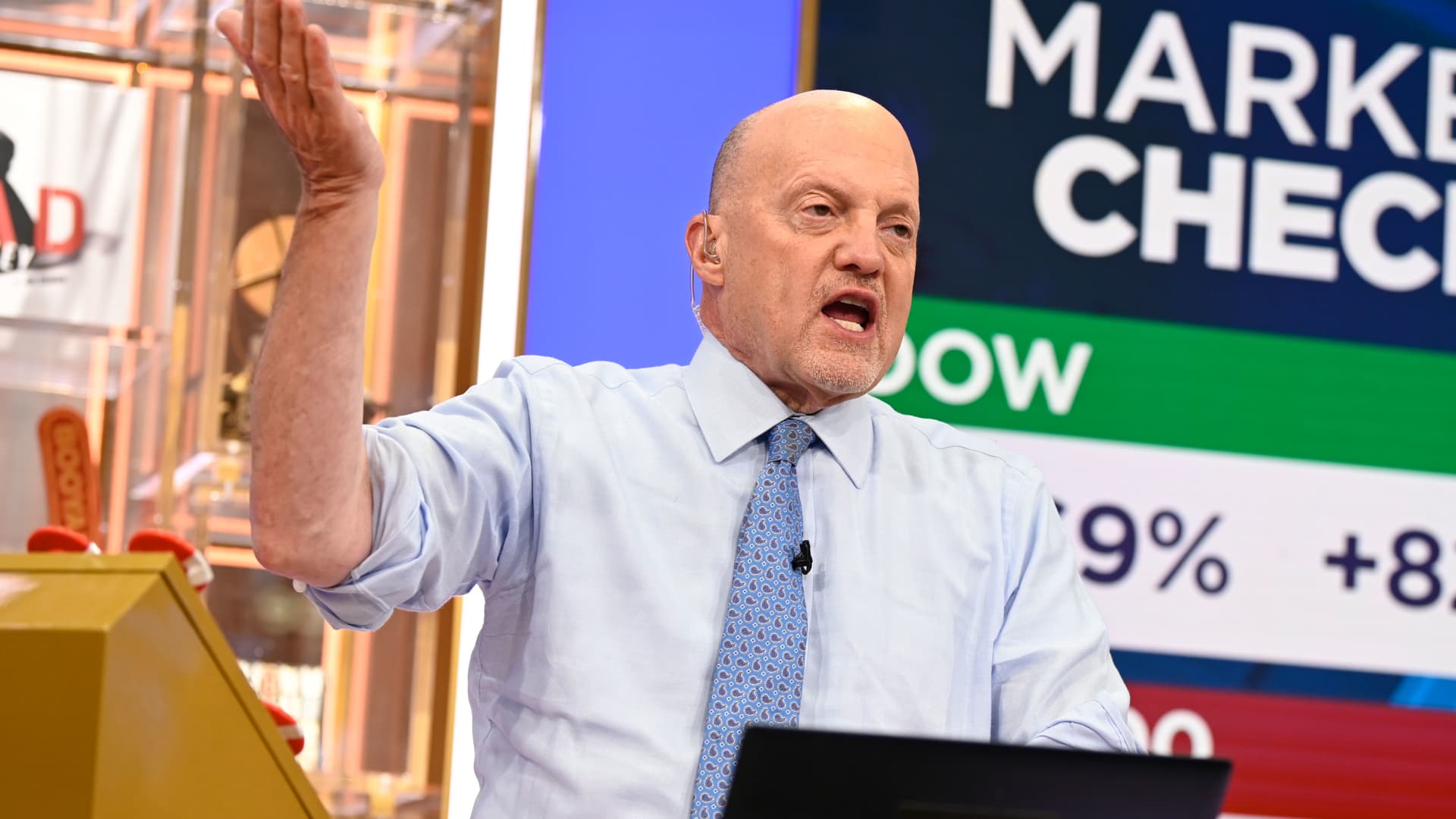
Markets rallied sharply, with the Dow up 869 points (+1.7%), the S&P 500 up 1.2%, and the Nasdaq up 1.5% as easing Middle East tensions and Iran’s reopening of the Strait of Hormuz improved risk appetite. Cramer highlighted a dense earnings calendar featuring Alaska Air, RTX, United Airlines, Boeing, GE Vernova, Vertiv, Tesla, Blackstone, American Express, Lockheed Martin, Intel, and Procter & Gamble, with several names framed as potential movers. The setup is constructive but still volatile because the ceasefire and U.S.-Iran backdrop remain unresolved.
The market is pricing a de-escalation dividend, but the more interesting second-order effect is a rotation from conflict beta into duration-sensitive cyclicals and infrastructure proxies. If energy transit risk keeps fading, the biggest relative loser is not crude itself so much as the premium embedded in defense-adjacent and airline names that had been trading on worst-case logistics assumptions; that premium can unwind fast because it is sentiment-driven rather than fundamentals-driven.
Defense remains the cleaner medium-term expression than the article implies. Even if headline risk drops, procurement cycles, replenishment of munitions, air defense, and munitions stockpiles are multi-quarter to multi-year demand drivers, which makes RTX and LMT more resilient than purely event-driven names. The market is still underestimating how much of this year’s defense re-rating could persist even after the immediate geopolitical shock fades.
On the other side, transportation and industrial beneficiaries are likely to be the most fragile trade if the peace narrative stalls. Airlines and Boeing get relief from lower fuel and less disruption, but those names tend to over-earn on the first move and then give it back when investors realize pricing power and delivery schedules still dominate the P&L. Vertiv and GEV sit in a separate bucket: they are less about the geopolitical tape and more about AI power demand, so any pullback there is more about positioning than thesis failure.
The contrarian miss is that the market may be too quick to extrapolate a clean normalization path. Any re-closure of the Strait, a delayed deal, or a broader sanctions response would reintroduce oil volatility and hit the most crowded reopening trades first. In that setup, defensives and balance-sheet quality should outperform while speculative rally winners mean-revert sharply over days, not months.
AI-powered research, real-time alerts, and portfolio analytics for institutional investors.
Request TrialOverall Sentiment
mildly positive
Sentiment Score
0.35
Ticker Sentiment
