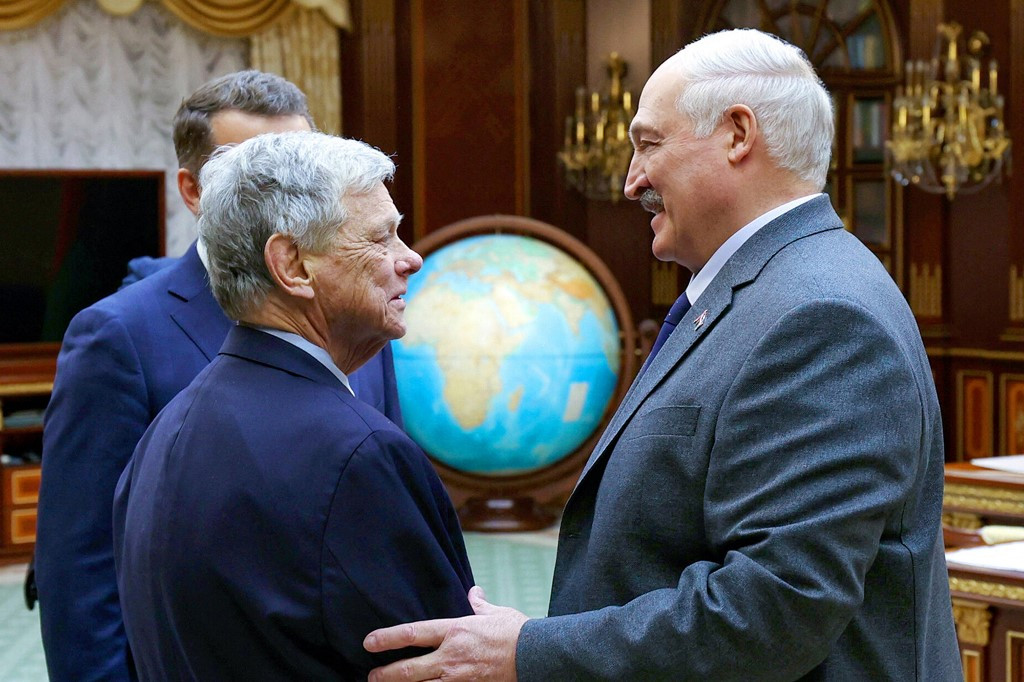
The US is pressing Ukraine and European partners to relax restrictions on Belarusian potash exports, following earlier US sanctions relief after Belarus freed 250 prisoners. EU restrictions remain in place until February 2027, and Lithuania says it will not discuss restoring transit through Klaipeda while those sanctions stand. The move is politically sensitive for Kyiv because it could provide new revenue to Minsk while Belarus continues supporting Russia’s war effort.
This is less about Belarusian cash flow than about a potential re-opening of a strategically important agricultural supply lane. If transit normalizes, the first-order beneficiary is global fertilizer availability, but the second-order move is a compression in delivered-cost volatility for import-dependent emerging markets, especially Brazil and South Asia, where potash is often a margin lever for crop input budgets rather than a headline commodity. The bigger market signal is that Washington is willing to treat commodity sanctions as a bargaining chip in wider geopolitical repositioning, which raises the odds of selective relief in other constrained flows over the next 3-12 months.
The immediate losers are not obvious potash producers alone; it is also any logistics rail/port operator that has benefited from rerouted volumes and higher freight scarcity rents. A reopening through the Baltic corridor would likely pressure non-Belarusian supply chain premia and narrow arbitrage spreads between inland and seaborne fertilizer prices. The more interesting second-order effect is on crop economics: cheaper potash tends to improve farmer margin confidence with a lag, which can lift acreage intensity and fertilizer application rates into the next planting cycle, modestly supportive for ag input distributors but bearish for fertilizer pricing power.
The main catalyst risk is political. If Lithuania holds the EU line through 2027, any U.S.-led thaw may only shift marginal flows, not the core trade route, limiting near-term impact. Conversely, if Brussels signals flexibility, the move could happen fast because logistics rerouting is operationally straightforward once sanctions friction is removed; that makes this a months-not-years setup for the trade, but with headline risk on both sides. The contrarian view is that markets may overestimate the economic value of potash transit as a leverage tool for Minsk: even if volumes recover, pricing power is likely capped by global supply normalization and buyers’ willingness to diversify after 2022 disruption.
AI-powered research, real-time alerts, and portfolio analytics for institutional investors.
Request DemoOverall Sentiment
neutral
Sentiment Score
-0.10
