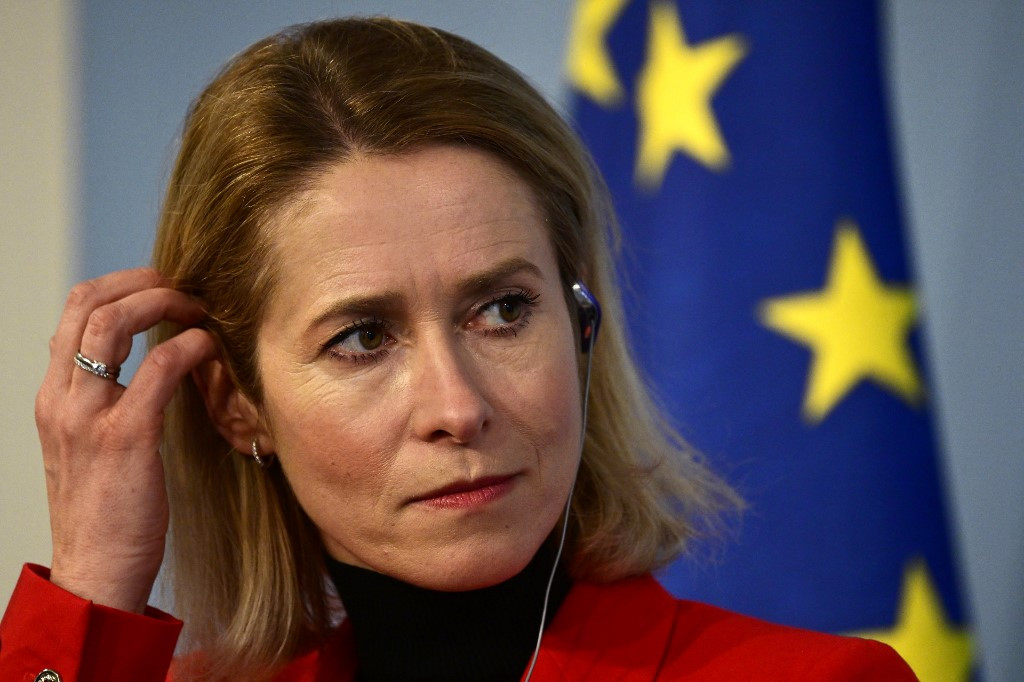
EU foreign policy chief Kaja Kallas said any military restrictions on Ukraine in a future peace deal should also be mirrored to Russia, underscoring tougher European negotiating terms. She highlighted broader security risks from Russian troops in Georgia and Moldova and warned Moscow could escalate or mobilize further, with Russia reportedly preparing to add 400,000 troops. The remarks point to elevated geopolitical risk and a more defensive European security posture.
The market implication is not about an immediate battlefield change; it is about a higher probability that Europe hardens into a longer-duration security regime. That matters for defense procurement visibility, munitions replenishment, air defense, EW, ISR, and border/security infrastructure over the next 12-36 months, even if headline peace-talk risk creates intermittent drawdowns. In other words, any negotiated framework that is conditional, mirrored, and verification-heavy tends to increase rather than reduce structural spend because it formalizes a perimeter that must be monitored and enforced.
The second-order winner is not only prime contractors but also the industrial base below them: seekers, propellants, guidance electronics, secure comms, and drone countermeasure suppliers. If Europe believes Russia may escalate to justify mobilization, procurement shifts from discretionary to readiness-driven, which compresses decision cycles and improves order book quality for firms with existing NATO-qualified capacity. Conversely, companies exposed to European consumer demand but with little defense linkage face a valuation headwind as fiscal resources are redirected and sovereign risk premia stay sticky.
The key tail risk is a short-lived ceasefire headline that pulls defense multiples lower before budget commitments catch up. That dislocation would likely last days to weeks, not quarters, because inventory depletion and replenishment math still dominate. The contrarian read is that the market may be underpricing the probability of a broader European mobilization narrative: if sanctions, troop posture, and election interference become linked in policymaker rhetoric, defense spending could step up faster than current consensus implies, especially in continental Europe where starting valuation is lower than in US primes.
AI-powered research, real-time alerts, and portfolio analytics for institutional investors.
Request TrialOverall Sentiment
mildly negative
Sentiment Score
-0.20
