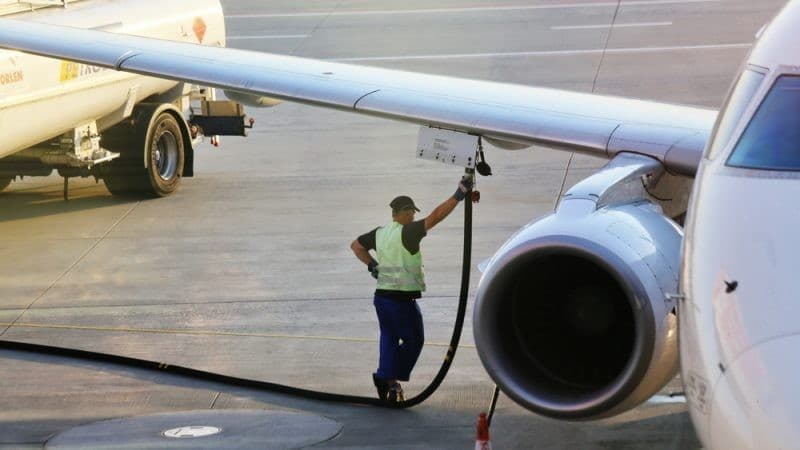
Europe faces an imminent jet fuel supply crunch as war-related disruption in Iran and the closure of the Strait of Hormuz have cut most Middle East imports, with prices spiking above $200 per barrel. IEA chief Fatih Birol said Europe may have only about six weeks of jet fuel left, while Northwest Europe imports are down 15% in April and further declines are expected as U.S. cargoes are redirected to Asia. Lufthansa said sharply higher kerosene costs, now more than double pre-war levels, are forcing it to accelerate flight cuts and aircraft retirements.
Europe’s jet fuel market is moving from a price shock to a physical allocation problem, which is materially more dangerous for equities than a simple margin squeeze. The key second-order effect is not just higher airline fuel bills; it is schedule rationalization, aircraft utilization drops, and fare inflation feeding into demand destruction just as summer travel peaks. That means the pain should show up first in European passenger carriers with weak pricing power, then cascade into airports, MRO activity, and lessors as flight hours get trimmed.
The supply side is unusually inelastic over the next 4-8 weeks. U.S. barrels are the only swing source, but Atlantic-to-Europe flows are already being pulled toward Asia, so the marginal cargo may be diverted away before it ever reaches Northwest Europe. That creates a classic short-lived but severe dislocation: prompt jet cracks can overshoot fundamentals because distributors and airlines need inventory now, not later, and any further disruption at Hormuz would force rationing before replacement molecules can arrive.
The contrarian view is that the market may be underestimating policy response. Europe can temporarily relax product-spec or reserve rules, airlines can substitute marginally with hedges, and cargoes can be rerouted if arb economics swing hard enough. But those are stopgaps, not fixes; the structural issue is two decades of refining capacity loss, so even if headlines calm, the region remains one geopolitical event away from the same problem again.
AI-powered research, real-time alerts, and portfolio analytics for institutional investors.
Overall Sentiment
strongly negative
Sentiment Score
-0.75
