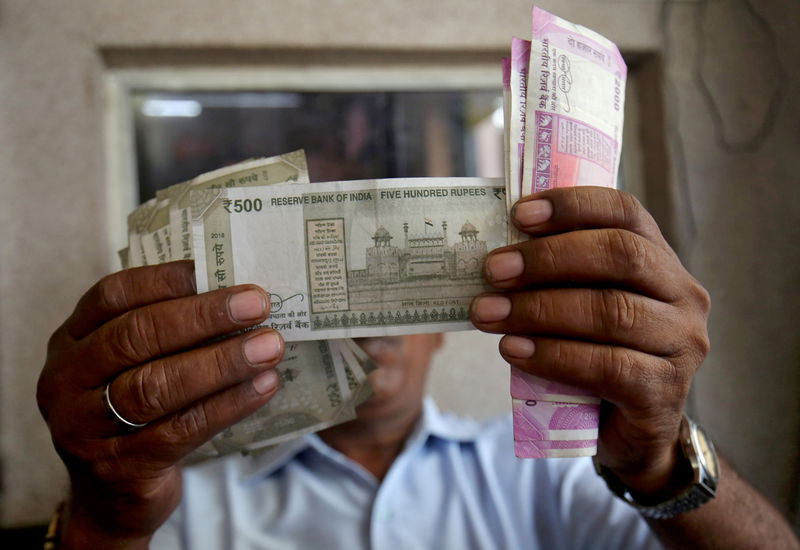
The Indian rupee firmed to 95.70 per dollar, recovering from nearly 97 last week after RBI Governor Sanjay Malhotra signaled the central bank would do "whatever is required" to stem further weakness. The move was supported by sharp oil price declines as weekend developments raised hopes of a U.S.-Iran peace deal. Lower oil and intervention support eased pressure on the rupee, which had fallen about 6% since the onset of the Iran war.
The immediate beneficiary is not just the rupee itself but every India importer with unhedged dollar exposure: lower oil and a softer USD/INR reduce near-term input-cost pressure, easing margin risk for airlines, autos, industrials, and broad consumer names. The bigger second-order effect is that the RBI has effectively put a short-vol ceiling under USD/INR; when a central bank signals it will defend a level, speculative longs become crowded and carry reverses quickly, which can create a fast, asymmetric mean-reversion trade over days rather than weeks.
For commodities and energy-linked risk assets, the peace narrative matters more through volatility compression than outright price direction. If crude backs off meaningfully, the market will begin to price less tail risk in EM FX and less urgency for defensive hedges, which typically supports cyclical beta in India and Asia. The flip side is that a partial de-escalation can also trigger a brief “relief rally” in risk assets that is vulnerable to headlines; these moves often fade unless physical oil balances and shipping insurance premia reset for more than 2-3 weeks.
The contrarian angle is that the rupee’s move may be more fragile than it looks: if the oil retreat stalls or the peace process proves cosmetic, India’s import bill reasserts quickly and the RBI’s defense may force a tighter domestic liquidity stance. That would compress financial conditions just as markets are extrapolating easing. In AI beneficiaries like SMCI and APP, the article’s mention is incidental, but the broader risk-on impulse helps high-beta growth at the margin; still, that support is indirect and much less durable than the FX/oil transmission into India equities.
AI-powered research, real-time alerts, and portfolio analytics for institutional investors.
Overall Sentiment
mildly positive
Sentiment Score
0.25
Ticker Sentiment
