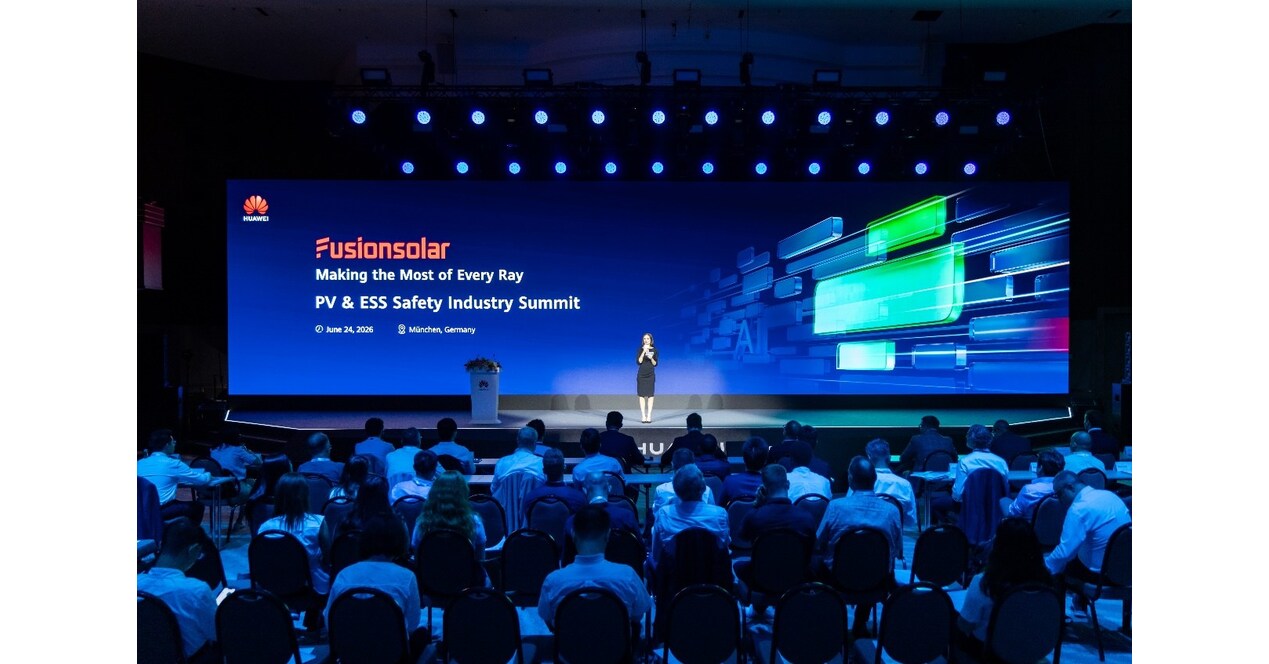
Huawei Digital Power held the first 2026 Industry Summit on PV & ESS security in Munich (June 24), highlighting gaps in safety coverage and insurance for large-scale PV+storage deployments. The event emphasized the need for quantitative life-cycle safety assessment and new testing/standards—citing issues such as battery thermal runaway, high-voltage insulation failures, and grid disturbances—alongside AI-driven early warning and passive-protection designs. With Germany’s BESS installed capacity cited at 19 GW, the summit points to upcoming regulatory/safety guideline updates over the next three years, which is more likely to affect industry standards than near-term pricing.
The economic lever here is not demand for batteries or solar hardware; it is the cost of insuring and financing them. If underwriters start requiring more granular test disclosure, tighter fire separation, and OEM response commitments, the winners are brokers/advisors and firms with the cleanest safety data, while lower-end integrators and project developers face higher all-in cost of capital. That is mildly supportive for WTW and peers like AON/MMC, but the bigger second-order effect is margin compression for utility-scale storage platforms and EPCs that cannot prove system-level resilience.
This is a slow-burn issue: the first reaction is likely negligible, but over the next 1-3 months insurance renewals, project finance terms, and procurement language can tighten if a few large carriers reprice the risk. Over 6-18 months, the market can bifurcate between "bankable" BESS vendors and commoditized ones, which should widen valuation dispersion in the storage stack. A meaningful falsifier would be stable premium rates and no change in lender/insurer requirements despite broader adoption.
The contrarian angle is that the market may overestimate how quickly safety rhetoric turns into hard standards. If fire frequency stays contained, the industry could absorb these costs without materially slowing deployment, making the headline more of a consulting/placement revenue story than an earnings driver. That said, any high-profile BESS loss event would likely accelerate a regime shift fast, and WTW would benefit from higher advisory intensity before it benefits from actual premium flow.
AI-powered research, real-time alerts, and portfolio analytics for institutional investors.
Request DemoOverall Sentiment
neutral
Sentiment Score
0.08
Ticker Sentiment
