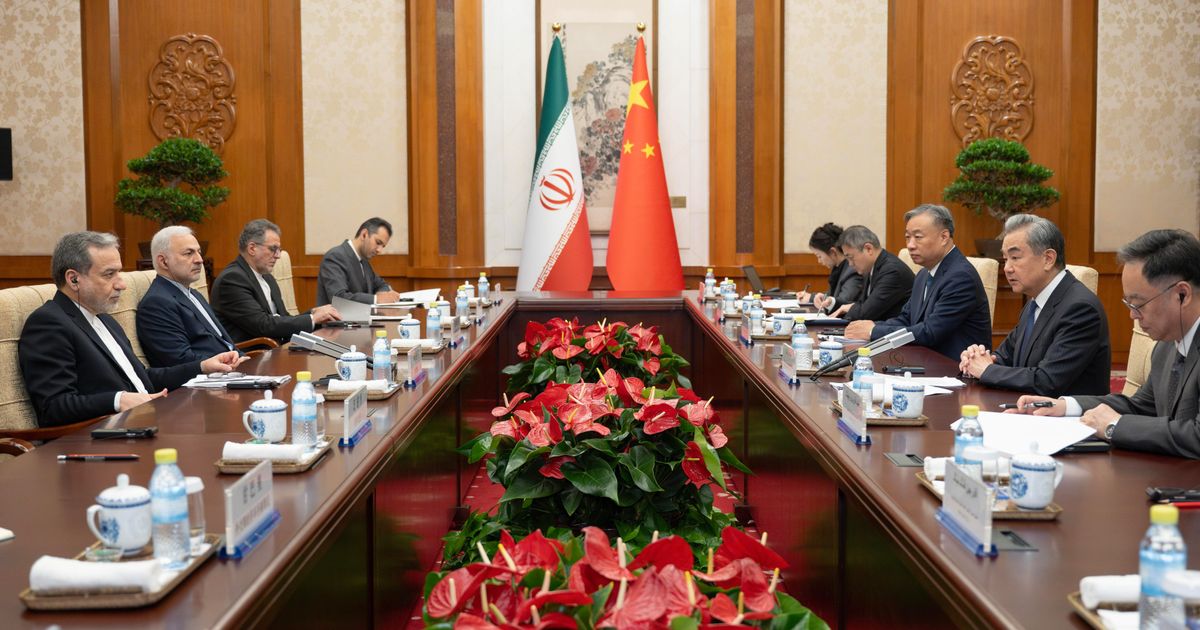
China is increasingly active in efforts to de-escalate the Iran war, with Foreign Minister Wang Yi calling for a comprehensive ceasefire and the reopening of the Strait of Hormuz during talks with Iranian Foreign Minister Abbas Araghchi. The timing is significant ahead of a planned Trump-Xi meeting, as Washington is pressing Beijing to use its leverage over Tehran to help restore normal passage through the critical waterway. While the article signals potential diplomatic momentum, it remains largely a geopolitical update with material implications for oil flows and regional risk sentiment.
China is trying to convert diplomatic theater into optionality: the immediate objective is not peace, but preserving leverage over the sequencing of any ceasefire, shipping normalization, and postwar reconstruction. That matters for markets because Beijing’s role can lower the probability of a sustained Hormuz disruption without eliminating tail risk, which means the risk premium in energy and freight may compress unevenly rather than collapse outright.
The second-order winner is not necessarily China as a broad asset class, but China-linked strategic sectors that benefit from de-escalation plus reconstruction influence: Gulf logistics, ports, industrials, and state-backed engineering supply chains. The more interesting loser is the “all-risk-premia-up” basket — crude, tanker rates, and defense proxies that have been trading on escalation optionality; if the diplomatic channel gains credibility, these names can underperform even while headline risk remains elevated. EM importers in Asia would also benefit from lower energy volatility, especially those with current-account sensitivity and subsidy exposure.
The key contrarian point is that Beijing’s incentive is to look indispensable without paying the cost of enforcement. Unless China is willing to make the Iranian side materially uncomfortable on oil purchasing, payments, or industrial inputs, this is more likely to cap the worst-case scenario than to deliver a durable settlement. So the trade is not “peace is coming,” but “left-tail disruption probability falls faster than realized normalization,” which argues for selling extreme geopolitical hedges into spikes rather than chasing outright reflation or peace-linked beta.
Catalyst window is days to 2 weeks around the Xi-Trump meeting and any follow-on shipping rhetoric; the real risk horizon extends 1-3 months if talks fail and the market re-prices Hormuz insurance/freight again. The main reversal would be a concrete Chinese enforcement step or a verified step-down in interference with maritime traffic; absent that, this stays a soft-power signal with limited durable market impact.
AI-powered research, real-time alerts, and portfolio analytics for institutional investors.
Request DemoOverall Sentiment
neutral
Sentiment Score
0.00
