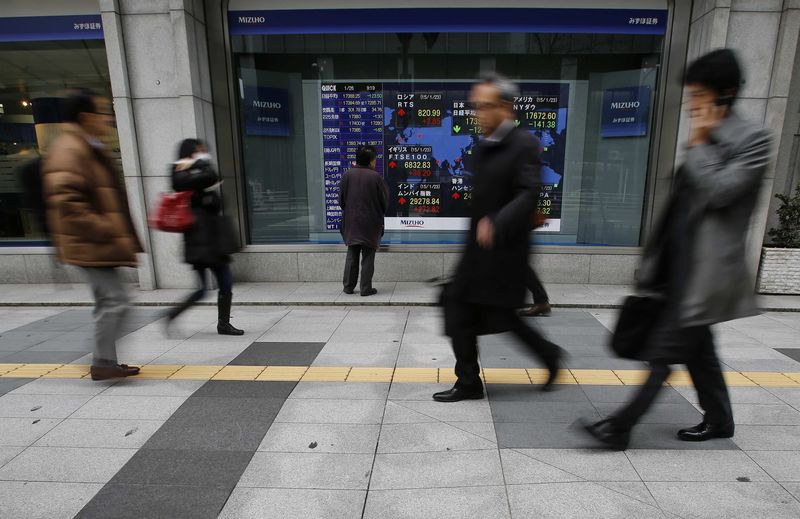
Asia tech markets cooled as investors took profit in semiconductors after last week’s AI-led rally: South Korea’s KOSPI fell 3.2% and Japan’s Nikkei 225 dropped 1.3%, while AI-infra spend remains in focus for the upcoming earnings season. The macro backdrop is mixed—softer U.S. payrolls kept rate-cut expectations intact, with investors awaiting Fed June meeting minutes—while easing oil prices and improved Israel-Iran ceasefire sentiment supported selective gains elsewhere. Notably, Hon Hai rose 0.6% after record June and Q2 revenue on strong AI server demand, while Samsung (−0.9%) and SK Hynix (−4.3%) underperformed, suggesting a positioning reset rather than immediate fundamental deterioration.
The important signal is not that the AI trade is breaking; it’s that the market is forcing a distinction between “AI exposure” and “AI cash conversion.” The most defensible longs are the picks-and-shovels names with visible order flow and operating leverage from server buildout, where incremental demand hits revenue sooner and with less valuation fragility than for the broader semiconductor basket. That favors TSM and HNHPF over memory-heavy or more macro-sensitive names such as SSNLF, where earnings can lag sentiment by a quarter or two.
Near term, this is a positioning reset, but the catalyst path is binary over the next 2-6 weeks: Fed minutes and regional trade data either confirm that lower rates are supporting duration assets, or they expose that the recent rally was mostly multiple expansion. If Taiwan trade data and company commentary show AI-linked export strength, the pullback should be bought; if not, the sector de-rates quickly because the market has little patience for capex that doesn’t show up in margin guidance. Lower oil and softer inflation help the macro backdrop, but they matter more as a support for the broad index than as a direct fundamental driver for semis.
Contrarian view: consensus is still assuming “AI spending” is enough. What matters is whether that spending is concentrated in a few infrastructure winners or broad enough to lift the whole ecosystem. If monetization remains narrow, NVDA can stay fundamentally fine while the rest of the complex underperforms on relative multiples. The 6-18 month risk is that the market treats AI as a growth story but prices it like a cyclical input cycle, compressing the multiple on any earnings miss or capex delay.
AI-powered research, real-time alerts, and portfolio analytics for institutional investors.
Request DemoOverall Sentiment
mildly negative
Sentiment Score
-0.12
Ticker Sentiment
