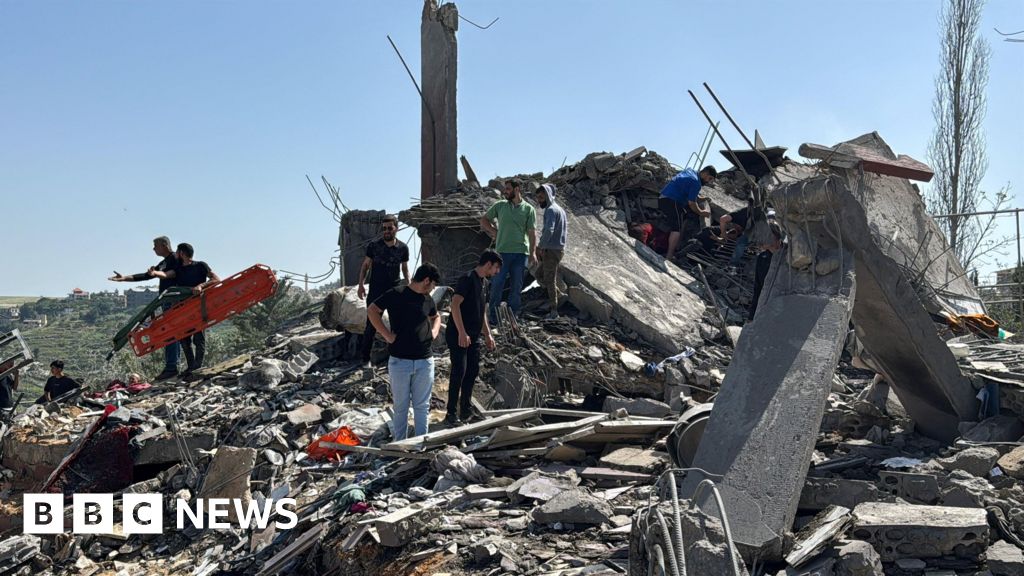
An Israeli strike in southern Lebanon killed at least seven people, including a child, and wounded 15 more, including three children, while a separate strike in Nabatieh killed a Syrian national and seriously injured his 12-year-old daughter. Hezbollah also launched a drone into northern Israel, wounding three Israeli soldiers, underscoring continued escalation despite the reported ceasefire framework. The conflict has reportedly killed more than 120 people in Lebanon in the past week and remains a significant regional geopolitical risk with potential spillovers into defense and energy markets.
The market implication is not a broad Middle East shock so much as a persistent risk-premium regime: repeated strikes and retaliatory attacks keep the conflict below the threshold of full regional war, but high enough to sustain elevated hedging demand in crude, defense, and shipping-sensitive assets. The second-order effect is a slow deterioration in cross-border logistics and insurance economics for the Levant, which disproportionately pressures EM sovereign risk, local banking liquidity, and reconstruction-linked contractors rather than creating a clean directional move in global equities.
The key catalyst window is days to weeks, not months: each casualty-heavy incident raises the probability of a miscalculation that forces either a larger Israeli escalation or a more visible Hezbollah response. That tail risk matters because markets typically underprice the nonlinear jump from episodic exchanges to infrastructure disruption, border closure, or expanded reserve mobilization; those outcomes would hit Israeli small caps, Lebanese dollar liquidity, and regional risk sentiment well before they show up in headline geopolitics.
Contrarian angle: the market may be overestimating the durability of the current pattern as a binary escalation trade and underestimating how quickly it can revert into a managed containment if Washington exerts pressure on both sides. If that happens, the immediate premium in defense and oil-linked hedges can decay quickly even if the underlying conflict remains unresolved. So the better expression is not naked long risk assets in the region, but owning convexity against an escalation spike while fading any assumption that this is already a full-scale war pricing event.
AI-powered research, real-time alerts, and portfolio analytics for institutional investors.
Request DemoOverall Sentiment
strongly negative
Sentiment Score
-0.85
