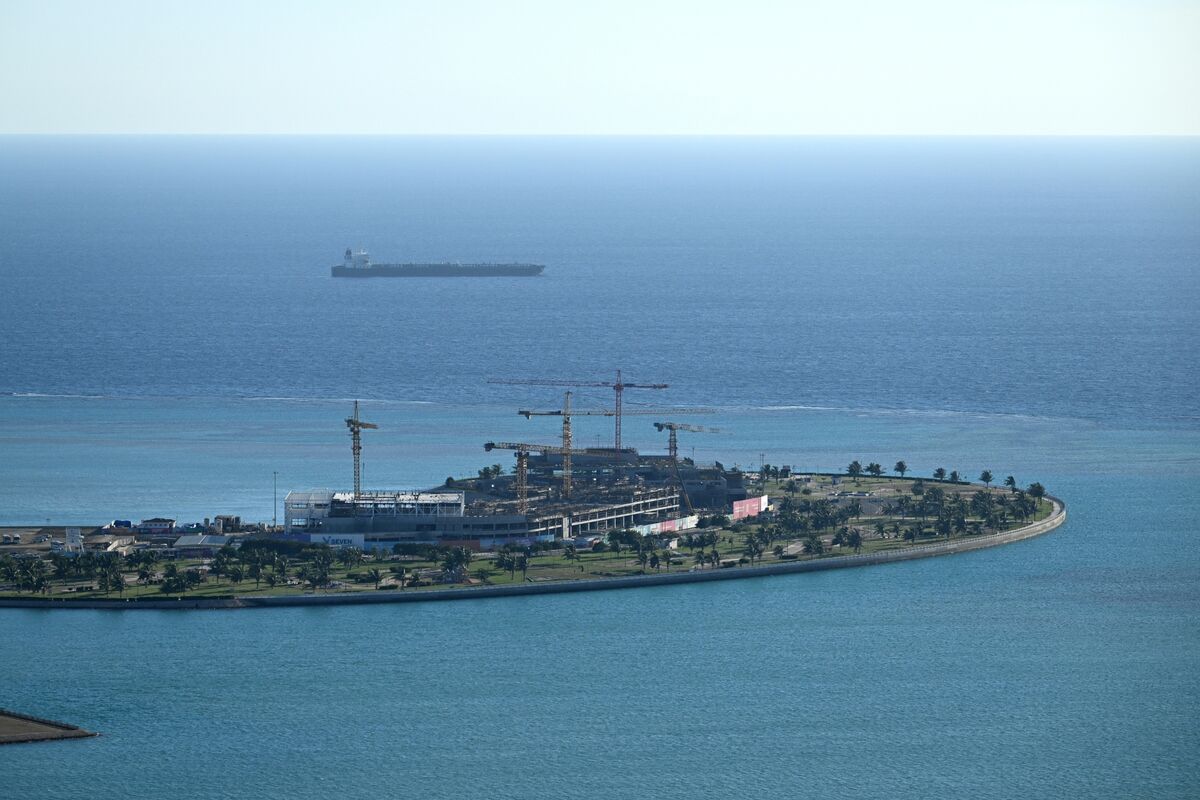
Saudi Arabia is offering long-term oil customers the option to take April allocations via the Red Sea port of Yanbu as it prepares for potentially lengthy disruptions in the Strait of Hormuz. Shipments to Yanbu will cover only part of monthly supply due to pipeline capacity constraints, while receiving from the Persian Gulf risks getting no cargo if the strait stays closed. The move raises short-term supply disruption risk for global oil markets, increasing price volatility and operational strain on refiners and shipping logistics.
Rerouting volumes to a single Red Sea export point creates an acute logistics choke that will re-price physical crude flows and tanker economics before it re-prices upstream balance sheets. Expect Suez/Aframax/Suezmax demand to rise and VLCC re-deployment frictions to push spot freight (TCEs) meaningfully higher within days–weeks; a 50–150% spike in short-term dirty tanker rates is a realistic stress scenario that amplifies landed cost volatility by $1–5/bbl on affected routes.
Because allocations will be rationed by pipeline capacity, counterparties with flexible storage or the ability to take partial shipments (traders, refiners with deep tanks) will arbitrage regional cracks — buyers without storage face downstream margin compression and forced purchases at higher spot differentials. Over months, this creates a two-speed market: shorter-term winners in shipping and storage and longer-term winners among export-capable US E&Ps and integrated majors that can redirect flows; losers are refiners and trading houses with Asia-facing intake and minimal buffer stocks.
Catalysts that would reverse the re-pricing are clear and fast: diplomatic or naval security solutions that reopen Hormuz (days–weeks), government-subsidized insurance corridors, or sudden large-scale floating storage releases made available by sovereigns (weeks–months). Conversely, escalation of attacks or sustained closure for multiple months would structurally increase investment incentives into alternate export infrastructure, benefiting pipeline and port owners over the 1–3 year horizon.
AI-powered research, real-time alerts, and portfolio analytics for institutional investors.
Overall Sentiment
mildly negative
Sentiment Score
-0.30
