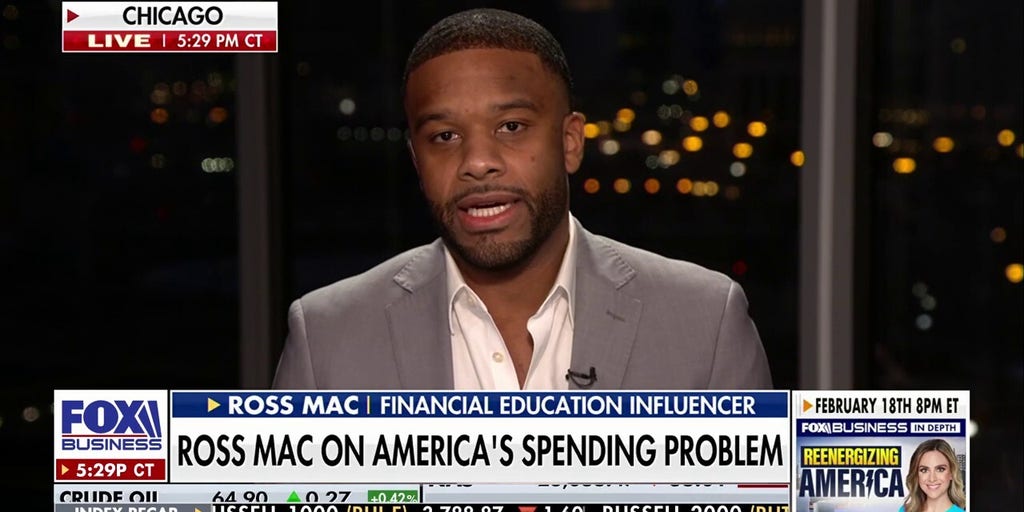
The provided text is a television programming schedule listing show titles and airtimes for Fox Business Channel, Fox News Channel, Fox Weather Channel and Fox News Radio. It contains no financial data, company news, economic indicators, or market-moving information and therefore provides no actionable intelligence for investment decisions.
Market structure: The programming schedule is a reminder that live/news-first linear TV (Fox News/Business) still captures consistent late-night attention and commands higher ad CPMs versus non-live entertainment. Winners are ad-driven broadcasters (FOXA/FOX) and MVPDs with retransmission fees; losers are pure‑play streamers (NFLX, DIS’s streaming segments) that rely on subscription growth. Cross-asset: stronger ad prints should tighten credit spreads for media names and compress equity implied volatility; FX and commodities impact is negligible.
Risk assessment: Tail risks include advertiser boycotts, increased FCC/regulatory scrutiny, or accelerated retransmission-fee losses from cord-cutting that could pare EBITDA by 10–25% over 2–4 years. Near-term (days–weeks) risks hinge on quarterly ad-sell updates; medium-term (3–12 months) on election-driven ad demand; long-term (>12 months) on structural declines in cable subs. Hidden dependencies: political event calendar and retransmission consent renegotiations drive >50% of revenue variance for news channels.
Trade implications: Establish a 2–3% long position in FOXA (Class A) with a 3–6 month horizon, target +15–25%, stop −12%; fund by a 1–1.5% short position in NFLX to capture divergence between live-ad resilience and subscription fatigue. Use a 3‑month FOXA call spread (5–12% OTM) sized to replace half the equity position for capped risk; consider buying a 3‑month 10% OTM put on NFLX as asymmetric hedge. Rotate portfolio +5–8% into ad‑driven media and -5–8% out of pure streaming names over 4–12 weeks.
Contrarian angles: The market underestimates the pricing power of live-news during political cycles—shorts on broadcasters may be overdone; historical parallels (2016–2020 election cycles) show 10–30% ad rev spikes concentrated in quarters. Unintended consequence: elevated exposure to political content increases reputational/regulatory volatility, so cap positions and hedge with options if implied vol rises above 30% on calls/puts.
AI-powered research, real-time alerts, and portfolio analytics for institutional investors.
Request DemoOverall Sentiment
neutral
Sentiment Score
0.00
