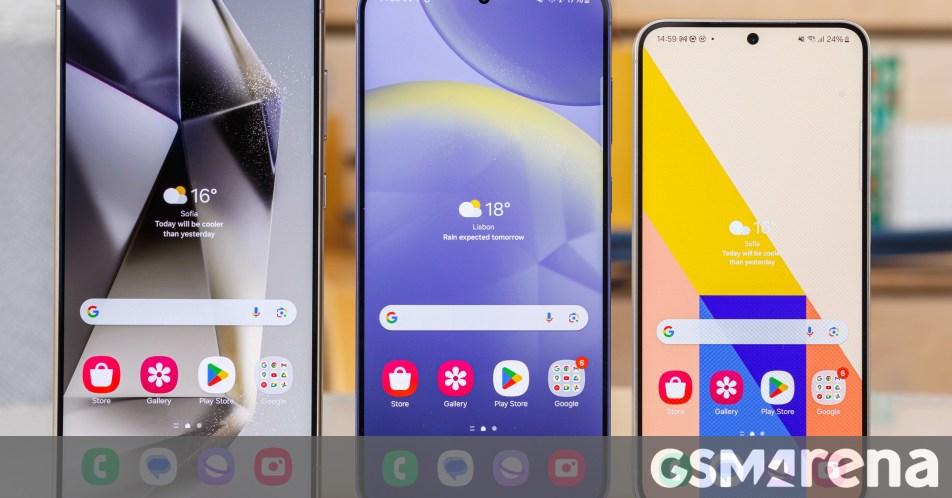
Samsung rolled out new One UI 8.5 beta updates for the Galaxy S24 family and Galaxy Z Fold7, adding Galaxy AI features first seen on the Galaxy S26 family. The update includes Creative Studio, Call Screening, improved Photo Assist, and a better Audio Eraser. Existing beta users will receive the build over the air, while the features should reach the stable One UI 8.5 release later.
This is less about a consumer-facing feature drop and more about Samsung using beta distribution to compress product-cycle learning into the installed base ahead of stable release. The key second-order effect is that generative editing and call-assistance features become “table stakes” across premium Android, raising the bar for any OEM that still treats on-device AI as a demo rather than a habitual workflow. That matters because perceived software leadership can slow upgrade deferrals in the high-end handset cohort, where replacement cycles are already stretched.
The near-term beneficiary is Samsung’s ecosystem lock-in: each incremental utility feature increases the odds that users stay within Galaxy hardware rather than testing rival flagships. The loser is any Android competitor leaning on camera/software differentiation without a comparable on-device AI stack, particularly brands that compete on spec sheets but lack a deep assistant and photo-editing narrative. Over months, this can also pressure accessory and app partners if Samsung pulls more editing and communication tasks into the OS layer, reducing third-party monetization opportunities.
The main risk is that beta feature parity does not automatically translate into retention or shipments if execution is uneven at stable launch. If battery drain, latency, or privacy concerns surface, the AI story can quickly flip from differentiator to liability, especially in markets where users are sensitive to trust and reliability. The timeline is mostly 1-2 quarters: the critical catalyst is whether stable rollout converts into measurable engagement uplift, not just press coverage.
Consensus may be underestimating how much of the AI handset battle is really a distribution battle, not a model-quality battle. If Samsung can make these features default behaviors, it strengthens its negotiating leverage with carriers and content partners, while forcing Apple and Chinese OEMs to defend a broader value proposition than camera hardware alone. The move looks mildly positive in isolation, but the strategic implication is that AI is becoming the new software moat in premium Android, and that moat compounds slowly rather than in a single launch event.
AI-powered research, real-time alerts, and portfolio analytics for institutional investors.
Request DemoOverall Sentiment
mildly positive
Sentiment Score
0.20
