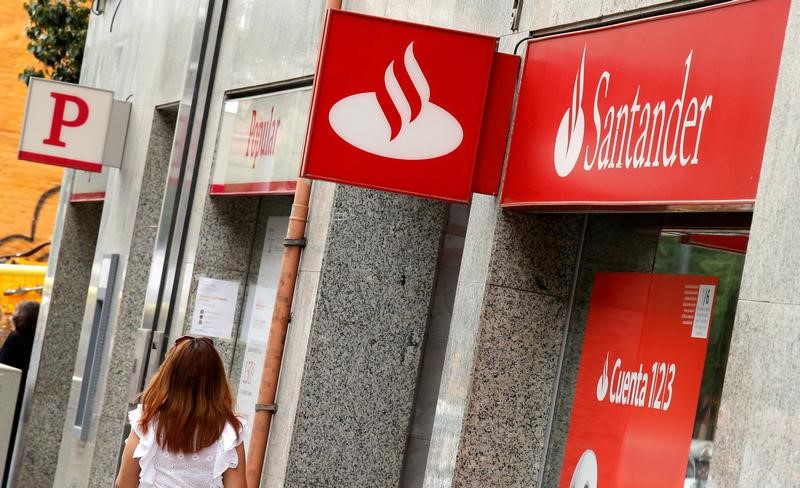
Banco Santander reported record Q1 attributable profit of €5.55 billion, up 60% year-on-year, though €1.90 billion came from a one-time gain on the Santander Bank Polska sale. Excluding that gain, underlying profit rose 12% to €3.56 billion, while total income increased 4% to €15.14 billion and the CET1 ratio improved to 14.4%, up 90bps in the quarter. The bank also confirmed a €24 cent full-year cash payout and €7.05 billion of total shareholder remuneration, with dividend and buyback activity representing about 50% of 2025 net reported profit.
SAN is not just printing clean earnings; it is using a disposal-led capital surge to buy itself optionality. The key second-order effect is that the market will start treating the balance-sheet rebuild as a funding source for a larger shareholder-return machine, but also as a bridge to digest two acquisitions that are capital intensive and execution-sensitive. That makes the stock less of a simple earnings beat and more of a barbell: short-dated upside from buybacks/dividends, longer-dated risk from deal integration and capital dilution.
The market should focus on the quality of the CET1 step-up, not the headline ratio. A large chunk of the capital gain is non-recurring, so the right question is whether SAN can preserve above-target capital while funding growth in the U.S. franchise and avoiding a drag from UK earnings volatility. If the Webster integration slips even modestly, the multiple can compress quickly because investors will reprice the bank from “capital return story” to “M&A execution story.”
A subtle winner is the bank’s own equity funding currency: with a stable cost of risk and improving fee mix, management has more flexibility to keep buybacks going without signaling stress. That can mechanically support the share price into the next few quarters, but it also increases sensitivity to any regulatory pushback or CET1 surprise. The contrarian risk is that consensus may be underestimating how much of the current rerating is already front-running the deal and payout narrative.
WBS is a cleaner relative loser from this setup only if the market starts assuming Webster is being acquired at a full valuation and the asset base is being monetized by a stronger buyer. In that case, regional-bank multiples could drift lower if investors conclude SAN is paying for growth rather than buying cheap deposits and ROE accretion. The broader banking basket implication is that large-cap European banks with visible capital return and M&A optionality deserve a premium to U.S. regionals with more opaque funding sensitivity.
AI-powered research, real-time alerts, and portfolio analytics for institutional investors.
Request DemoOverall Sentiment
moderately positive
Sentiment Score
0.45
Ticker Sentiment
