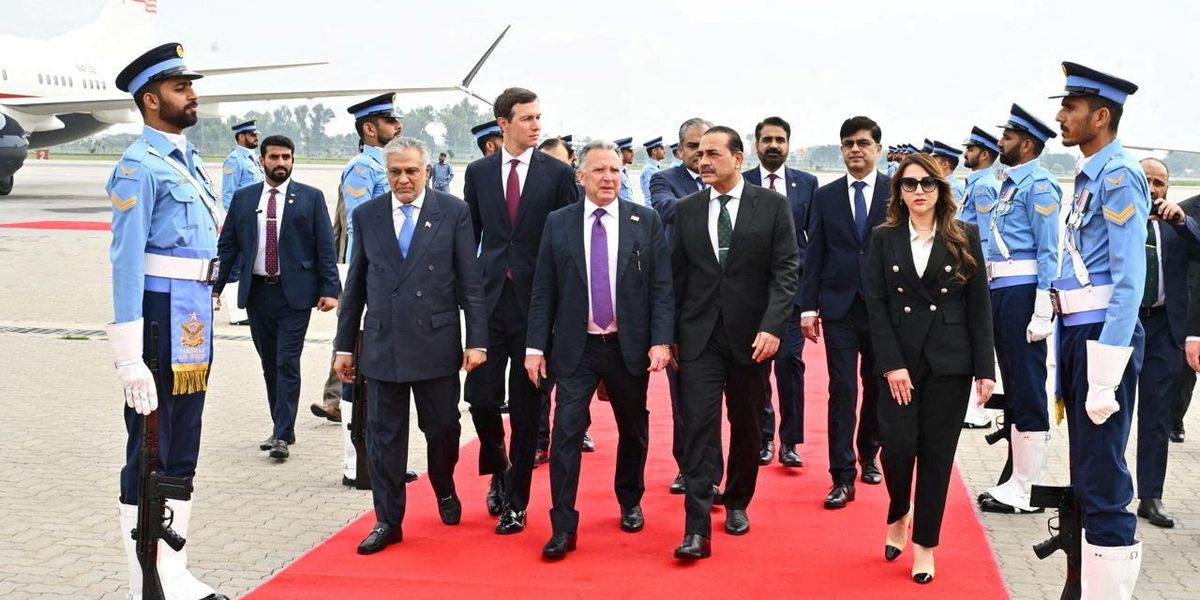
Pakistan is being discussed as a host and intermediary for U.S.-Iran talks, with diplomats and analysts arguing it could gain credibility and leverage from facilitating dialogue. The article frames this as a potential diplomatic rebrand, but stresses that hosting negotiations is not the same as shaping outcomes and that Pakistan still faces institutional and political constraints. Market impact is limited and primarily geopolitical, with no direct financial figures or immediate asset-specific catalyst mentioned.
Pakistan’s value here is less about diplomatic prestige than optionality: it is trying to monetize relevance without paying the fixed cost of being a formal guarantor. That creates a near-term tailwind for the military establishment and any domestic asset tied to “stability optics,” but it does not yet change Pakistan’s sovereign risk premium because the market will correctly discount one-off convening power versus durable institutional mediation.
The second-order effect is on regional intermediation competition. If Islamabad is seen as a low-cost venue that can host U.S., Gulf, Chinese and Iranian channels, it pressures Qatar, Oman and potentially Turkey on the “trusted hub” trade, but Pakistan lacks the balance-sheet capacity to underwrite outcomes. That means the real economic prize is not fees from diplomacy; it is downstream leverage in IMF negotiations, bilateral financing, and security cooperation, which can improve reserve optics over 1-2 quarters if Washington chooses to reward facilitation.
The key risk is reputational reversal. If talks fail or are followed by escalation, Pakistan’s elevated profile could quickly reprice into “overexposure” to regional spillovers, especially through shipping, insurance, remittance confidence, and FX. The consensus may be overestimating how much goodwill this generates in Washington; U.S. policymakers typically reward outcomes, not hosting, so the benefit window is likely measured in weeks unless Pakistan can convert access into a concrete de-escalation framework.
Contrarian take: the biggest beneficiary may be Pakistan’s domestic civil-military compact, not external diplomacy. Visible coordination can extend the shelf life of the current power configuration, but that is also a vulnerability because any diplomatic setback will be interpreted as evidence that the military is overreaching into foreign policy. In other words, the trade is not “Pakistan peace dividend,” but “Pakistan credibility premium with a tight stop-loss.”
AI-powered research, real-time alerts, and portfolio analytics for institutional investors.
Request TrialOverall Sentiment
neutral
Sentiment Score
0.10
