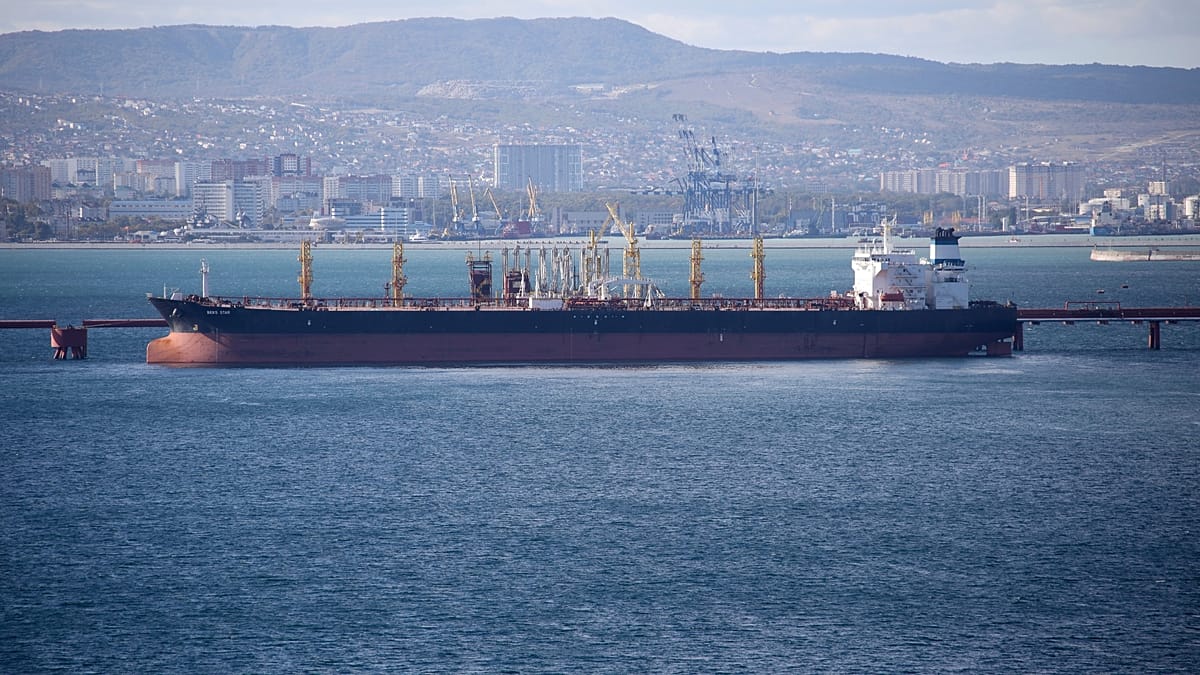
Russian oil-and-gas tax revenues collapsed to 393bn rubles (€4.27bn) in January from 587bn in December and 1.12tr (€12.16bn) in January 2025 as US and EU sanctions (including Nov. 21 sanctions on Rosneft and Lukoil and an EU ban on fuel from Russian crude from Jan. 21) plus pressure on buyers such as India cut exports and pushed Urals crude discounts to about $25/bbl (Urals < $38/bbl versus Brent ~ $62.50). The Kremlin has raised VAT to 22%, lifted levies on imports and sin goods, leaned on domestic banks and its sovereign wealth fund to plug budget gaps amid stalled GDP (0.1% Q3; 0.6–0.9% forecast) and 5.6% inflation with 16% policy rates — actions that stabilize near-term finances but increase fiscal strain and elevate downside risk to Russian energy supply and global energy-market volatility.
Market structure: The immediate winners are non-Russian crude suppliers and global majors able to replace lost seaborne barrels (US shale, Middle East) and short-term beneficiaries include tanker owners/operators capturing elevated freight (VLCC rates up to ~$125k/day). Losers are the Russian fiscal position (oil tax receipts down ~65% YoY in January vs Jan 2025), shadow-fleet participants, refiners/refinery logistics reliant on Urals and insurers/shippers exposed to sanctions. The Urals–Brent spread widening to ~$25/barrel signals persistent quality/route risk and a structurally higher Brent if blockage/insurance frictions persist. Risk assessment: Tail risks include a full EU shipping-services ban or US secondary sanctions on buyers (low-probability high-impact: 2–3 mb/d effective seaborne cut — months) which would spike Brent >$90 and freight prices >$150k/day; conversely, a rapid India/China absorption of discounted Urals would stabilize flows within 3–6 months. Hidden dependencies: Russia’s fiscal cushion (NWF + bank lending) can temporize budget stress but raising VAT and domestic borrowing increases inflationary pressure and depresses demand within 6–12 months. Key catalysts: EU vote on blanket services ban (weeks–months), additional US sanctions lists, and large Ukrainian strikes on export hubs. Trade implications: Tactical long exposure to US majors (XOM/CVX) and Brent (via futures or BNO) benefits from higher Brent; pair trades favor US over European integrated peers (long XOM, short BP/TTE) to capture regulatory/geography alpha. Short RUB via FX forwards or options is a direct play on Russian revenue shock; size as tactical 1–2% notional and scale into weakness beyond USD/RUB 80 with target 100. Use options to express convexity: buy 3–6 month Brent calls or 6-month call spreads on XOM/CVX to cap cost while retaining upside; take profits if tanker rates normalize (TD20 < $70k/day) or Brent falls below $60. Contrarian angles: Consensus assumes a structural collapse of Russian exports; history (Iran sanctions, Venezuela) shows shadow fleets and discount-driven demand can reconstitute flows over 6–12 months, capping sustained Brent rallies. The market may be overpricing tanker-equity upside without fully pricing seizure/sanctions risk — favors buying freight volatility via options rather than outright equity longs. Unintended consequences: a prolonged Brent >$85 would accelerate durable capex into US shale and LNG, creating a 12–24 month mean-reversion risk for energy cyclicals and a sector rotation opportunity into energy transition names and fertilizer/commodity supply chains.
AI-powered research, real-time alerts, and portfolio analytics for institutional investors.
Request DemoOverall Sentiment
moderately negative
Sentiment Score
-0.65
