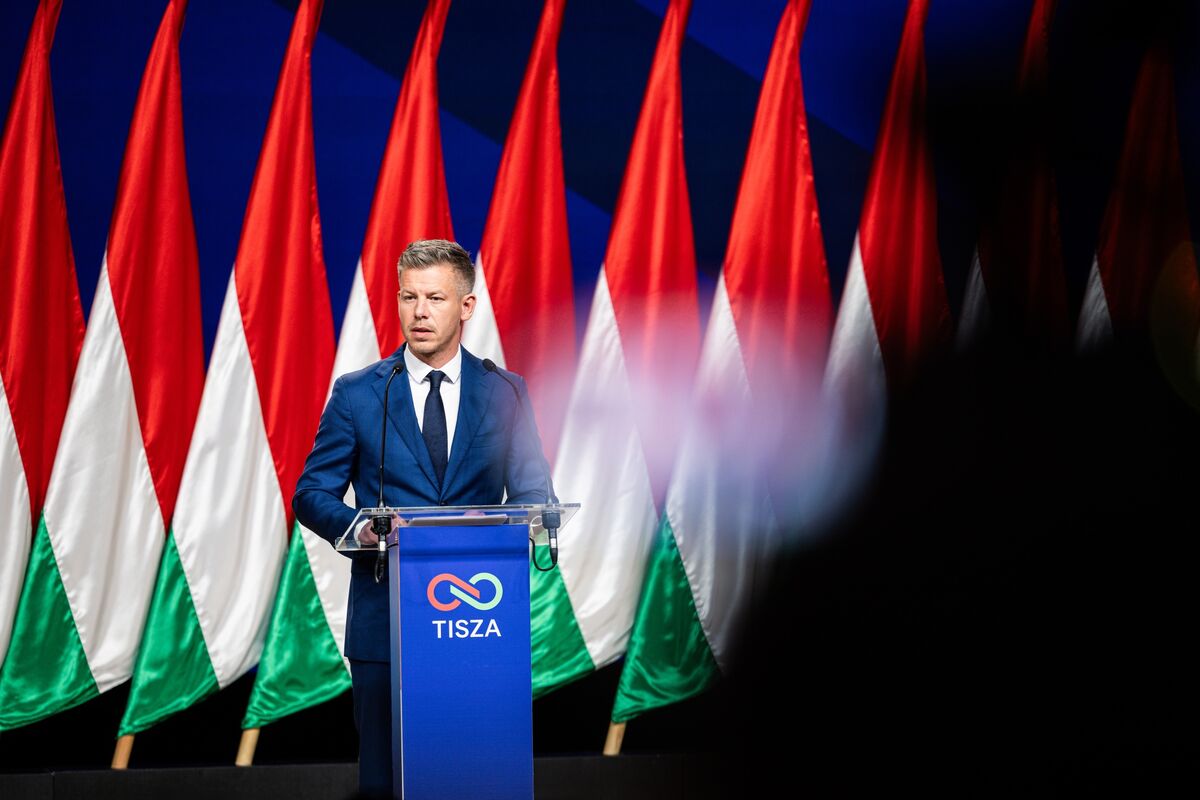
Hungary’s incoming prime minister Peter Magyar said Viktor Orban is expected to lift his veto on a €90 billion EU loan to Ukraine once oil flows through a key pipeline are restored. Hungary would still keep its opt-out from contributing financially to the loan. The article is primarily a political update on EU-Ukraine funding, with limited direct market impact.
This is less about the headline funding package and more about how quickly a political veto can be converted into a bargaining chip on energy security. The key second-order effect is that any normalization of oil transit into Hungary reduces Budapest’s leverage over Brussels, which lowers the probability of disruptive EU brinkmanship spilling into broader sovereign and budget negotiations over the next 1-3 months. That matters for Eastern European risk premia: a cleaner path on one flashpoint tends to compress cross-asset volatility in neighboring sovereigns even if the underlying geopolitical risk to Ukraine remains elevated.
The market should also think about sequencing. If the pipeline issue resolves first, Hungary gets domestic political credit without paying the fiscal cost of directly financing the loan, which makes an EU compromise more likely than a true policy reversal. For Ukraine, the practical implication is improved funding visibility, but only modestly: this is a credibility gain, not a balance-sheet transformation, so the effect on sovereign spreads should be incremental rather than regime-changing.
The contrarian angle is that consensus may be overestimating how much one veto actually matters. EU funding mechanisms have a long history of being re-routed, delayed, or re-labeled, so the real market mover is not the announcement itself but the risk that a restored oil flow becomes a precondition for other concessions. If that linkage hardens, Hungary’s bargaining power rises in future rounds, and the tail risk shifts from funding disruption to repeated negotiation cycles that keep regional risk assets capped.
From a time-horizon perspective, the immediate trade is a days-to-weeks reduction in headline risk, while the months-long issue is whether this signals a broader détente on energy transit and budget discipline. The main reversal catalyst is any interruption to the oil flow restoration or a domestic political incentive for the outgoing government to re-escalate before transition. In that case, the market would likely reprice Eastern European sovereigns and credit proxies quickly, but the move should fade if Brussels has already built in alternative financing channels.
AI-powered research, real-time alerts, and portfolio analytics for institutional investors.
Request TrialOverall Sentiment
neutral
Sentiment Score
0.05
