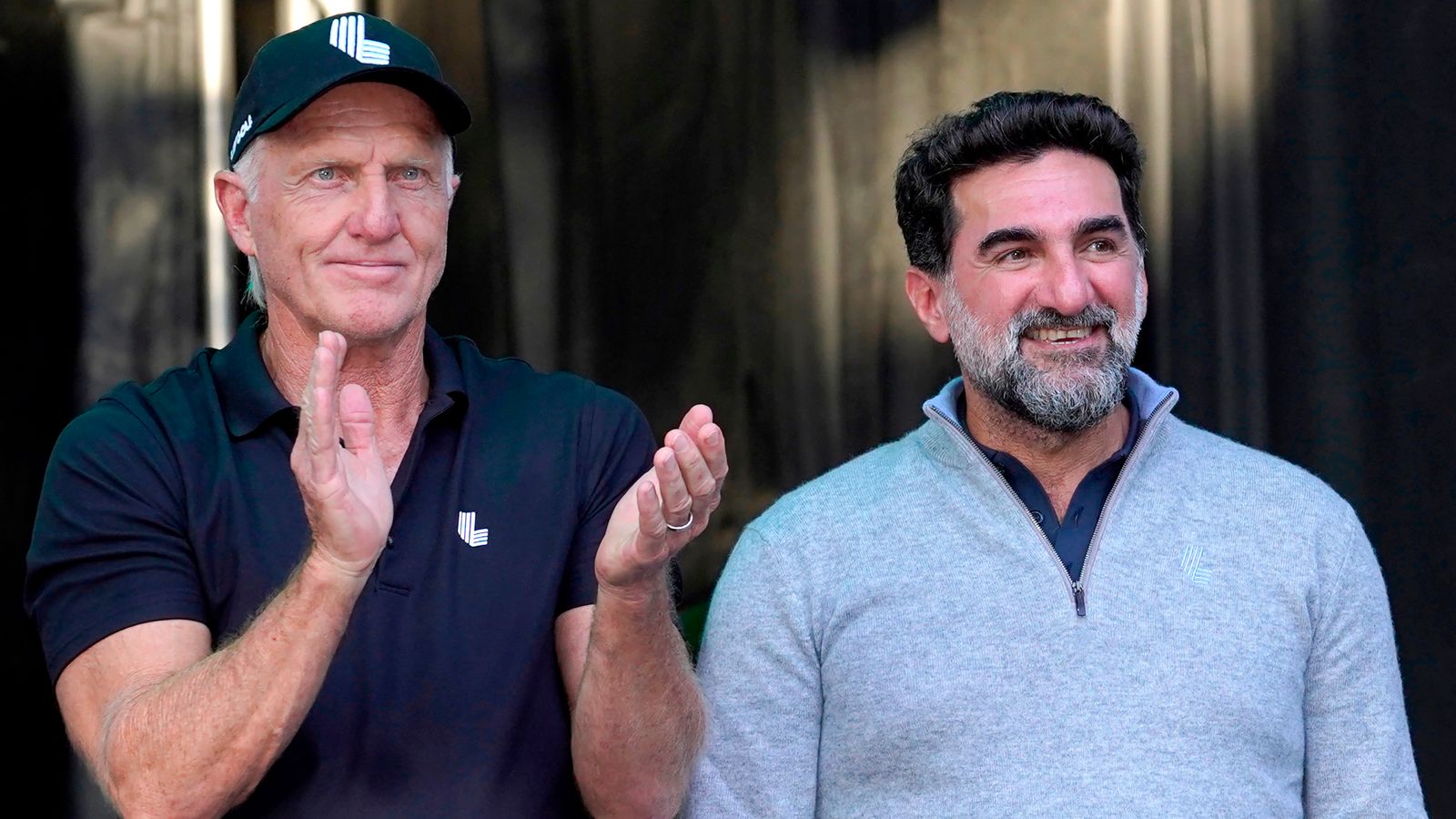
LIV Golf is expected to lose future Saudi Public Investment Fund backing beyond this year, with chairman Yasir Al-Rumayyan set to resign and the league preparing a new strategic plan to attract outside investors. The funding withdrawal raises doubt over LIV's ability to retain stars like Bryson DeChambeau and Jon Rahm and complicates its path to financial solvency after having spent $5bn since 2022. The league is still committed to a team-based global tour, but players are reportedly exploring alternatives amid rising uncertainty.
The immediate market read is not about golf; it is about sponsor-funded consumer media economics. Removing a sovereign backstop turns LIV from an infinite-duration marketing asset into a cash-burn business that now has to justify itself on enterprise value, franchise rights, and broadcast monetization. That typically compresses negotiating leverage with elite talent first, then vendors, then event-host venues and media partners, because each cohort understands the runway is shortening.
The second-order winner is the PGA Tour ecosystem: if LIV loses retention power, the premium attached to “rebellion scarcity” fades and the best players’ bargaining chip weakens. That matters most over 3-12 months, not days, because player movement is gated by contract mechanics and equity vesting, but the direction of travel is clear: more optionality for the incumbent tour, less pricing power for the breakaway league, and lower probability of an expensive bidding war for talent.
The key tail risk is a messy transition rather than an outright shutdown. A rights-sale or strategic investor process can keep the brand alive while forcing a haircut to player guarantees, which would trigger defections and lower event quality before revenue has time to stabilize. Conversely, the bullish reversal case is a strategic buyer with media distribution ambitions stepping in quickly; that would preserve the model, but likely at a valuation that implies heavy dilution and a reset of current economics.
Consensus is likely underestimating how fast governance change can alter counterparty behavior. Once players, sponsors, and venues believe the sovereign put is gone, the league’s cost of capital rises sharply and the franchise model becomes harder to defend, even if headline operations continue. That creates a classic “soft-landing” illusion: the business may look intact for a quarter or two while underlying retention and pricing power deteriorate quietly.
AI-powered research, real-time alerts, and portfolio analytics for institutional investors.
Request DemoOverall Sentiment
moderately negative
Sentiment Score
-0.45
