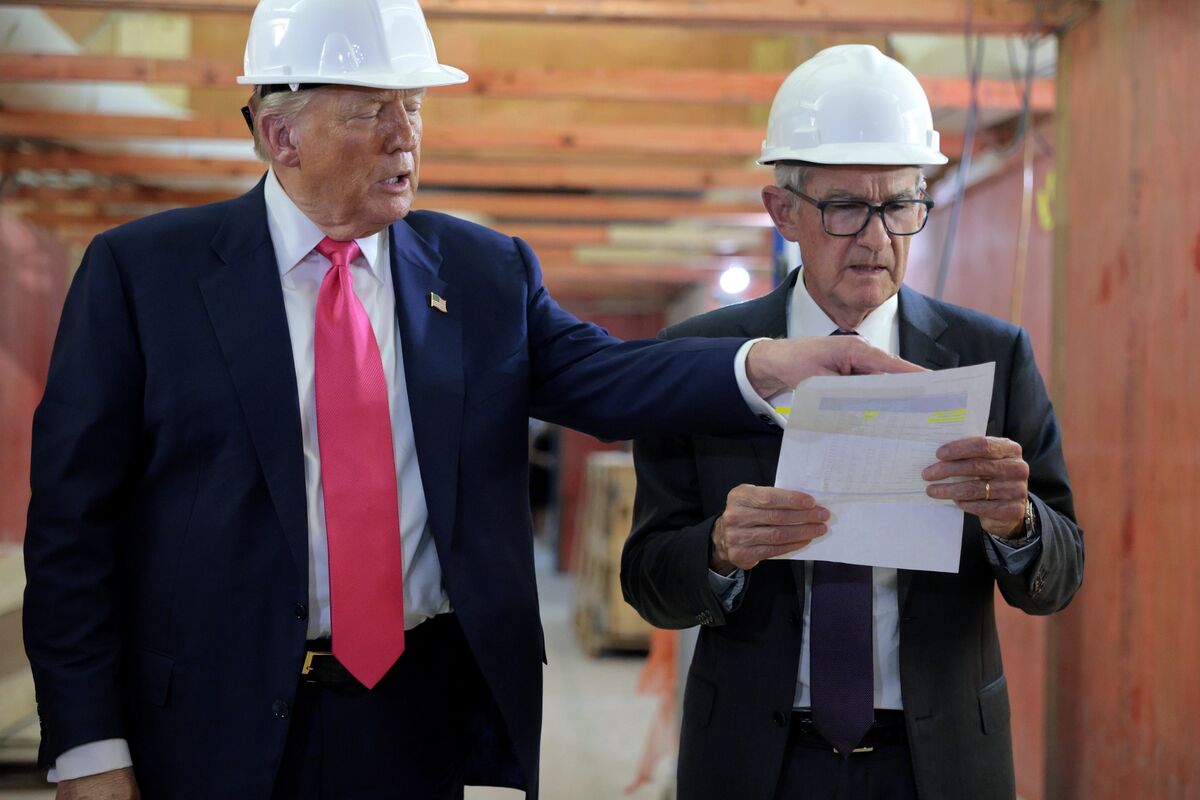
President Donald Trump used a joint tour of the Federal Reserve's renovation project with Chairman Jerome Powell to publicly press for lower interest rates. The interaction also featured a disagreement over the renovation's cost, highlighting continued friction between the executive branch and the central bank regarding monetary policy independence.
President Donald Trump publicly reiterated his call for lower interest rates during a joint appearance with Federal Reserve Chairman Jerome Powell at the central bank's headquarters. The interaction, which occurred during a tour of the Fed's renovation project, was also marked by a disagreement over the project's cost, underscoring the ongoing friction between the executive branch and the central bank. This event highlights the continued political pressure on the Federal Reserve's monetary policy decisions. While the immediate market impact is assessed as low, the persistent and public challenges to the Fed's autonomy could introduce uncertainty regarding the future path of interest rates and erode market confidence in the institution's independence, a cornerstone of stable monetary policy.
AI-powered research, real-time alerts, and portfolio analytics for institutional investors.
Request DemoOverall Sentiment
mixed
Sentiment Score
0.00
