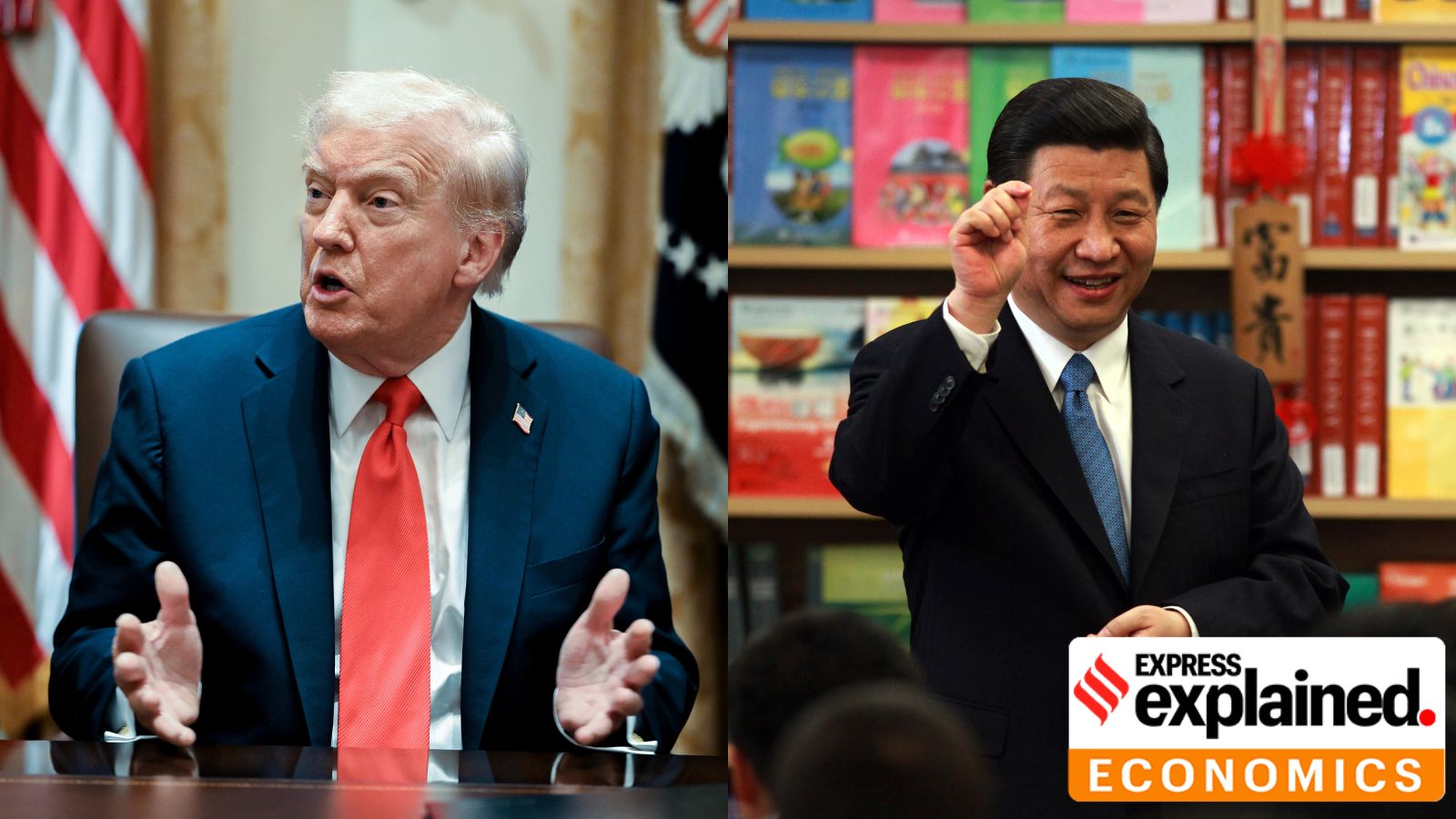
US President Trump announced new 100% tariffs on China, effective November 1, and export curbs on "critical software," further escalating trade tensions and canceling an upcoming meeting with President Xi Jinping. This aggressive stance follows China's recent imposition of export restrictions on rare earth elements and associated technologies, effective December 1, citing national security. Given China's near-monopoly on rare earth processing and magnet manufacturing, these reciprocal actions significantly threaten global supply chains for critical industries, including automotive, defense, and electronics, by weaponizing essential materials and technology.
The US-China trade conflict has significantly escalated with President Trump's announcement of 100% tariffs on China, effective November 1, and new export curbs on "critical software," likely targeting semiconductors. This follows China's retaliatory measure of imposing export restrictions on rare earth elements (REEs) and related technologies, effective December 1, citing national security concerns. These actions represent a breakdown of the recent "restive truce" and signal a deepening economic decoupling. China's rare earth restrictions are particularly impactful given its near-monopoly, controlling 70% of mining, 90% of processing, and 93% of magnet manufacturing for these indispensable materials used in EVs, consumer electronics, and defense. This strategic leverage, previously weaponized against Japan and the US, poses a severe threat to global supply chains. The move is interpreted as China's equivalent of the US foreign direct product rule, extending control over foreign-made products using Chinese REE technology. The reciprocal tariffs, now higher than ten months prior (Chinese goods +30% levy, US imports +10% tariff), coupled with export controls, are poised to severely disrupt global supply chains. Previous REE restrictions in April halved exports and forced American automakers to halt operations, demonstrating the immediate and tangible economic impact. The "extremely negative" sentiment and high market impact score (0.95) reflect the significant uncertainty and operational challenges these measures introduce across multiple sectors, including automotive, technology, and defense.
AI-powered research, real-time alerts, and portfolio analytics for institutional investors.
Overall Sentiment
extremely negative
Sentiment Score
-0.90
