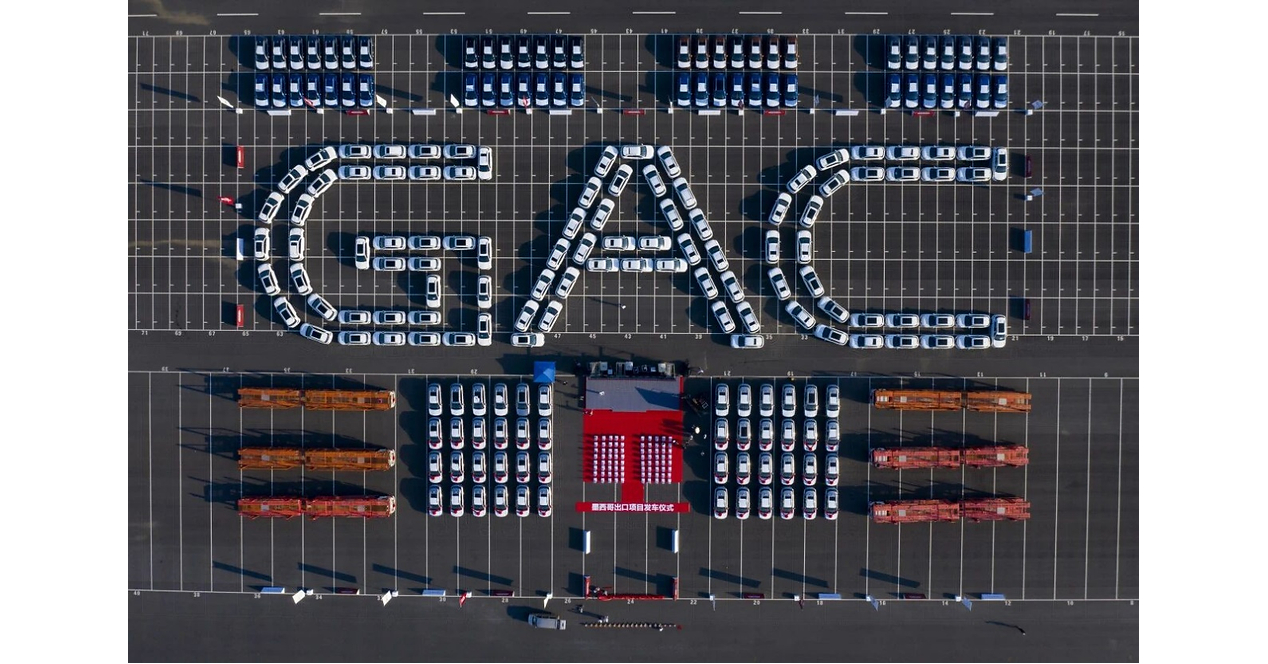
GAC Group reportó ventas totales de 773.100 vehículos en el 1S 2026 (+2,35% interanual), con 62,82% provenientes de vehículos de bajo consumo y nuevas energías. Las ventas de marcas propias se aceleraron por el plan “Panyu Action” a 346.000 unidades (+35,69% YoY), mientras que las exportaciones de marcas propias alcanzaron 121.500 unidades (+132% YoY) entre enero y junio. En julio, la producción acumulada superará los 30 millones de unidades y el grupo proyecta seguir creando valor en movilidad en el 2S 2026.
The market should be careful not to extrapolate unit growth into earnings power. For an exporter-led auto story, the first-order boost is volume, but the second-order effect is usually margin dilution from lower ASPs, distributor incentives, homologation costs, and working-capital drag as overseas inventory is seeded. That means the near-term winner is likely the broader China EV export complex only if GAC can prove it is taking share without sacrificing gross margin; otherwise, the better expression may be the suppliers with pricing power (battery, electronics, powertrain) rather than the OEM itself.
Competitively, the signal is most relevant for BYD (1211.HK) and Geely (0175.HK) in emerging markets, plus NIO (NIO) and XPeng (XPEV) in markets where brand/export momentum matters. GAC’s push into Europe also raises policy risk: any acceleration in Chinese EV market share in the EU increases scrutiny around tariffs, local-content rules, and dealer-network compliance, which can hit conversion rates with a 1-2 quarter lag. The Austria assembly milestone is strategically important because it can reduce headline tariff friction, but it also raises fixed-cost leverage; if sell-through softens, localization becomes a margin trap rather than a moat.
Contrarian view: the consensus will likely focus on fast-growing overseas sales, but the more important question is whether the company can monetize that growth at a higher ROIC than domestic business. If the overseas mix is mostly low-price models, the stock could underperform on any future disclosure showing weaker export margins or elevated channel inventory. Watch for Q3 evidence on gross margin and foreign receivables; if those deteriorate while exports keep rising, the growth narrative becomes a value trap rather than a compounding story.
AI-powered research, real-time alerts, and portfolio analytics for institutional investors.
Request DemoOverall Sentiment
moderately positive
Sentiment Score
0.35
