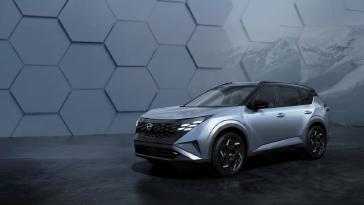
Nissan unveiled an all-new 2027 Rogue Hybrid featuring e-POWER technology and confirmed the return of Xterra, with U.S. production targeted for late 2028. The Rogue is a key nameplate for Nissan in the U.S. and Canada, and management highlighted hybrid efficiency and improved everyday usability as core selling points. The news is strategically positive for Nissan’s product pipeline, but details on design, specs and launch timing remain limited.
This is less about a single model refresh and more about Nissan trying to defend relevance in the two segments where brand inertia matters most: compact crossovers and rugged utility. The strategic read-through is that Nissan is admitting it cannot win on pure battery EV timing in North America, so it is using hybrid architecture to buy time, improve showroom conversion, and keep fleet/regulatory economics moving without overcommitting capital. If execution is clean, the biggest beneficiary is likely Nissan’s own mix and residual values; if it is not, the market will treat this as another proof point that the company is still a laggard in mainstream product cadence.
The e-POWER angle matters because it shifts the competitive battleground from “who has the best EV” to “who can deliver EV-like drive feel without charging dependence.” That is a direct challenge to Toyota and Honda in the value-conscious family SUV segment, where consumers want perceived innovation but still prioritize reliability and monthly payment discipline. Second-order, this could pressure suppliers tied to conventional hybrid components and increase demand for e-motor, inverter, and battery-content chains over pure ICE transmission suppliers.
The Xterra return is more interesting as an option on truck/SUV white space than as an immediate earnings driver. A U.S.-built body-on-frame family could improve Nissan’s NA manufacturing utilization and bargaining power with labor/localization stakeholders, but the ramp risk is high and the launch timing pushes any financial benefit into 2028+ rather than the current cycle. The contrarian point is that the market may overrate the branding upside: nameplate nostalgia does not fix brand equity or dealer profitability unless Nissan gets pricing power, and the core question is whether these products can sustain gross margin after incentives normalize.
Near term, this should be a modest positive for Nissan’s sentiment and a mild negative for competitors exposed to compact SUV share, but the tradeable impact is probably more in supplier baskets and rival OEM sentiment than in Nissan itself. The catalyst path is long-dated: next proof point is specification/pricing detail on Rogue Hybrid, then order take-rate, then whether the U.S.-built rugged program expands or gets rationalized. The key risk is that hybrid differentiation gets commoditized quickly if Toyota/Honda respond with better-priced or higher-volume alternatives before Nissan reaches scale.
AI-powered research, real-time alerts, and portfolio analytics for institutional investors.
Request TrialOverall Sentiment
mildly positive
Sentiment Score
0.35
