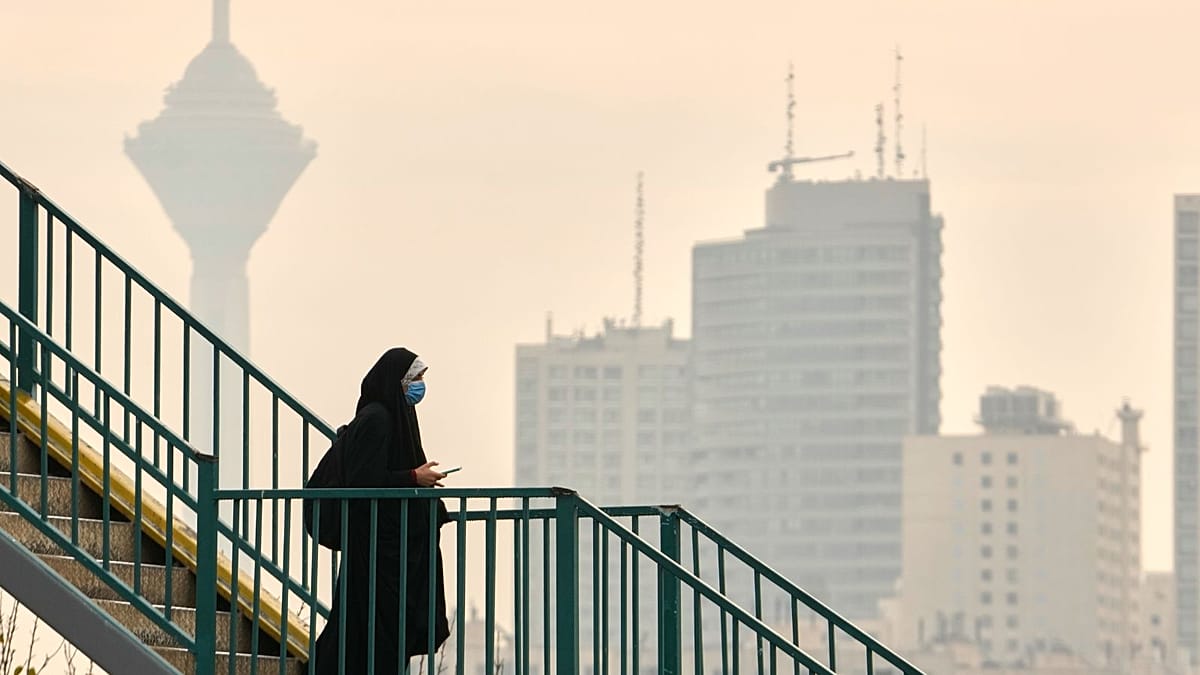
Widespread ecological collapse in Iran — including land subsidence of 20–30 cm/year (cited as ~40x developed-country averages), an aquifer deficit of ~130 billion cubic meters, mazut-fueled pollution that pushes SOx up to ten times legal limits, and air-pollution deaths approaching 30,000/year — is triggering mass unrest and crippling urban infrastructure. The crisis has rendered parts of Isfahan uninhabitable, threatens 1.5m ha (≈30%) of Zagros oak forest and ~100,000 ha/yr of farmland, and is causing mandatory power cuts that halt production and erode middle-class assets (soil erosion reportedly consuming the equivalent of 10–15% of GDP annually). For investors, this raises heightened country risk for Iran-exposed assets, persistent disruption to regional energy/infrastructure operations, and an increased likelihood that sanctions, governance failures and underinvestment will prolong structural economic decline.
Market structure: Environmental collapse in Iran reallocates economic pain from consumer cashflows to physical capital — winners are global providers of water infrastructure, desalination, filtration and fertilizer producers; losers are Iranian real estate, regional utilities and local manufacturing. Expect higher pricing power for global water-tech suppliers (installation + replacement cycles) and fertilizer manufacturers as Middle East crop shortfalls and fertilizer-production outages tighten global supply by a discrete single-digit-percent band over 6–18 months.
Risk assessment: Tail risks include escalation to attacks on Gulf oil infrastructure (spike risk to Brent/WTI >25% in days) and mass internal migration triggering broader regional instability and sanctions spillovers. Near-term (days–weeks) is volatility in oil, EM FX and CDS; medium-term (months) is sovereign default/refinancing stress for sanctioned issuers; long-term (years) is structural re-rating of regional credit and sustained capex demand in water/energy infrastructure.
Trade implications: Tactical trades should favor water-capex and fertilizer equities, long oil volatility via bounded option structures, and defensive sovereign/FX hedges (EM bond CDS or EEM puts) while cutting direct frontier exposure. Positioning should be size-limited (1–3% per theme), uses option-defined downside for geopolitical spikes, and rotates out as headline risk normalizes or commodity tightness resolves.
Contrarian angle: Consensus treats this as purely political unrest; the market is underpricing durable capex demand for desalination/wastewater (~$billions/year) and fertilizer reallocation. Reaction is likely underdone in specialized names (XYL, PNR, ECL) where orderbooks can re-rate earnings 10–30% over 12–24 months; conversely shorting plain EM beta and Iran-adjacent real estate/speculative banks offers asymmetric payoff if degradation accelerates.
AI-powered research, real-time alerts, and portfolio analytics for institutional investors.
Request DemoOverall Sentiment
strongly negative
Sentiment Score
-0.70
