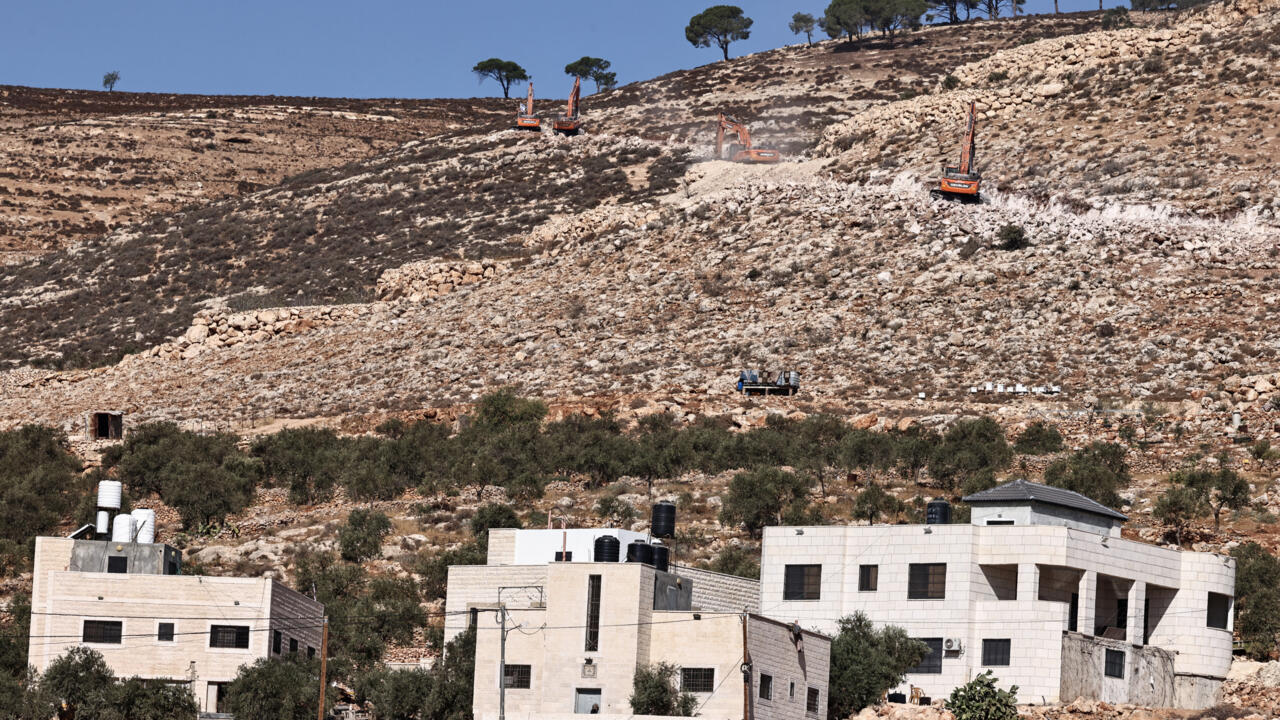
US President Donald Trump has publicly committed to blocking Israeli annexation of the West Bank, a pivotal declaration made ahead of Prime Minister Benjamin Netanyahu's visit, signaling a strategic US push for regional de-escalation and an end to the Gaza conflict. This firm stance, reportedly influenced by warnings from key Arab allies like Saudi Arabia and the UAE, introduces a significant constraint on Israeli policy and could reshape geopolitical risk, even as Palestinian President Mahmud Abbas, in a separate address, disavowed Hamas's October 7 actions and called for international recognition of a Palestinian state.
A significant divergence in US-Israel policy has emerged, with US President Trump explicitly vowing to block any Israeli annexation of the West Bank. This declaration, made ahead of a high-stakes meeting with Prime Minister Netanyahu, signals a direct US effort to de-escalate regional tensions and facilitate an end to the Gaza war. The US position appears heavily influenced by diplomatic pressure from key Arab allies, including Saudi Arabia and the UAE, who have warned against the risks of annexation and whose cooperation is critical for regional stability. While this American stance introduces a powerful constraint on Israeli hardliners, the situation remains underscored by uncertainty, as the article notes Netanyahu has defied US diplomacy in the past. Concurrently, Palestinian Authority President Mahmud Abbas has attempted to position his government as a viable partner by disavowing Hamas's October 7th actions and future role in governance, a move aimed at garnering international support for Palestinian statehood amid the ongoing conflict which has resulted in over 65,500 Palestinian deaths according to the Hamas-run health ministry.
AI-powered research, real-time alerts, and portfolio analytics for institutional investors.
Request DemoOverall Sentiment
neutral
Sentiment Score
0.15
