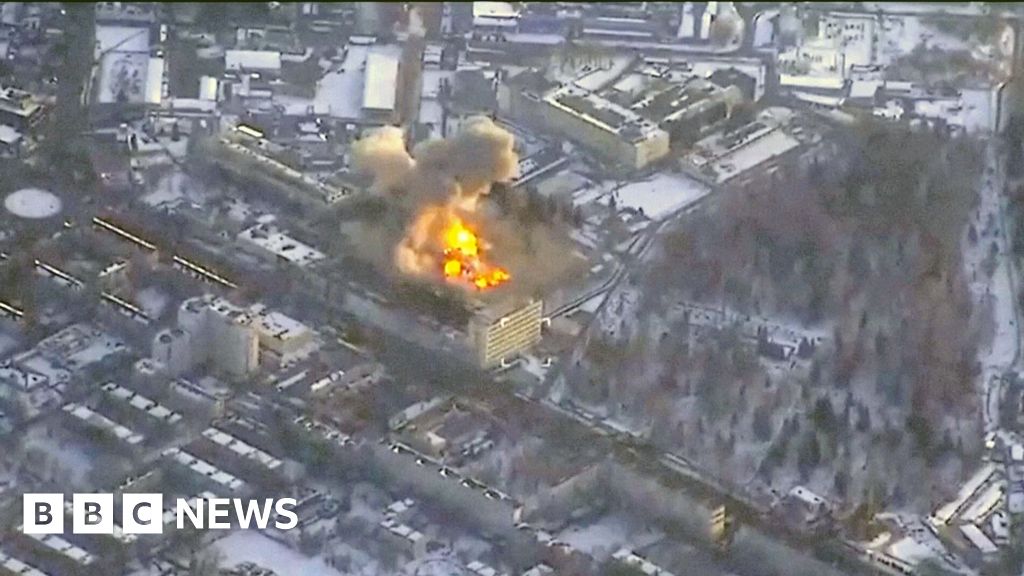
Ukraine struck the Kremniy El missile-component plant in Russia's Bryansk region using British Storm Shadow missiles; Russian authorities report at least 6 civilians killed and 42 injured and Ukraine says the plant made electronics for missiles. Separate recent Russian strikes killed 2 (5 injured) in Kharkiv and 4 (16 injured) in Slovyansk; Russia controls >80% of Donbas. The cross-border strike raises escalation risk and is likely to pressure risk assets and support defense-sector bids, while diplomatic talks led by US President Donald Trump (including proposals for Ukraine to cede parts of Donbas) remain politically sensitive.
A sustained upward repricing of demand for long‑range precision munitions and the discrete electronics that enable guidance/navigation is the most direct sectoral transmission. Expect revenue recognition to be lumpy: initial orders drive outsized FY+1 margin expansion for prime contractors, while their tier‑2 electronics partners see 6–18 month lead‑time pull‑through with higher pricing power and constrained elasticity.
Parallel demand for counter‑UAS, electronic warfare and short‑range interceptors increases — these are lower‑ticket but higher‑volume buys for militaries pivoting to layered defense, favoring suppliers with rapid production flexibility over bespoke platform builders. The semiconductor/advanced sensor supply chain (specialty foundries, rad-hard chipmakers, precision MEMS) becomes the binding constraint; bottlenecks there will set the cadence for how fast revenue actually flows to primes.
Policy and political catalysts dominate the risk calendar: near‑term outcomes hinge on diplomatic windows and electoral timelines in donor countries, while medium-term secular effects depend on whether procurement becomes permanent (multi‑year budgets) versus one‑off replenishment. Tail risks — expanded cross‑border targeting of industrial nodes or formal supply embargoes — would shift market dynamics from idiosyncratic defense winners to systemic risk assets (energy, FX, sovereign credit).
From a portfolio perspective, volatility creates objective option entry points and asymmetric pair trades: play the constrained supply of specialized electronics and C‑UAS with structured long exposure, hedge macro escalation with liquid safe‑haven instruments, and monitor order announcements and export‑control changes as trade triggers over the next 3–12 months.
AI-powered research, real-time alerts, and portfolio analytics for institutional investors.
Request DemoOverall Sentiment
strongly negative
Sentiment Score
-0.60
