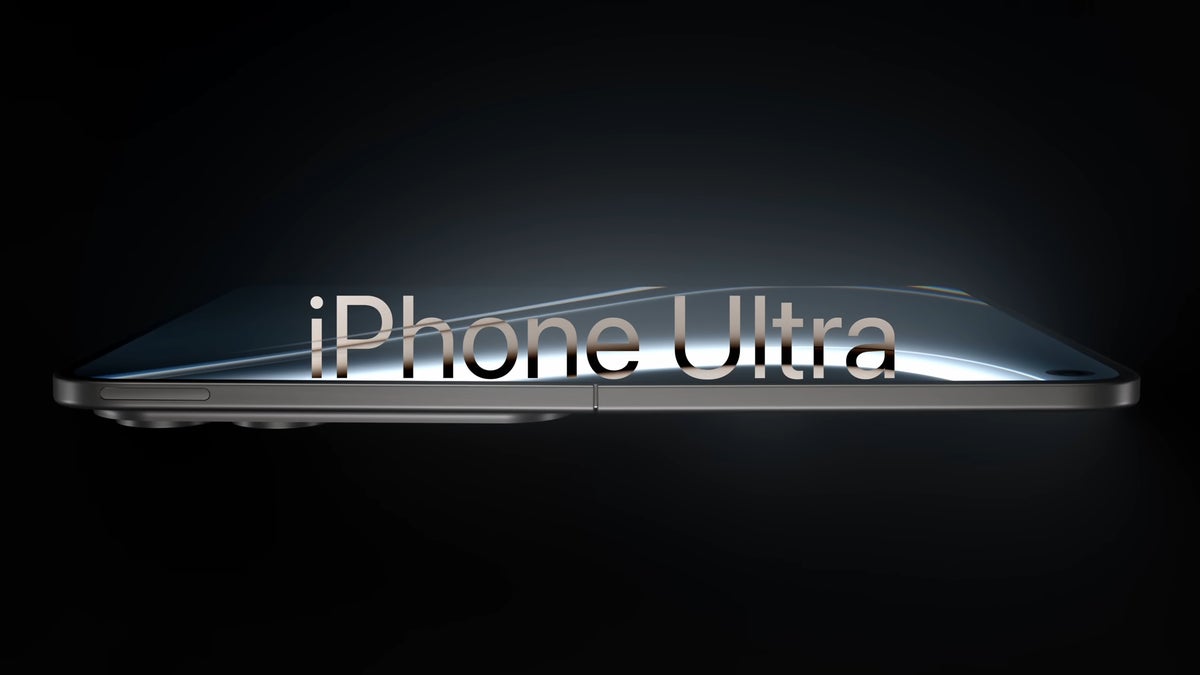
Key specs leaked: the foldable 'iPhone Ultra' reportedly packs a 5,800 mAh battery and measures ~9.5 mm folded / ~4.5 mm unfolded, with a potential under‑display front camera option. These figures exceed rival foldables cited (Galaxy Z Fold7 4,400 mAh; rumored Fold8 ~5,000 mAh; Galaxy Z TriFold 5,600 mAh) and could improve in‑hand feel and battery life if confirmed. The report is based on renders and a leak source (Jon Prosser/Fpt), so confirmation risk is material; nevertheless, a validated launch with these specs could pressure competitors (notably Samsung) on battery and design choices.
Apple entering the foldable space is less about incremental unit share and more about resetting product expectations across display, battery and industrial-design tiers. A credible Apple foldable forces Android OEMs and suppliers to accelerate roadmap items they may have deferred — larger battery formats, finer crease engineering and under-display optics — compressing multi-year R&D timelines into a 6–18 month scramble and reallocating capex across the supply chain.
Second-order winners are predictable but non-obvious: flexible OLED capacity owners and advanced battery makers will benefit not only from incremental Apple orders but from follow-on demand as competitors are forced to increase battery size and robustness across their fleets. Conversely, mid-tier OEMs and lower-margin component vendors that can’t scale advanced flexible-display yield or secure battery allocation will see margin pressure and potential inventory write-downs as premium foldables capture channel attention.
Main near-term risks are execution and adoption rather than product quality alone — poor yield on under-display optics or battery-pack integration could delay shipments and concentrate returns risk in suppliers with forward-booked, non-cancellable contracts. Market reaction will play out in two windows: a news/option-implied-volatility window around official product announcement (weeks to months) and a demand-realization window driven by first-quarter sell-through data (3–9 months). The consensus is bullish but underestimates the timing friction between Apple’s design ambition and mass-market manufacturability.
AI-powered research, real-time alerts, and portfolio analytics for institutional investors.
Request DemoOverall Sentiment
mildly positive
Sentiment Score
0.35
Ticker Sentiment
