



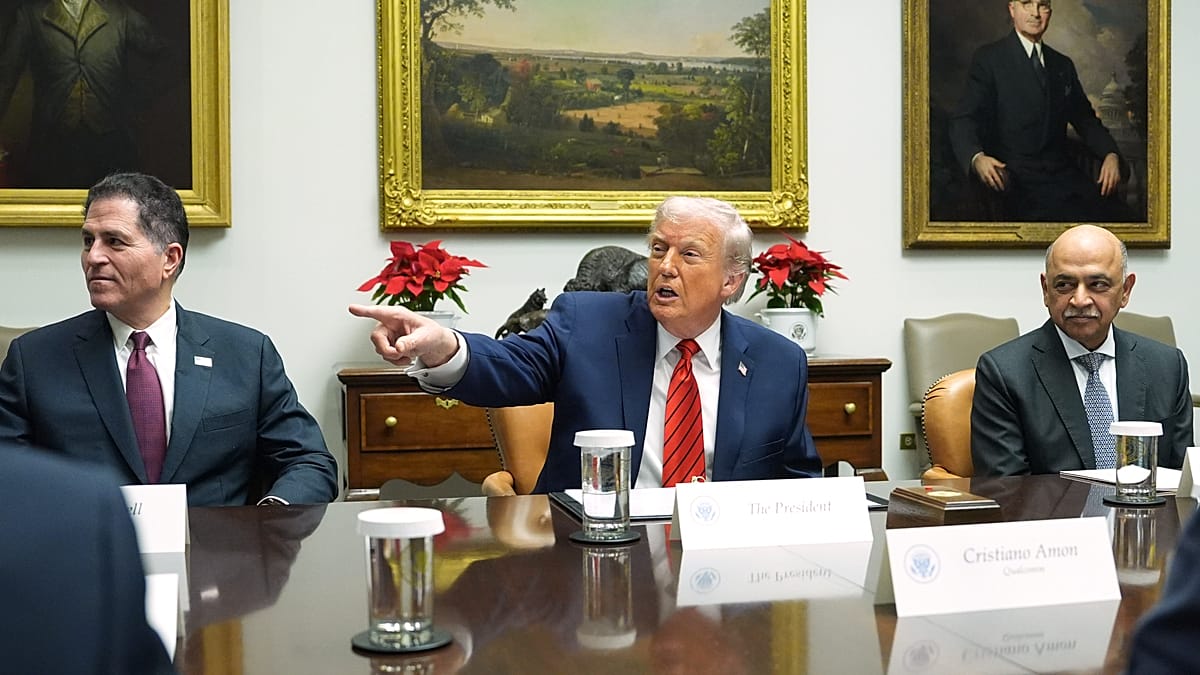
Dell Federal Systems won a five-year $9.7 billion Pentagon contract to provide and manage Microsoft software licensing across the US military, intelligence agencies and Coast Guard. The award is expected to save the Department of War about $422 million annually and sent Dell Technologies shares up around 5% pre-market to about $320. The deal is notable both for its scale and for the heightened scrutiny around Trump-linked endorsements and financial disclosures.
This is a cleaner read-through for DELL than the headline suggests: the real value is not the notional contract size but the visibility into a multi-year federal software annuity with sticky renewal characteristics. The second-order effect is that Dell becomes a higher-quality channel for Microsoft’s public-sector stack, which should support mix and cash conversion more than top-line growth alone; that’s why the market is likely to reward the stock on multiple expansion rather than near-term EPS revisions. The more important implication for competitors is that large-scale federal procurement is consolidating toward vendors with existing clearance, integration, and financing muscle, which raises the hurdle for smaller resellers and point-solution vendors.
The near-term risk is that the market may overestimate earnings impact before the first quarter print. At this stage, the contract is more likely to improve backlog optics and forward visibility than to drop meaningfully into current-quarter revenue, so any post-announcement pop could fade if guidance is merely reiterated. Over the next 3-12 months, the key catalyst will be evidence that Dell can convert this into additional adjacent wins in government services, storage, and endpoint refresh, rather than a one-off licensing event.
MSFT is a quieter beneficiary: if federal software standardization tightens around its ecosystem, the company benefits from higher switching costs and better seat retention, but the upside is incremental rather than transformative. The more interesting contrarian angle is governance noise — scrutiny around timing and political optics can create volatility, but that tends to be a trading issue, not a fundamentals issue, unless it bleeds into procurement delays or broader federal contracting reviews. The market may be underappreciating that the biggest winner could be the federal IT incumbent set generally, while the biggest loser is the fragmented reseller layer that gets squeezed out by centralized buying.
AI-powered research, real-time alerts, and portfolio analytics for institutional investors.
Request TrialOverall Sentiment
moderately positive
Sentiment Score
0.62
Ticker Sentiment
