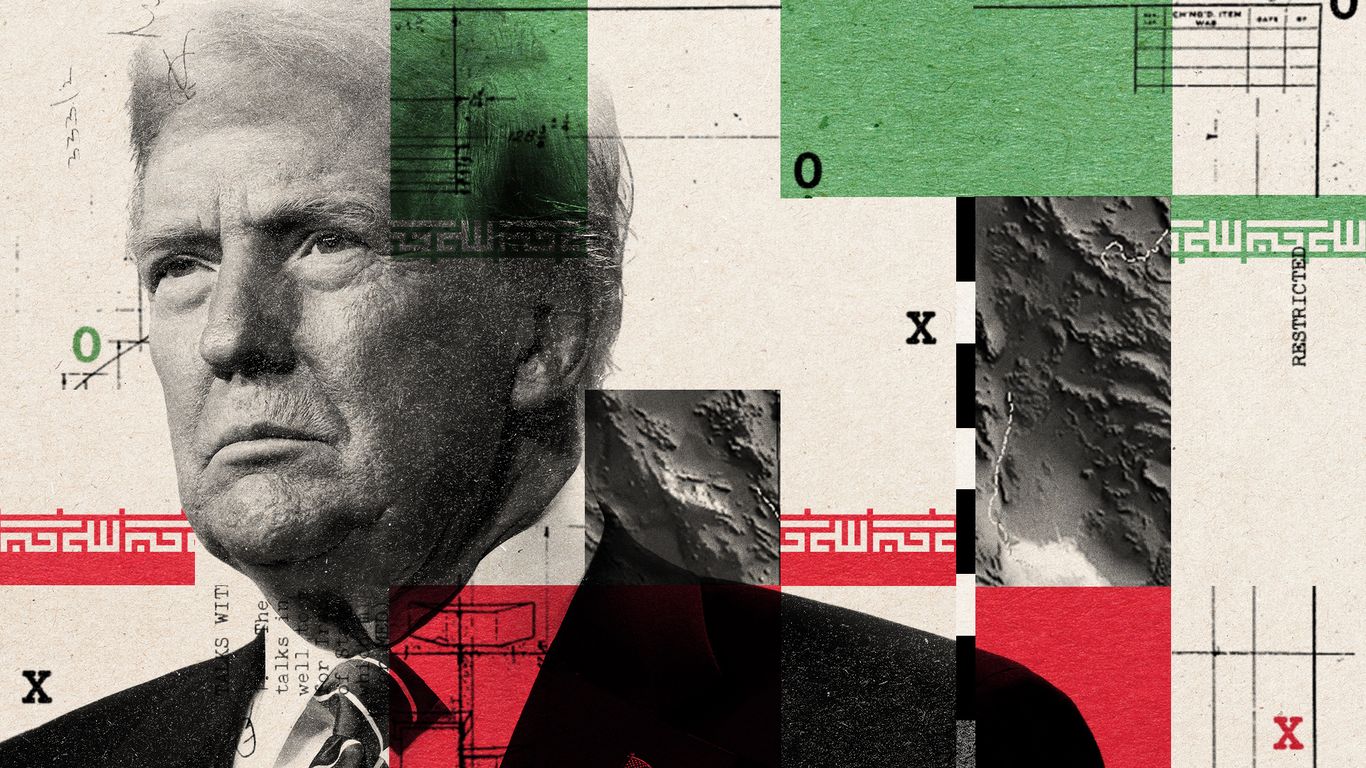
The article headline indicates Trump is upset after being kept waiting in Tehran, suggesting a politically charged diplomatic or geopolitical incident. No substantive policy, market, or economic details are provided, limiting the likely market impact.
The immediate market read is not about one headline, but about the growing gap between policy noise and real-world risk premia. When geopolitical tension intrudes on an election-sensitive narrative, the first-order impulse is usually a brief risk-off move; the second-order effect is a repricing of tail risk across industrials, semis, and transport names with Middle East exposure in freight, energy input costs, or customer concentration. That creates a window where implied vol can stay cheap for a day or two even as the probability of a larger overnight gap rises.
For TSLA specifically, the impact is indirect but meaningful: the stock is increasingly a macro-duration trade, so any escalation that lifts oil or broadens risk aversion can pressure multiples even if fundamentals are unchanged. The more important channel is sentiment contamination versus direct demand—higher fuel prices can help the EV adoption narrative over months, but in the next 1-4 weeks the market is more likely to focus on equity-beta de-rating and margin anxiety than on a second-order EV tailwind.
The contrarian point is that these headline-driven political spikes often fade unless they alter shipping lanes, sanctions, or the oil complex. If no physical disruption follows, the premium assigned to the event usually mean-reverts within several sessions, making outright momentum shorts on TSLA fragile unless energy and rates confirm the move. The cleaner setup is to use the event to buy cheap convexity or express a relative-value view rather than a directional macro bet.
AI-powered research, real-time alerts, and portfolio analytics for institutional investors.
Request DemoOverall Sentiment
neutral
Sentiment Score
-0.10
Ticker Sentiment
